How to Measure Legal Printer Paper Size
To measure legal printer paper size accurately, start by placing the sheet flat in a portrait orientation. Make sure the shorter edge is horizontal, so you’re measuring it correctly. This step is essential because legal paper has specific dimensions that differ from other types.
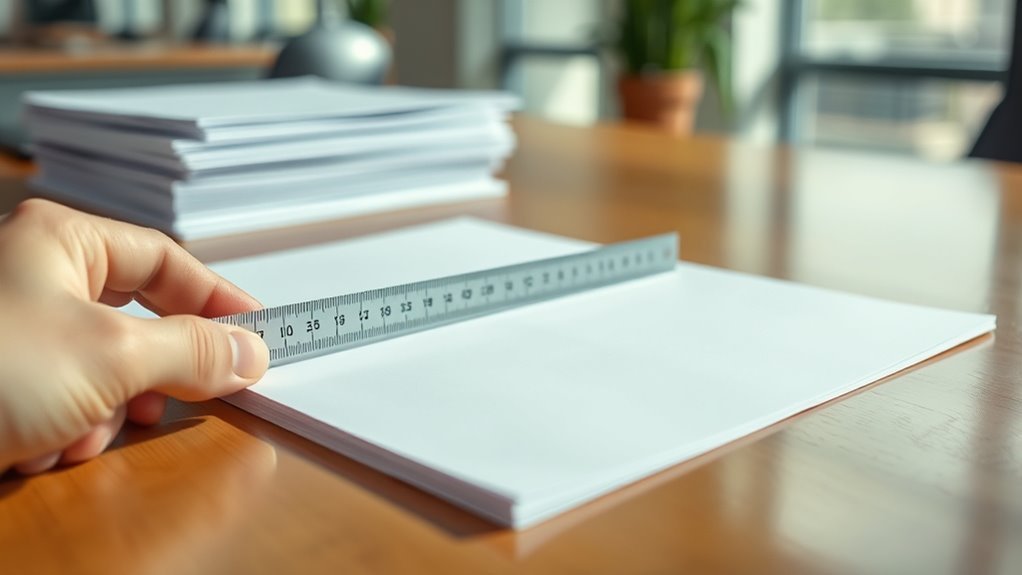
Next, grab a rigid ruler or a digital caliper. Align the zero mark right at the paper’s edge to avoid any measurement errors. You want to confirm that the width is exactly 8.5 inches and the length is 14 inches—or their metric equivalents if you prefer.
It’s a good idea to check multiple sheets to make sure the size is consistent across your stack. Also, avoid curled or folded edges since they can throw off your measurements. Accurate measuring is key because it directly affects printing quality and how your documents will fit into filing systems.
Taking these simple steps will help you measure legal printer paper size quickly and correctly every time.
Key Takeaways
- Place the paper flat in portrait orientation, measuring width across the short edge (target 8.5 in) and length along the long edge (target 14 in).
- Use a rigid steel ruler or digital caliper aligned at the corner zero mark to avoid parallax errors for accurate measurements.
- Measure multiple sheets from top and middle of the pack to ensure consistent size and detect any miscuts or variations.
- Confirm measurements by converting inches to millimeters (8.5 in = 215.9 mm, 14 in = 355.6 mm) for precise verification.
- Avoid measuring curled, folded, or compressed edges; always use a flat, hard surface to prevent inaccurate readings.
How To Identify Legal Printer Paper By Its Exact Dimensions
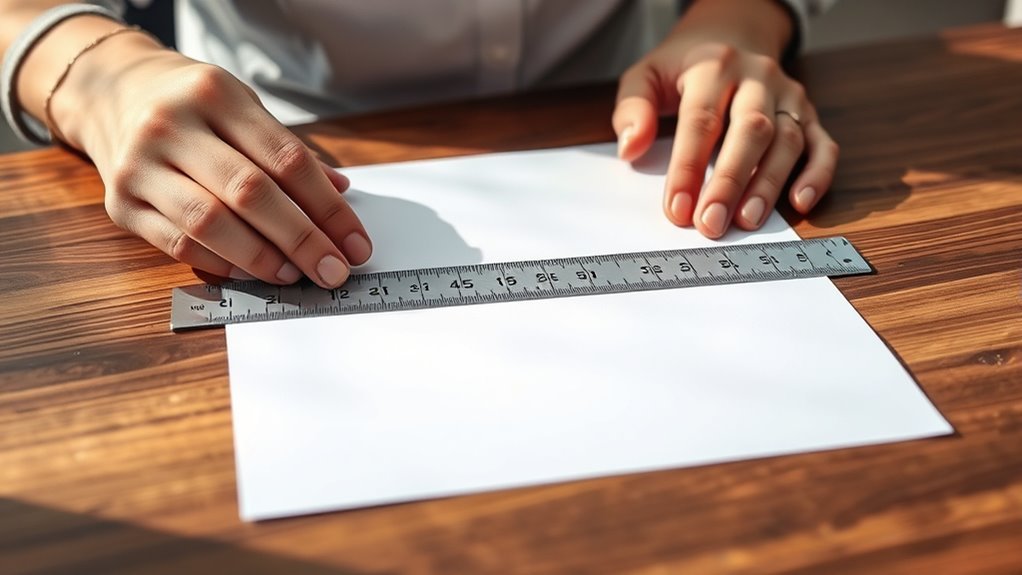
To identify legal printer paper by its exact dimensions, you’ll want to measure it carefully. Legal paper measures exactly 8.5 inches wide by 14 inches long, or 216 × 356 mm. This size shares the same 8.5-inch width as standard US Letter but is 3 inches longer.
For accurate measurement, place the sheet in portrait orientation—with the long side vertical—and confirm the length is 14 inches and the width is 8.5 inches. In metric terms, these dimensions help when comparing legal paper to A4 or setting custom printer settings.
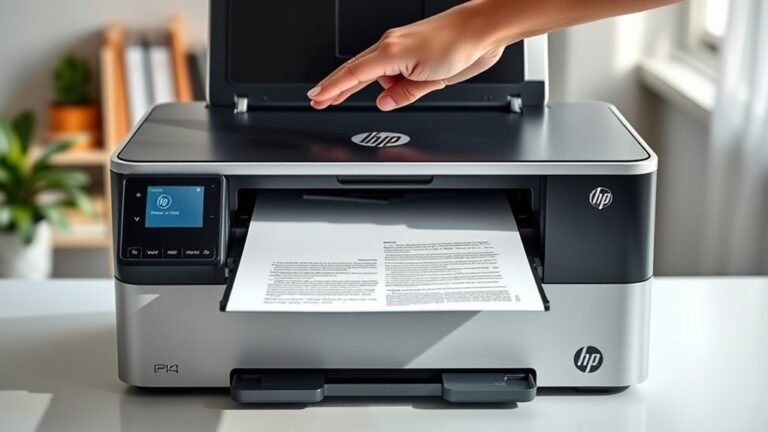
Before printing, make sure your application’s page size is set to “Legal (8.5 × 14 in)” and that the printer tray supports 14-inch sheets. This avoids scaling or clipping issues and guarantees precise printing on legal paper.
Tools You Need To Measure Legal Paper Accurately
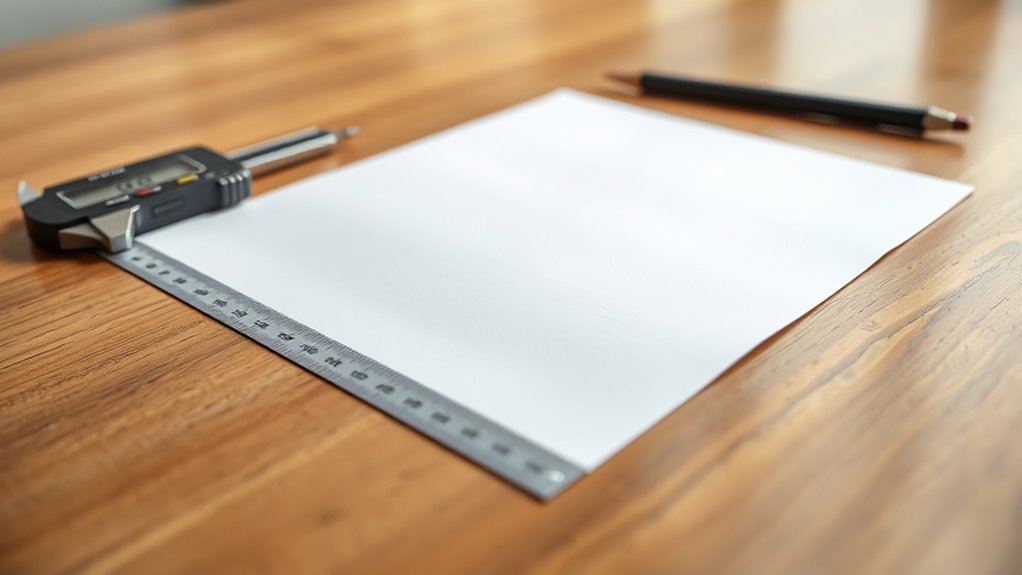
To measure legal paper accurately, you’ll need precise tools like a steel ruler or a metal tape measure, preferably with clear markings in inches or millimeters. Make sure to place the paper on a flat surface and align your measuring tool carefully to get exact width and length readings.
Using these techniques guarantees you catch any sizing errors or print scaling issues before they cause problems. It’s a simple step that can save you a lot of hassle down the road. Just take your time and double-check your measurements!
Essential Measuring Tools
Grab a rigid steel or metal ruler marked in both inches and millimeters to measure legal paper accurately. Legal sheets typically measure 8.5 x 14 inches or 216 x 356 mm, so your ruler should clearly show these markings.
For even greater precision, use a digital caliper capable of measuring to 0.01 inches (0.1 mm). This is especially handy if you need to verify exact dimensions or detect slight trimming.
A measuring tape with imperial and metric scales also helps for quick checks, particularly across stacks. When measuring, place the paper on a flat surface and align the zero mark of your tool with the paper’s edge to avoid errors.
Measuring both the top sheet and one from the middle guarantees consistent sizing throughout the stack. This way, you’ll know your measurements are spot on every time.
Accurate Measurement Techniques
Make certain your measurements are spot on by using a steel ruler or metal tape measure aligned precisely with the edges of the legal paper. Place the sheet flat on a hard surface, measuring from outer edge to outer edge to confirm the legal paper size is exactly 8.5 × 14 inches.
For metric confirmation, use a metric ruler or caliper to check dimensions at approximately 216 mm by 356 mm, allowing a ±1 mm tolerance. When measuring multiple sheets, measure one or divide total thickness by sheet count to avoid compressed-stack errors.
Finally, verify printer tray settings by measuring the printable area inside the tray to make certain it supports 8.5 × 14 inches without clipping. These measurement techniques guarantee accuracy every time.
How To Measure Legal Paper Size Step-By-Step (Including Orientation)
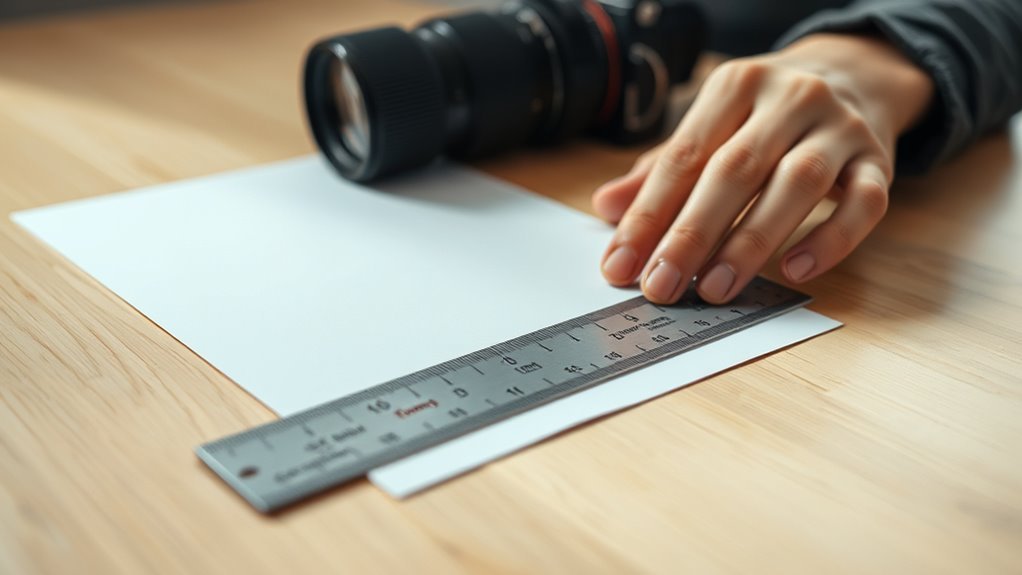
To measure legal paper size accurately, start by placing the sheet flat in portrait orientation and measure both width and length.
Remember, legal paper is 8.5 inches wide and 14 inches long, which helps you confirm the size.
Checking the orientation is key since legal and letter paper share the same width but differ in length.
Measuring Paper Dimensions
Start by laying your legal paper flat in portrait orientation, with the shorter edge at the top. To accurately measure its dimensions, follow these steps:
- Use a ruler or tape measure to measure the width across the short edge; it should be 8.5 inches (216 mm), the same as Letter size.
- Measure the long side from top to bottom; Legal paper is 14 inches (356 mm), exactly 3 inches longer than Letter.
- If you prefer metric, confirm dimensions as approximately 216 x 356 mm, rounding to the nearest millimeter.
- When measuring in a printer tray, check the usable paper area edge to edge to make certain it supports the full 8.5 x 14 inches without folding or clipping.
These steps help you measure width and length precisely for Legal paper. It’s pretty straightforward once you get the hang of it!
Identifying Paper Orientation
Although it might seem simple, correctly identifying the orientation of legal paper is key to accurate measurement. Hold your legal size sheet in portrait orientation, with the longer edge vertical.
Measure the shorter edge across the top—it should be 8.5 inches, not 5 inches or 0 inches. The longer edge, from top to bottom, should measure 14.0 inches. If these measurements swap, your paper is in landscape orientation.
When dealing with a stack or printer tray, align the 8.5-inch side with the paper guides to guarantee proper fit. Make sure the tray supports a 14-inch length to accommodate legal size in portrait orientation.
This way, you avoid misfeeds and guarantee precise handling of your legal paper.
Common Mistakes To Avoid When Measuring Legal Paper
When measuring legal paper, you’ll want to avoid common pitfalls that can lead to inaccurate results. Here’s what to watch out for to measure accurately:
Don’t assume legal size matches foolscap or international sizes—always verify the sheet measures 8.5 × 14 inches (216 × 356 mm) rather than relying on the name alone.
Avoid using printer tray labels; instead, measure a physical sample sheet since some stock may be miscut or labeled incorrectly.
Don’t measure along folded or curled edges—lay the sheet flat and use a metal ruler for precise width and length.
Avoid mixing units without exact conversion; if you measure in millimeters, confirm the dimensions as 216 × 356 mm to make certain accuracy.
Following these tips prevents errors and assures you know the true legal paper size.
Converting Inches To Millimeters For Legal Paper
After making sure you’ve measured your legal paper correctly, converting those measurements from inches to millimeters helps confirm accuracy. This is especially helpful since many specifications use metric units.
US legal paper measures 8.5 x 14 inches, which converts to 215.9 x 355.6 mm. To convert inches to millimeters, just multiply by 25.4. For example, 8.5 inches × 25.4 = 215.9 mm.
When you measure with a ruler, multiply your inch measurement by 25.4 or use the table below for a quick reference. If you’re setting the page size in software, use 215.9 x 355.6 mm (or rounded 216 x 356 mm) to make sure your printing comes out right.
| Inches (in) | Multiply by | Millimeters (mm) |
|---|---|---|
| 8.5 | 25.4 | 215.9 |
| 9 | 25.4 | 228.6 |
| 14 | 25.4 | 355.6 |
| 5 | 25.4 | 127 |
| 10 | 25.4 | 254 |
How To Verify Legal Paper Size For Printing And Filing
To verify your legal paper size accurately, measure both the width and length using a ruler or tape—legal sheets should be 8.5 inches wide and 14 inches long (216 × 356 mm).
Here’s how to confirm your legal paper fits printing and filing needs:
- Measure with ruler or tape, guaranteeing dimensions match 8.5 × 14 in; remember, legal paper is longer than letter size.
- Check your printer’s paper tray/specs to confirm it supports legal-size sheets and select legal in printer settings.
- When filing, use legal-size folders designed for 14 in length to avoid folding or damage.
- Verify digital document page properties or PDF dimensions are set to legal size before printing to prevent scaling issues.
This approach guarantees your legal paper prints and files correctly every time.
How To Adjust Your Document Settings After Measuring Legal Paper
Once you’ve confirmed your paper measures 8.5 × 14 inches, set your document’s page size to Legal in your word processor so your digital layout matches the physical sheet. In Word, go to Layout → Size; in Google Docs, use File → Page setup → Paper size.
Adjust margins to fit Legal (8.5 x 14) properly—default Letter margins often cause extra white space or unwanted page breaks. Resize or reflow tables, images, and headers/footers to use the extra vertical space without widening content.
When printing, select Legal paper size and verify your printer supports this format; if not, use “Scale to Fit” cautiously to avoid clipping. Finally, export PDF with page size set to Legal, then review pagination and margins on-screen or with a test print to confirm everything aligns perfectly.
Tips For Accurate Legal Paper Measurement And Handling
Although measuring legal paper seems straightforward, ensuring accuracy requires careful technique and attention to detail. To handle legal size (8.5 x 14 inches or 216 × 356 mm) paper properly, follow these tips:
First, use a measuring tape or ruler on a flat surface. Make sure to align the zero mark at the corner to avoid parallax error when checking width and length.
Also, check multiple sheets from the pack. This helps catch any size variation or miscuts that might be hiding in there.
Don’t forget to verify your printer’s compatibility. Measure the paper path to ensure it supports the full 14-inch length without jamming.
And when it comes to filing storage, measure your folders and drawer depth. This way, you can confirm they fit legal size sheets without needing to fold them.
These simple steps will help you achieve precise measurement and proper handling for legal size paper.
Frequently Asked Questions
What Is the Legal Print Size?
The legal print size is 8.5 by 14 inches. You’ll notice it’s wider than letter size and exactly three inches longer.
When printing, just select the legal paper preset for correct dimensions and layout. It makes the process super easy!
What Are the Dimensions of A2 Paper?
Imagine holding a poster-sized canvas—A2 paper measures 420 by 594 millimeters, or about 16.5 by 23.4 inches.
You’ll find it twice as big as A3, perfect for bold, eye-catching prints.
How Big Is 11X17?
11×17 paper measures 11 inches wide by 17 inches tall. You can use it in portrait or landscape orientation.
It’s perfect for larger prints like posters or spreadsheets without scaling or clipping issues. Makes things look clear and easy to read!
What Is the Size of 8×10 Paper?
You’ll find 8×10 paper measures exactly 8 inches by 10 inches, or about 203 by 254 millimeters. It’s great for photos and art prints but isn’t a standard office size, so plan accordingly when printing.
If you’re using it for anything other than pictures or artwork, just double-check your printer settings. That way, you won’t end up with any surprises!
Conclusion
Now that you know how to measure legal printer paper accurately, you’re ahead of the game. Did you know legal paper is typically 8.5 by 14 inches—about 22% longer than standard letter paper? That extra length can make a big difference in your documents.
By measuring carefully and adjusting your settings, you’ll avoid printing errors and keep your files organized. Stay precise, and you’ll handle legal paper like a pro every time.
Understanding how to measure legal printer paper size correctly ensures your prints come out just right. Whether you’re printing contracts, legal forms, or any important documents, knowing the exact dimensions helps you avoid wasted paper and time. So, focus on accuracy, double-check your measurements, and tweak your printer settings accordingly. With these tips, managing legal paper becomes effortless, and your documents always look professional.