What Can a 3D Printer Do for Your Projects?
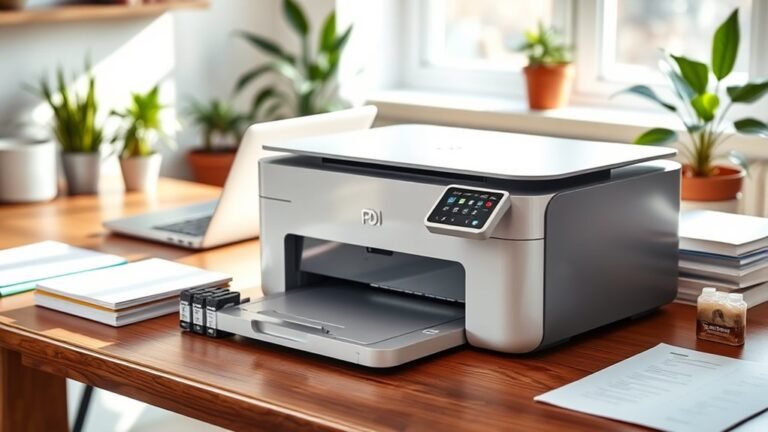
A 3D printer lets you turn digital ideas into real, precise objects quickly. It’s an amazing tool for bringing your creative projects to life with speed and accuracy. Whether you’re designing prototypes, custom tools, or replacement parts, 3D printing makes the process faster and more efficient.
You can create prototypes to test your designs fast, making tweaks without the usual delays. Plus, it’s perfect for making custom tools tailored exactly to your project’s needs. Need a replacement part? You don’t have to wait weeks anymore.
It also helps build detailed architectural models, lightweight drone parts, and even personalized medical devices. Whether you’re starting simple or aiming for complex applications, 3D printing adapts to your needs. Keep exploring, and you’ll see how it transforms every step of your creative process.
Key Takeaways
– 3D printers enable rapid prototyping, letting you quickly iterate designs and test how they work in just a few days.
This speeds up the whole development process and helps catch issues early on.
– They can produce custom tools, replacement parts, and small-run production components that fit your specific project needs perfectly.
So, whether it’s a one-off or a limited batch, 3D printing has you covered.
– 3D printing is great for educational projects too.
It turns digital models into real, tangible learning aids and creative objects that students can interact with.
– Using high-performance materials and patient-specific designs, 3D printing really shines in medical, dental, and durable tooling applications.
It’s all about making things fit better and last longer.
– Architectural and lightweight parts benefit from precise and cost-effective fabrication.
This helps speed up construction and the production of vehicle components without breaking the bank.
Starter Projects You Can Make With a 3D Printer
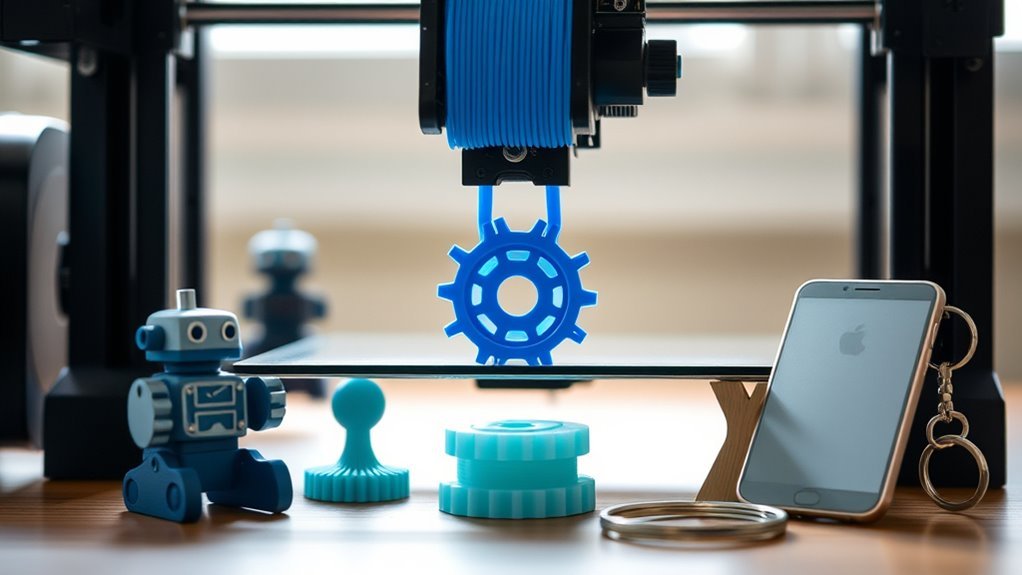
Plunge into 3D printing by tackling starter projects that help you master key skills like bed adhesion, overhangs, and dimensional accuracy. You can use 3D printing to create a smartphone stand in about 2–3 hours using PLA, which trains you on bed adhesion and overhangs while producing a practical accessory.
If you want something quicker, try printing cable guards with TPU in roughly an hour. They’re perfect for flexible protection and a great way to get comfortable with flexible materials.
To explore strength and functional tolerances, print a low-profile CNC clamp in PETG or PLA+—each takes about an hour. This project helps you understand how different materials behave under stress.
For a longer print time, a trading card deck box (8–12 hours) hones your warping control and precision for multi-part assemblies. It’s a bit more advanced but super rewarding once you nail it.
Calibration prints like the 3D Benchy or Cali Cat help you tune settings before diving into these projects. They’re like your practice rounds to make sure everything prints just right.
How 3D Printing Speeds Prototyping and Design Iteration
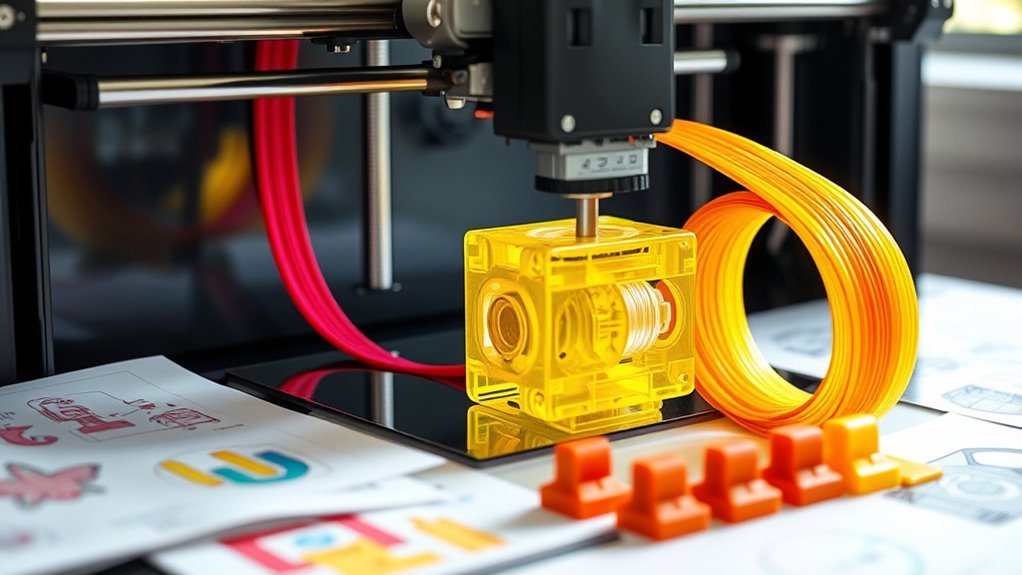
Accelerate your product development by using 3D printing to create functional prototypes within 24 to 48 hours. This rapid turnaround lets you test initial parts—like housings or jigs—quickly, cutting traditional lead times from weeks to days.
Printing prototypes in near-final materials such as carbon-fiber composites or TPU gives you realistic insights into form, fit, and function before costly tooling begins. Because each design tweak only costs a few dollars and hours, you can iterate multiple times in a single week, accelerating your design cycle.
In-house printing minimizes dependency on suppliers and slashes lead times, speeding your design-to-production process. Plus, scalable printing workflows help you shift smoothly from prototype to short-run production when your design is ready.
Custom 3D Printed Tools and Parts for Home and Hobbies
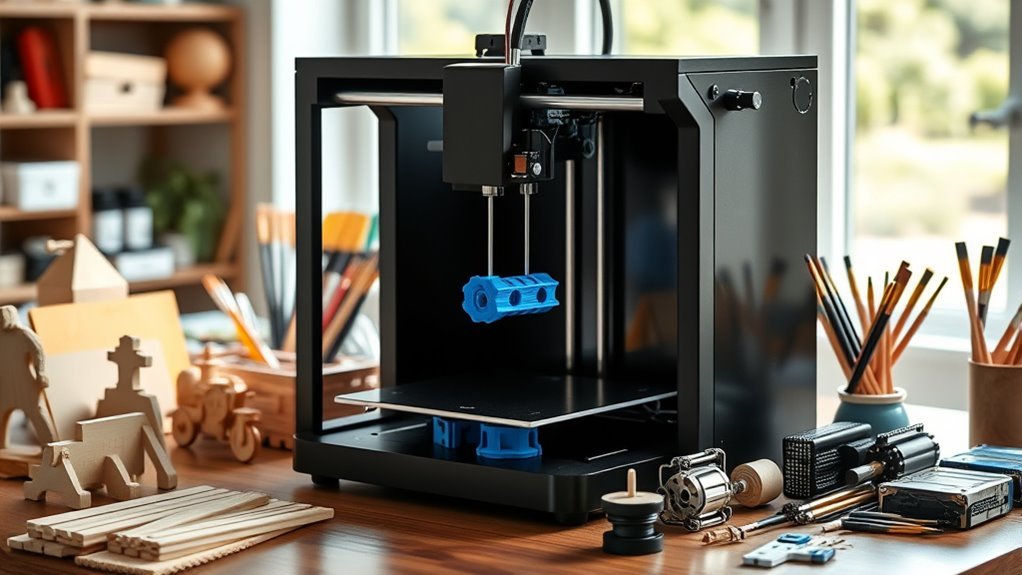
You can easily create custom tools and parts tailored to your home and hobbies with a 3D printer. Whether it’s a unique clamp, a replacement piece, or a specialized holder, printing lets you get exactly what you need without waiting or overspending.
This hands-on approach lets you tweak designs and produce functional items that fit perfectly into your projects. It’s a great way to make sure everything works just right for you.
Personalized Tool Creation
Creating personalized tools and replacement parts with a 3D printer saves you time and money by letting you produce exactly what you need. Using 3D printing, you can create new custom fixtures like CNC clamps, sanding block handles, or bespoke mounts tailored to your workflow.
You can quickly prototype different designs, ensuring perfect fit and ergonomics before finalizing your tool. Need a rare drawer handle or a missing LEGO piece? Just model it precisely and print it in durable materials like PETG or PLA.
Flexible filaments let you create adaptive tools such as stylus-holder wrist straps or cable guards that conform to your needs. Small runs of one-off shop fixtures become affordable and fast, eliminating the wait and cost of traditional machining or sourcing.
Hobby Part Customization
When you run into hard-to-find parts for your hobbies, 3D printing steps in to fill the gap. Using 3D printed parts modeled in SOLIDWORKS, you can recreate vintage handles, custom mounts, or unique fixtures with precise fit.
PLA material suits many hobby needs, balancing ease of printing and durability. You can prototype tools or adapt accessories rapidly, saving time and cost.
Flexible TPU and strong composites expand your options for functionality and strength.
| Part Type | Material Example | Use Case | Benefit |
|---|---|---|---|
| Replacement parts | PLA, PETG | Vintage handles, Lego pieces | Functional, exact fit |
| Custom tools | PLA, Nylon | Router jigs, sanding handles | Rapid prototyping |
| Adaptive accessories | TPU | Stylus holders, cable clips | Flexibility, comfort |
| Hobby mounts | Carbon fiber | Guitar mounts, drone parts | Lightweight, strong |
Personalized 3D Printed Medical and Dental Devices
3D printing is changing the game in personalized medical and dental care by making patient-specific prosthetics, orthotics, and dental devices faster and more accurate than ever. With additive manufacturing, you can turn scans into custom-fit parts, cutting lead times from weeks down to just days.
In dentistry, 3D printing helps pump out clear aligner molds, crowns, dentures, and surgical guides on a large scale. This makes orthodontic workflows much smoother and more efficient.
Hospitals also get in on the action by using flexible materials like TPU to quickly create low-cost, functional aids for patients who have limited dexterity. Plus, metal and carbon-fiber 3D printing allow for prototyping and producing surgical tools that stand up to real-world use.
All in all, these technologies deliver highly accurate, patient-specific solutions that boost comfort, fit, and treatment results — and they do it while saving time and cutting costs.
Lightweight 3D Printed Parts for Drones and Vehicles
Lightweight parts for drones and vehicles are transforming performance by combining strength with reduced mass. You can leverage 3D printing to produce complex, lattice-infused components like housings and brackets that integrate continuous carbon fiber, boosting stiffness without adding weight.
Using technologies such as HP Multi Jet Fusion, you’ll create aerodynamic, topology-optimized parts previously impossible to manufacture. This enhances flight endurance or fuel efficiency.
This method allows rapid iteration and on-demand production, cutting lead times from weeks to days and minimizing spare part inventories. Automotive and drone industries already use these techniques—Volkswagen prints gearshift knobs, and CUPRA Racing produces lightweight vents.
These examples show 3D printed parts can match traditional ones in function and form. By adopting continuous fiber reinforcement and HP Multi Jet Fusion, you’ll make your projects lighter, stronger, and more efficient.
3D Printing for Construction and Architectural Models
You can use 3D printing to create detailed architectural scale models quickly, capturing complex designs with ease. It also lets you produce prefabricated building parts, speeding up construction and cutting costs.
This technology helps you visualize and build smarter, faster. It’s a game-changer for architects and builders who want to bring their ideas to life without the usual delays.
Prefabricated Parts Production
When you need to produce housing components quickly and affordably, additive manufacturing offers a game-changing solution. Prefabricated parts production uses printing to create structural panels, architectural elements, and even entire tiny homes.
This method cuts lead times, slashes costs, and allows rapid customization. You can adapt designs to local climates and materials with ease.
Here’s what 3D printing brings to your project:
| Benefit | Application | Impact |
|---|---|---|
| Fast production | Tiny homes, panels | 24-48 hour build times |
| Cost-effective | Housing prototypes | Under $4,000 per unit |
| On-site or factory print | Large-format concrete | Reduced logistics |
| Custom design | Unique layouts, joinery | Tailored solutions |
| Sustainable materials | Local/recycled inputs | Eco-friendly builds |
With prefabricated parts production, you speed up construction without sacrificing quality or creativity. It’s a smart way to build better, faster, and greener.
Architectural Scale Models
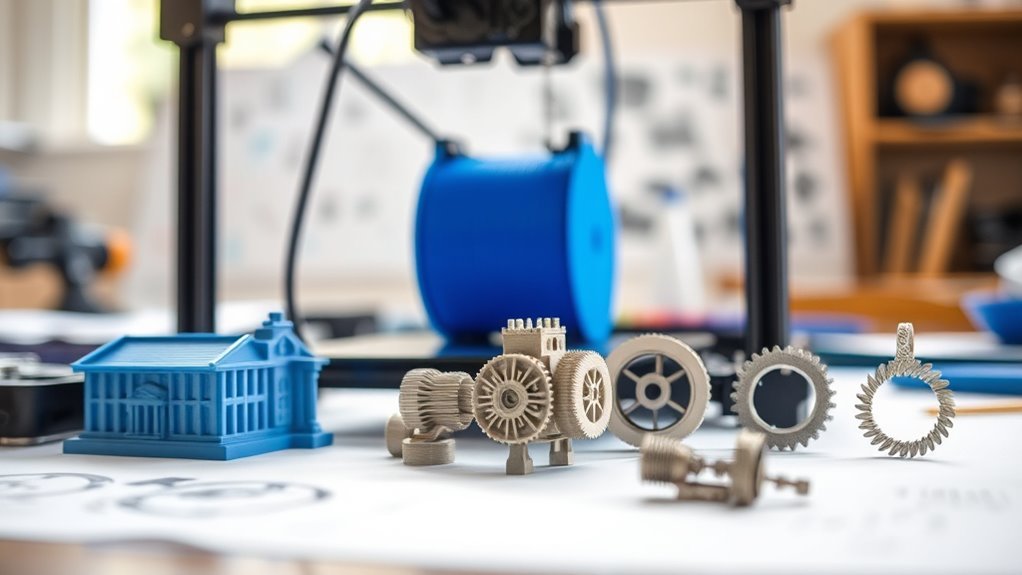
Prefabricated parts production showcases how 3D printing speeds up construction, but the technology’s advantages extend further into architectural scale models. With 3D printing, you can quickly turn complex CAD designs into detailed scale models—complete with intricate facades, organic shapes, and interior components—often within hours or days.
High-resolution printers like SLA or PolyJet deliver accurate color, texture, and transparency, which really enhances client presentations and design reviews. By integrating common CAD workflows, you can iterate layouts and create modular parts without having to switch software.
Plus, 3D printing supports rapid prototyping of custom fixtures and bespoke elements. This cuts lead times and lets you include unique architectural features.
Whether you’re working on tiny-home prototypes or precise site context models, 3D printing helps you visualize and refine your projects efficiently. It’s a game changer for bringing your ideas to life quickly and accurately.
3D Printing for Marine and Environmental Use
Harnessing 3D printing technology has revolutionized marine and environmental conservation by enabling the creation of complex coral reef structures that closely mimic natural formations. You can use a 3D printing service to produce these reef units, which promote faster recolonization by fish and invertebrates.
These printed structures are customizable, cost-effective, and deployable on-site, making them ideal for fragile ecosystems. Beyond reefs, 3D printing helps you create bespoke parts for underwater equipment and sensors. This means you can replace components on demand and reduce downtime during marine research.
Additive manufacturing also allows rapid prototyping of lightweight, hydrodynamic components that optimize marine vessel performance. By integrating 3D printing into your projects, you contribute to innovative solutions for environmental restoration and marine technology enhancement.
Creative and Educational 3D Printing Projects
Creative and educational 3D printing projects often inspire students and hobbyists to transform digital designs into tangible objects quickly. With 3D printing, you can create hands-on learning models like architectural scales, mechanical assemblies, and anatomical replicas. This way, CAD lessons turn into real-world items in just a few hours.
Beginner projects such as 3D Benchy and Cali Cat help you grasp calibration and bed adhesion. Plus, you get to produce prints in under two hours, which feels pretty rewarding.
You’ll also enjoy creative activities like custom toys and lithophanes. These projects foster design thinking and rapid iteration, making the whole process more fun and engaging.
By combining 3D printing with materials study, you can develop functional parts using PETG or TPU. This approach really enhances your product development skills.
Using free repositories and design tools, you’ll move from simple prints to complex, personalized designs. It’s a great way to build your CAD and fabrication expertise efficiently.
Frequently Asked Questions
How Important Are 3D Printers?
3D printers are essential because they speed up your design process, cut costs, and let you create custom, complex parts quickly. They empower you to innovate, prototype rapidly, and solve problems with on-demand, precise manufacturing.
Honestly, having one means you can bring ideas to life faster than ever. It’s like having a mini factory right on your desk, ready whenever inspiration strikes.
Is It Legal to 3D Print a House?
Yes, you can legally 3D print a house if you follow local building codes, obtain necessary permits, and meet safety standards.
Just remember, zoning rules and inspections still apply before you can legally live there.
What Files Do 3D Printers Use?
You might expect printers to use simple images, but 3D printers primarily use STL files, slicing them into G-code.
For richer detail, they handle OBJ or 3MF formats, supporting color, multiple materials, and complex metadata. It’s pretty neat how these formats let printers do way more than just basic shapes.
What Can I Make With a 3D Printer?
You can make custom household items, rapid prototypes, medical devices, architectural models, and creative or educational tools with a 3D printer. It lets you quickly create functional, detailed, and personalized parts for nearly any project.
Pretty cool, right? Whether you’re fixing something around the house or working on a school project, a 3D printer can come in handy. It’s like having a mini factory right at your fingertips!
Conclusion
With 3D printing, you can bring your ideas to life faster and more affordably than ever before. Did you know the 3D printing market is expected to grow by over 23% annually? That means more innovation and accessibility for your projects.
Whether you’re prototyping, customizing tools, or creating educational models, 3D printing makes it easier to get exactly what you need. It’s a game-changer for anyone looking to experiment and create with less hassle.
Embrace this technology to unleash endless possibilities and make your creative visions a reality. From functional prototypes to unique designs, 3D printing opens doors to new project opportunities. Your next great project is just a print away—so why wait? Dive into 3D printing today and watch your ideas take shape like never before!