Is 3D Printer Filament Food Safe?
You can’t just assume 3D printer filament is food safe simply because it says so on the label. Food safety depends on certified compliance with regulations like FDA 21 CFR 177 or EU 10/2011.
Plus, print quality matters a lot—avoiding porosity and contamination is key.
Materials like PLA are only good for short-term dry food use.
On the other hand, PETG or PEEK suit tougher needs and longer contact times.
Choosing the right filament and applying proper post-processing steps are essential.
There’s definitely more to evaluate when it comes to safe food contact with 3D printed parts.
So, don’t skip your homework!
Key Takeaways
- “Food safe” labels on 3D printer filament don’t always guarantee safety unless there’s verified regulatory compliance documentation backing it up.
- Materials like PLA aren’t inherently food safe. On the other hand, PETG and certain certified grades have a better chance of being safe for food contact.
- When you use FDM printing, the surfaces tend to be porous. This means they can trap contaminants, which raises health risks if the prints aren’t properly finished or sealed.
- To meet regulatory standards, you need to follow FDA 21 CFR 177 or EU 10/2011 guidelines. That also means getting declarations from suppliers and conducting migration tests.
- To keep risks low, it’s best to use dedicated clean printers and stainless steel nozzles. Plus, optimizing print settings and doing post-processing to smooth surfaces helps a lot.
What “Food Safe” Means for 3D Printer Filaments
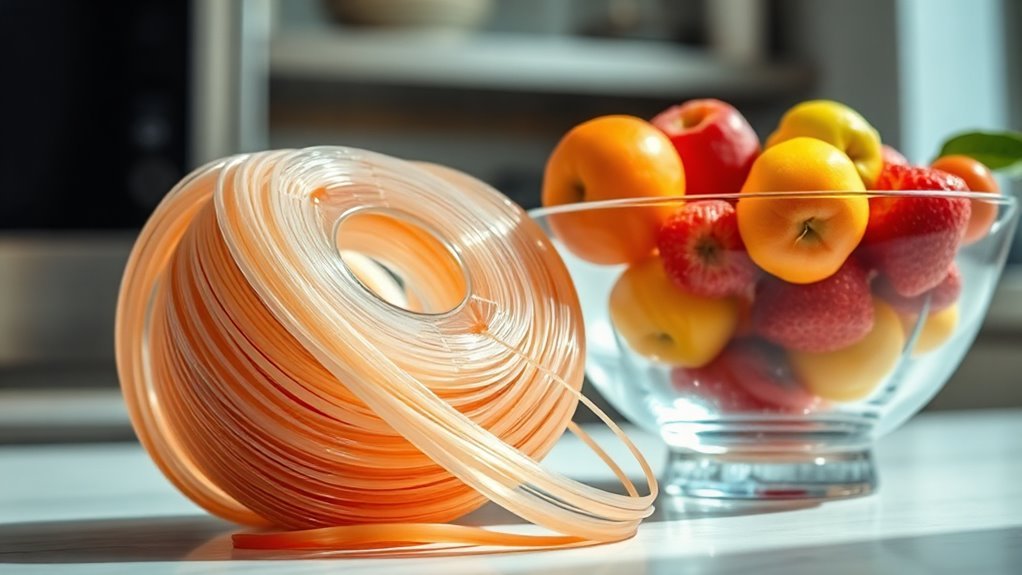
While you might assume that a filament labeled “food safe” is automatically safe for all food contact, the reality is more complex. Food safety with 3D printer filaments hinges on whether the material—and the finished part—won’t release harmful substances or alter food taste.
You need to perform due diligence by checking food contact compliance, which involves regulatory documentation like FDA 21 CFR 177 or EU 10/2011 declarations. Simply being “food grade” isn’t enough, since additives, pigments, and printing conditions affect safety.
Plus, surface porosity in FDM prints can trap contaminants, so finish quality impacts whether the part is truly food safe. Ultimately, verifying compliance as used—considering time, temperature, and food type—is necessary to ensure safe food contact with your 3D-printed items.
Food Safe 3D Printing Filament Options and Uses
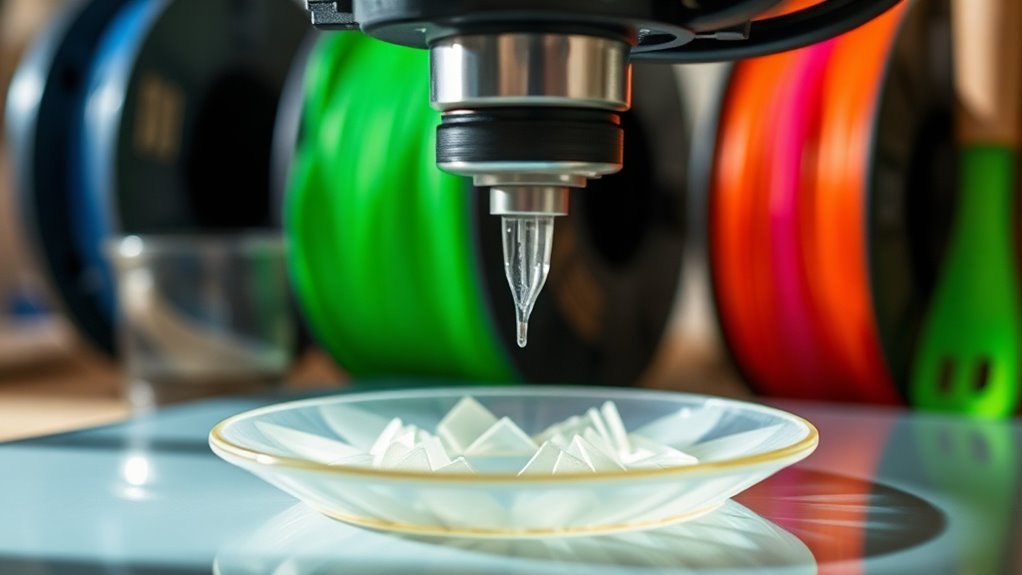
If you want to create food-safe 3D printed items, you need to carefully choose your filament and consider how the finished part will perform. PLA is popular and easy to print but isn’t inherently food safe due to additives and surface porosity. So, it’s best for short-term use with dry food like cookie cutters.
PETG often offers stronger durability and better food-safe potential, but you must confirm additive compliance. It’s usually a good step up if you want something a bit more reliable for food contact.
For more demanding uses involving different food types or higher resistance, materials like PEEK or PEI/ULTEM provide certified food-safe grades. Just keep in mind these require advanced printing skills and equipment.
How 3D Printing Affects Food Safety of Printed Parts
3D printing can introduce unique challenges to food safety because the layered construction creates tiny grooves and voids that trap moisture and food particles. These hidden spots increase the risk of contamination and biofilm growth, especially over long term use.
Even if you choose food-grade filament, the final printed part may still leach substances into food depending on contact time, temperature, and food type. So, it’s not just about the material you start with.
To keep your 3D-printed parts safe for food contact, consider a few things:
- Surface smoothness and non-absorbency to reduce residue buildup
- Minimizing porosity through optimized print settings
- Thorough post-processing and sealing to enhance cleanability
- Regular inspection for stains, odors, or wear that compromise hygiene
Taking these steps can really help make sure your printed parts stay safe and clean for use with food.
Food Safety Regulations for 3D Printing Filaments
Because food safety regulations vary by region, you need to understand the specific rules that apply when selecting filaments for printing food-contact items.
In the US, the FDA regulates materials under the FD&C Act, requiring compliance through pathways like 21 CFR Part 177 polymers, GRAS status, or Food Contact Substance notifications.
In the EU, plastics must meet Regulation (EC) No 1935/2004 and specifically Commission Regulation (EU) No 10/2011, which sets migration limits and requires supplier Declarations of Conformity.
Keep in mind, regulatory approval focuses on the filament resin itself, but 3D printing’s layer porosity and surface cleanliness also affect safety.
How to Make 3D Printed Parts Safe for Food Contact
When you want to make certain your printed parts are safe for food contact, start by selecting filaments with verified compliance to relevant food safety standards. Don’t just trust “food-grade” labels—confirm the certification covers the specific additives and colors you use.
Next, focus on printing settings that minimize porosity and layer lines, since tiny gaps can trap bacteria and moisture. After printing, seal the surface to create a smooth, non-absorbent finish that’s easy to clean.
Also, keep your printer clean and consider stainless-steel nozzles to avoid contamination from residues. It’s all about reducing the chances for anything unwanted to stick around.
- Use filaments with FDA or EU food-contact certifications
- Tune print settings for dense, low-porosity parts
- Seal surfaces to prevent bacterial buildup
- Maintain a dedicated, clean printing environment
Risks of Using Food Safe 3D Printing Filaments
Choosing certified filaments and optimizing your print settings helps, but you still face risks using so-called food safe 3D printing filaments. Layer lines, microscopic voids, and surface porosity can trap food and moisture. This increases the risk of contamination.
Additives like colorants may not be food safe. Plus, chemical migration rises with harsher foods, longer contact, and heat. Printing contaminants and residues add extra hazards you need to watch out for.
You often need physical and chemical mitigation to reduce these risks. This means fewer voids in your prints and using food-contact coatings to make the surface safer.
| Risk Factor | Cause | Impact |
|---|---|---|
| Porosity | Layer lines, voids | Traps bacteria, moisture |
| Additives | Colorants, stabilizers | Possible toxic migration |
| Use conditions | Heat, acidic/fatty foods | Increased chemical migration |
| Printing residues | Non-dedicated equipment | Contamination |
| Surface treatment | Lack of coatings | Higher absorption/leaching |
Using Food Safe 3D Printing Filaments for Kitchen Items
When choosing filaments for kitchen items, you’ll want to pick materials like PETG or specific PEI grades that meet food safety standards. These materials are designed to handle food contact better than others.
Keep in mind, printing settings and careful post-processing—like smoothing and coating—are key to reducing porosity and contamination risks. Taking these steps helps make your finished prints safer for food contact.
Food Safe Filament Types
Which 3D printer filaments can you confidently use for kitchen items? The answer depends on both the filament’s raw formulation and how you print it. Additives and print porosity really affect food safety, so keep that in mind.
Common options with higher compatibility include:
- PETG: Popular for its strength and chemical resistance, but make sure to check for food-grade certification.
- Nylon (PA11/PA12): Durable and heat resistant, yet it requires careful surface finishing to be safe.
- PEEK: High-performance and often food-safe, though it’s expensive and can be tricky to print.
- PEI (ULTEM): Strong and chemical-resistant, it’s actually used in industrial food-contact applications.
Printing And Post-Processing
Printing kitchen items with food-safe filaments demands more than just selecting the right material—you’ve got to optimize your print settings and post-process carefully. Since FDM prints have layer lines and microscopic voids that trap food and increase contamination risk, tune your infill and shell settings to minimize gaps.
Use a clean or dedicated printer and food-contact compatible hardware, like stainless steel nozzles, to avoid contamination from previous prints. After printing, clean your items thoroughly with mild soap and water, avoiding abrasives and excessive heat that roughen surfaces.
For improved hygiene and reduced chemical migration, apply a food-safe sealing coating such as epoxy or silicone. Remember, single-use or short-contact items are safer than long-term storage or hot/liquid contact unless you have certified sealing methods.
How to Choose the Right Food Safe 3D Printing Filament
Choosing the right food safe 3D printing filament starts with verifying its compliance with recognized food-contact regulations like FDA 21 CFR 177 or EU 10/2011. Don’t rely on vague “food safe” labels without exact documentation.
You should also consider the intended use and printing conditions to minimize health risks. Here’s how to choose wisely:
- Confirm the filament has proper food-contact compliance certificates.
- Select materials based on contact type and conditions (PLA for dry, short-term; PEEK or PEI for heat/chemical resistance).
- Optimize print settings to reduce porosity and apply a food-safe coating when needed.
- Use a dedicated, clean printer with a stainless steel nozzle to avoid contamination.
Frequently Asked Questions
Is All PLA Filament Food Safe?
No, not all PLA filament is food safe. You’ll want to check for specific food-safe certifications and avoid additives.
Even then, printing methods can create gaps that trap bacteria, so handle your prints carefully for food use. It’s always better to be cautious when using 3D printed items with food.
Is TPU Dishwasher Safe?
Just like a shield that falters under fire, TPU isn’t automatically dishwasher safe. You’ll need to evaluate its heat and detergent resistance first.
Also, make sure to polish its surface and confirm it’s certified for durability. Only then should you trust it with your dishwasher cycles.
Are US Stores Selling 3d-Printed Meat?
No, US stores aren’t currently selling 3D-printed meat commercially. You might find lab-grown meat startups around, but widespread retail availability isn’t here yet.
There are still regulatory approvals to get through, and scaling challenges that hold back mass-market 3D-printed meat sales. So, it’s not quite ready for your local grocery store shelves.
Are There Food Safe 3D Printers?
You want safety, you want cleanliness, you want reliability—but no, there aren’t truly food-safe 3D printers.
You have to control contamination, use specific materials, and clean thoroughly to get close to food-safe printing conditions yourself.
It’s not as simple as just hitting “print” and trusting the results. You need to be careful and hands-on with the process.
Conclusion
So, you want to 3D print your next gourmet meal plate? Just remember, “food safe” filaments aren’t magic wands—they don’t turn your printer into a hygiene inspector. Unless you enjoy a side of bacteria with your pasta, follow safety tips and regulations.
Otherwise, your “culinary masterpiece” might double as a petri dish. Choose wisely, clean thoroughly, and maybe keep that famous spaghetti sauce off your latest 3D print—unless you’re into adventurous dining!
When it comes to 3D printer filament food safety, it’s important to understand that not all filaments labeled “food safe” are truly safe for direct food contact. The printing process can leave microscopic gaps and layers that harbor bacteria. Plus, post-processing and proper cleaning are crucial to making your 3D printed item as safe as possible.
So, if you’re planning to use 3D printed objects for food purposes, always check the filament’s certification, clean your prints thoroughly, and consider applying a food-safe coating. In short, 3D printer filament food safety requires more than just picking the right material—it’s about careful handling and maintenance to keep your culinary creations safe and hygienic.