How Much Is a 3D Printer?
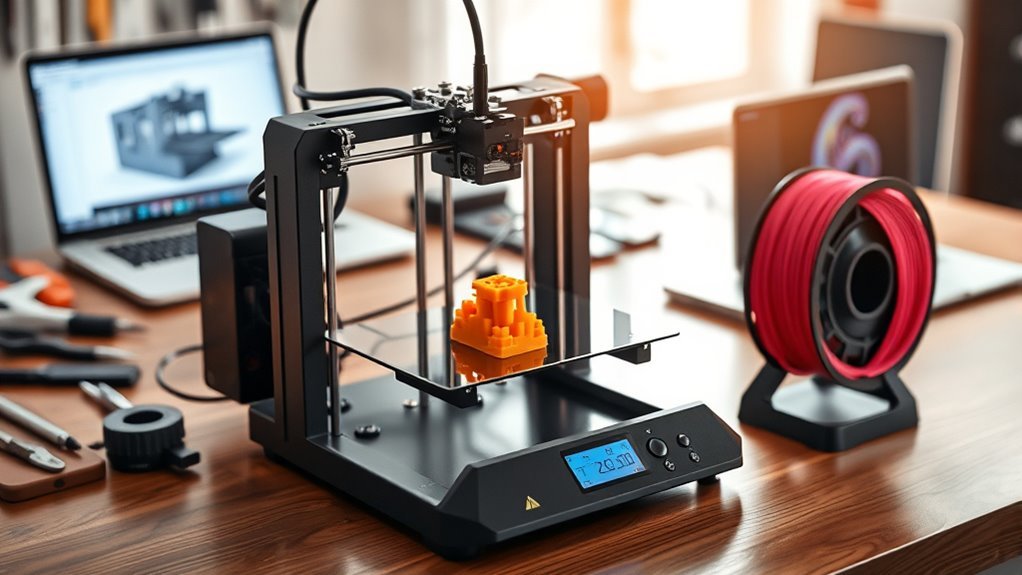
You’ll typically spend between $100 and over $2,000 on a 3D printer, depending on what you want. If you’re just starting out or need something basic, FDM models usually start around $100–$300. These are great for simple projects and learning the ropes.
Resin printers, on the other hand, offer much finer detail and usually cost between $200 and well above $1,000. The price goes up when you look for larger build volumes or advanced features like dual extrusion.
High-temp filament support and multicolor setups will also add to the overall cost. Curious how these different factors shape prices or want to find the best deals? Keep reading for deeper insights—you’ll get a better idea of what fits your budget and needs.
Key Takeaways
- Basic FDM 3D printers typically cost between $100 and $300. They’re perfect for beginners and great for making simple functional parts.
- Mid-range printers usually range from $300 to $700. These often come with larger build volumes and handy features like auto-leveling.
- Resin printers start around $200 but can go over $1,500. The higher end models offer incredible detail and use advanced LCD or DLP technology.
- Advanced 3D printers with things like dual extrusion, heated chambers, and multi-material support usually cost $1,000 or more.
- Keep in mind, there are ongoing expenses too. Filament or resin, maintenance, and other consumables all add to the total cost beyond just buying the printer.
How to Choose a 3D Printer That Fits Your Budget and Needs
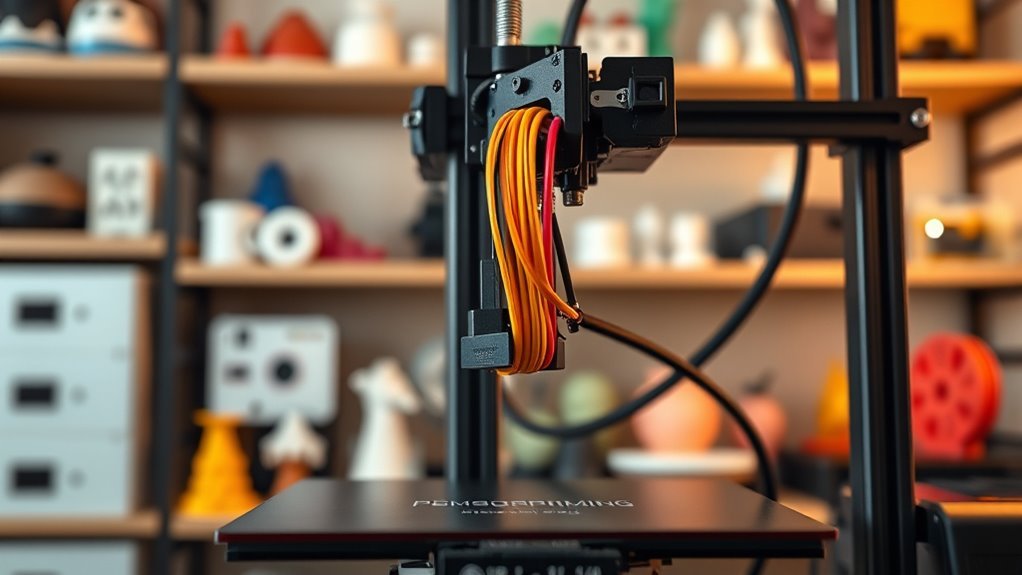
When choosing a 3D printer that fits your budget and needs, start by picking the right technology: FDM printers are great for functional parts and typically cost between $200 and $1,000. Resin printers offer higher detail starting around $200 but increase in price with resolution and size.
Next, match the build volume to your projects; desktop FDM or resin printers usually offer 120–300 mm cubed. Larger FDM machines cost more, so keep that in mind.
Consider material expenses—PLA filament runs about $20–$30/kg, whereas resin costs $20–$100 per liter. You’ll also want to factor in maintenance and consumables like nozzles or FEP sheets.
Finally, prioritize features like auto bed leveling or heated chambers if you want smoother prints. Just remember, these add to the price.
Balancing these factors helps you pick the best FDM or resin printer for your needs. It’s all about finding what works for your projects and budget!
How Different 3D Printer Types Affect Price
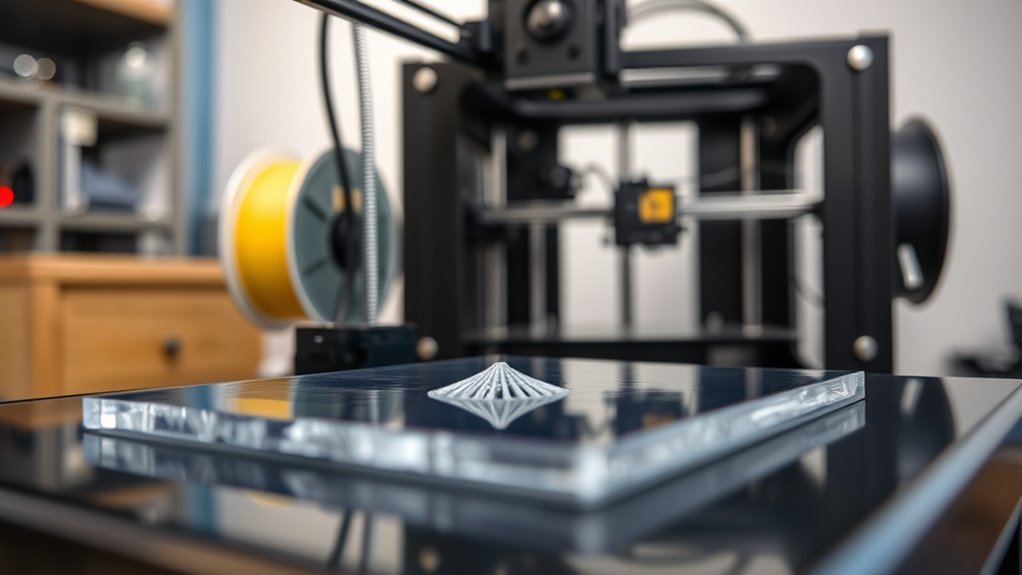
Choosing the right type of 3D printer plays a big role in your overall costs. FDM 3D printers are the most affordable, with basic models starting around $100–$300. They’re perfect if you’re on a tight budget.
Resin printers, on the other hand, tend to be pricier due to their precision optics. Prices typically start near $200 and can climb to $1,500 or more for higher-end models.
Here’s what impacts price differences:
- FDM printers have simpler mechanics and cheaper filament.
- Resin printers require costly LCD/DLP/SLA components.
- Advanced features like dual extrusion or heated chambers raise costs.
- Ongoing expenses include filament/resin, maintenance, and replacement parts.
Knowing these factors will help you pick a printer that fits your budget without any surprises.
How Build Volume Influences 3D Printer Costs
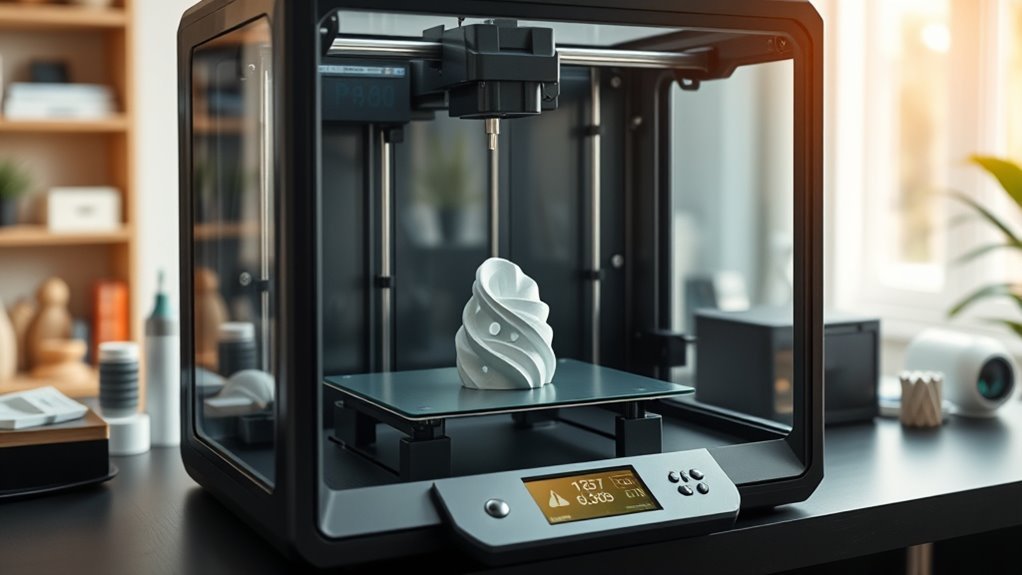
Build volume plays a crucial role in determining a 3D printer’s price because larger print areas demand sturdier frames, stronger motion systems, and bigger heated beds. When you choose a printer with a bigger build volume, expect a higher printer price since these components must handle increased size and weight while maintaining precision.
Small desktop printers with modest build volumes usually cost between $100 and $300 due to simpler parts. Mid-range models with larger volumes, like the Neptune 4 Plus or Bambu Lab A1, fall between $300 and $700, thanks to reinforced structures and upgraded thermal management.
Keep in mind, as build volume grows, so do ancillary expenses like material usage, energy, and maintenance. All these add to the total cost of ownership beyond the initial printer price.
Which Consumer-Grade Materials and Features Affect 3D Printer Prices
You’ll find that the types of materials a 3D printer can handle substantially affect its price, especially if it supports high-temperature or specialty filaments.
Adding multi-color or multi-material printing capabilities also raises costs due to increased mechanical complexity. Plus, larger build volumes require sturdier designs and bigger heated beds, which typically push the price higher.
Material Compatibility Impact
Understanding how material compatibility influences 3D printer prices can help you find a machine that matches your project needs and budget. Printers supporting advanced filament or resin types often require specialized hardware, which raises costs.
For example, handling high-temp filaments like Nylon or ABS means you’ll need a heated bed and hotends reaching 300–320°C. This usually pushes prices beyond basic PLA-only models. Resin printers with high-resolution LCDs and optics add to the price too.
Key factors affecting material compatibility costs include heated beds and enclosed chambers for high-temp filaments, plus hardened steel or ruby nozzles for abrasive filaments.
You’ll also want to consider advanced optics and consumables for resin printing, along with electronics and sensors for features like auto bed leveling and filament feeding.
Choosing a printer with the right material support guarantees you don’t overspend or limit your projects. It’s all about matching the machine to what you really need.
Multi-Color Printing Costs
Adding multi-color capabilities to a 3D printer often means paying more upfront and ongoing. For example, Bambu Lab’s A1 base model costs around $399, but adding its color accessory or opting for the Combo with dual extrusion pushes the price closer to $559 or higher.
Dual extrusion setups and filament-swapping systems add mechanical complexity, requiring extra motors and upgraded electronics. This generally raises prices from mid-range ($300) into the $500–$1,000 range.
You’ll also face increased material expenses since multi-color printing demands multiple filament spools, each costing around €20–€30 per kilogram. Plus, you’ll encounter extra filament waste during color shifts and higher maintenance for nozzle changes and calibration.
All these factors add up and increase the total cost of ownership when investing in multi-color 3D printing. So, it’s definitely worth considering these expenses before diving in.
Build Volume Influence
When choosing a 3D printer, the build volume plays a major role in determining its price. Large-format printers with build volumes around 300×300×400 mm or bigger need bigger frames, stronger motion systems, and high-spec heated beds. This pushes prices from $500 to over $2,000.
Smaller desktop models start around $200–$300. Besides size, certain features and materials also influence cost.
High-temperature materials require enclosed, heated chambers and hot ends rated up to 320°C. This raises prices to the prosumer tier.
Dual extrusion or multi-material setups add mechanical complexity, increasing costs by several hundred dollars.
Resin printers with high-resolution LCDs and automation features cost more than basic models.
Extras like auto bed leveling and Wi-Fi control can push prices up markedly regardless of build volume.
Why Multicolor and Dual-Extruder 3D Printers Cost More
You’ll notice multicolor and dual-extruder 3D printers cost more because they have extra parts like additional hotends and motors that add mechanical complexity. Managing multiple materials also means dealing with more filament waste and higher consumable costs.
These factors combined push both the upfront price and ongoing expenses higher than single-extruder models. So, while they offer more capabilities, you’re also paying for that added convenience and complexity.
Complex Mechanisms Increase Cost
Because multicolor and dual-extruder 3D printers require extra motors, drives, and specialized components like a second hotend or color-mixing module, their manufacturing costs climb noticeably. You’ll find these complex mechanisms push prices into the $400–$1,000+ midrange, compared to simpler single-extruder models.
Beyond hardware, the added electronics and firmware to manage multiple extruders increase development costs. Multi-material prints demand precise motion control and cooling to prevent issues like oozing or cross-contamination. That means better components and engineering.
Consider these factors driving up costs:
- Extra stepper drivers and hardened nozzles
- Advanced firmware and sensor integration
- Cooling systems and enclosures for temperature control
- Purge towers or waste filament management
Understanding this complexity helps you grasp why dual-extruder setups cost more upfront. It’s just the nature of handling more moving parts and smarter tech.
Material and Waste Factors
Although multicolor and dual-extruder 3D printers offer greater creative flexibility, they also lead to higher material consumption and waste. With multi-filament prints, you’ll use roughly 10–30% more filament due to purge towers and color shifts.
Dual-extruder printers mean extra maintenance costs since each nozzle needs separate care and occasional replacement. Plus, if you use soluble supports like PVA for complex or multicolor prints, expect added material expenses.
Multicolor printing raises the risk of failed prints and requires more tuning, increasing waste and labor overhead. On top of that, printers with dual-extruder setups have more hardware, which drives up upfront costs and depreciation.
All of this boosts the hourly machine cost for every print you make. So, while the creativity is great, just be ready for the extra costs and effort involved.
Comparing Price Ranges for Resin vs. Filament 3D Printers
When deciding between resin and filament 3D printers, it helps to break down their price ranges and what you get for your money. Resin printers, including LCD and DLP types, start around $200–$300 and can exceed $10,000. Filament (FDM) printers range from about $200 to over $1,000.
Both types offer solid options between $200 and $700, which is ideal for most hobbyists. Resin excels in fine layer height and detail, whereas FDM printers focus on larger build volumes and versatility.
Resin printers cost more because of the optics and high-resolution LCD/DLP panels. On the other hand, filament printers get their price from multi-material extrusion and heated chambers.
Also, resin consumables like resin and FEP add ongoing expenses. Filament users pay for PLA and specialty filaments, plus maintenance.
Understanding these differences really helps you choose the right printer within your budget.
Where to Find the Best 3D Printer Deals
To score the best 3D printer deals, you’ll want to keep an eye on major sales and manufacturer promotions, where prices can drop dramatically—like the Anycubic Kobra X Multicolor slashed from $459 to $299.
Watch for major sales and promotions to find steep discounts on 3D printers like the Anycubic Kobra X.
Check refreshed editorial roundups and lab-tested reviews that often highlight new launches such as Bambu Lab’s A1, which frequently comes with bundle discounts.
Don’t overlook certified-refurbished listings on MatterHackers or brand stores; these can offer significant savings on mid-range and high-end models.
Timing your purchase around big sale events or when models like the Creality Ender-3 V3 are discontinued can also yield lower prices.
Focus on printers priced between $200 and $700 to find the best value, especially when bundling options improve your overall deal.
Comparing Entry-Level and Advanced 3D Printer Prices
If you’re just starting out, entry-level FDM printers like the Creality Ender 3 series or Kingroon KP3S offer a budget-friendly gateway, typically costing between $100 and $300. These models, including the Creality Ender 3 V, are perfect for beginners.
As you upgrade, mid-range machines like the Bambu Lab P1P push prices to $300–$1,000, providing features like auto-bed leveling and larger build volumes. Advanced printers, starting around $1,000, deliver industrial speeds, dual extrusion, and enclosed heated chambers.
Consider these factors when comparing prices:
- Entry-level printers focus on affordability and simplicity.
- Mid-range options add reliability and user-friendly features.
- Premium models offer multi-material printing and durability.
- Total cost includes consumables like PLA filament and resin.
Balancing your budget with desired features is key to choosing the right printer. It’s all about finding what fits your needs without breaking the bank.
Frequently Asked Questions
Is a 3D Printer Expensive?
A 3D printer isn’t necessarily expensive. You can find reliable entry-level models under $500.
Keep in mind, ongoing costs for materials and maintenance add up. But starting out doesn’t require a huge investment.
Can I 3D Print a Tooth?
Yes, you can 3D print a tooth using dental resin printers.
But you’ll need biocompatible materials, proper post-processing, and certified equipment to guarantee accuracy and safety. This is especially important for permanent restorations like crowns or bridges.
What Is the Easiest 3D Printer to Use?
The easiest 3D printer to use is the Bambu Lab A1 mini or Flashforge Adventurer 5M. They offer simple setup, one-button workflows, Wi-Fi, and guided software, making your first prints smooth and hassle-free.
These machines really take the stress out of getting started. Plus, the guided software walks you through each step, so you’re never left guessing. It’s perfect if you want something straightforward and reliable right off the bat.
What Software Do You Need for 3D Printing?
You need slicer software like Cura or PrusaSlicer to prepare your models for printing. For resin printers, use resin slicers bundled with the machine.
CAD tools like Blender help create models, while mesh repair tools fix errors. These tools make sure your prints come out just right.
Conclusion
Choosing a 3D printer that fits your budget and needs means balancing build volume, materials, and features. Whether you’re drawn to dazzling dual-extruders or simple single-color setups, understanding the price puzzle helps you pick perfectly.
From resin to filament, find fantastic features without breaking the bank. Plunge into deals, discover distinctions, and decide with confidence—your creative canvas is just a careful choice away.
Start sculpting your success with smart spending today! Remember, the right 3D printer is all about matching your goals with the best value. So, whether you want detailed resin prints or versatile filament options, knowing how much a 3D printer costs helps you make a confident investment. Be savvy, explore your options, and turn your creative ideas into reality without overspending.