3 Key Factors That Determine How Much Ink Does Cost for a Printer
You pay a premium for printer ink mainly because of three key factors that influence how much ink does cost for a printer.
First, manufacturers rely on complex technology and precision materials to create ink that works perfectly with your device.
Second, the specialized chemical formulations and expensive raw materials used in ink production push up the costs.
On top of that, printer companies use razor-and-blade business models. They back this approach with patents and digital rights management (DRM), which keeps prices high and limits your cartridge choices.
If you want to understand how these factors come together to affect your ink costs, there’s definitely more to uncover.
Key Takeaways
- Ink cost is driven by high markup rates, often 200–400%, on cartridges sold below printer cost.
- Specialized ink formulations with costly raw materials and additives increase production expenses.
- Printer manufacturers use embedded chips and DRM to block third-party cartridges, maintaining high prices.
- Page yield and per-page cost claims influence perceived ink affordability but vary by print quality and volume.
- Subscription services and firmware locks create ongoing revenue streams, impacting overall ink cost.
Why Does Printer Ink Cost So Much?
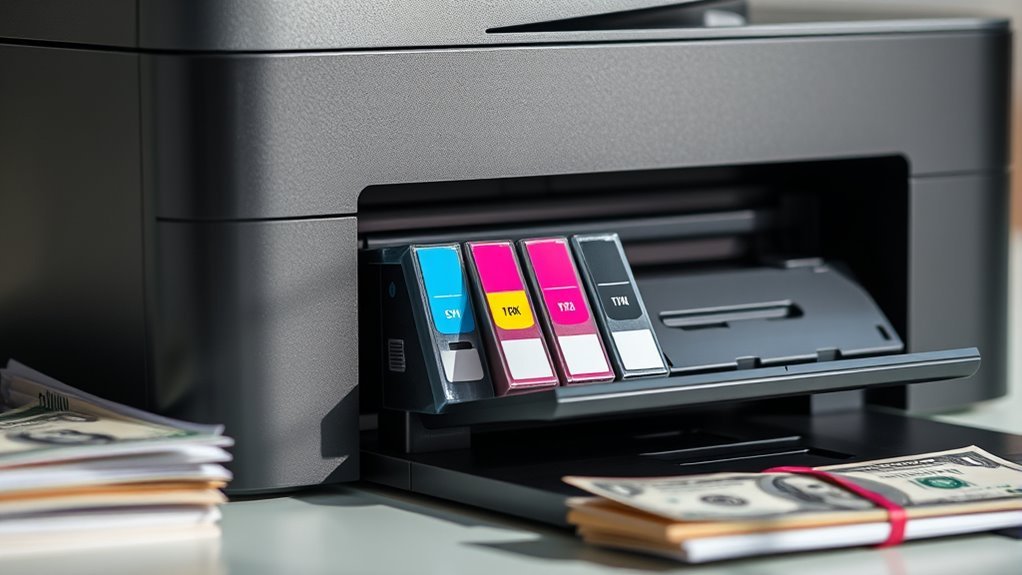
Although printers often come at low prices, you pay dearly for ink cartridges because manufacturers rely on the razor-and-blade model. They sell printers at or below cost and make most of their profit from expensive, high-margin ink.
Printers are cheap, but manufacturers profit heavily from costly, high-margin ink cartridges.
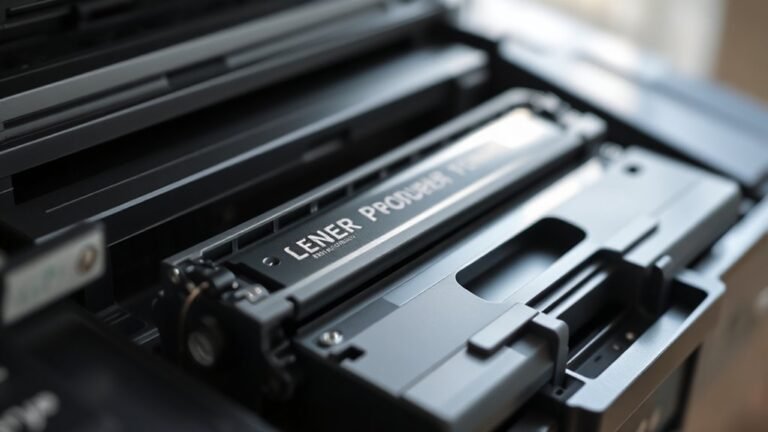
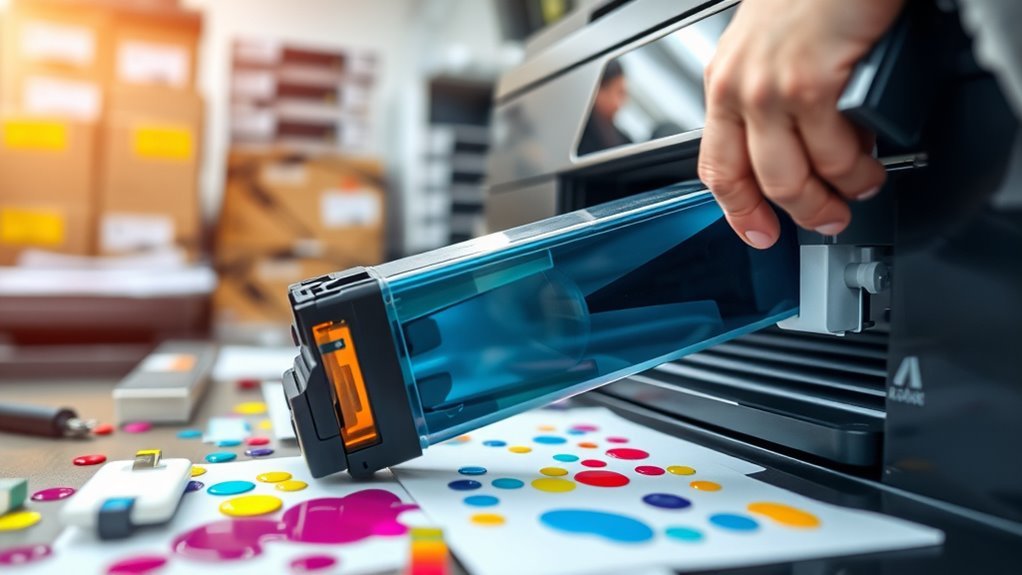
Ink cartridges contain specialized formulations and micro-nozzles, plus embedded chips that raise production costs and prevent cheap refills. These features allow manufacturers to charge premium prices.
When you print a lot, those per-page ink costs add up quickly—like a $22 cartridge yielding about 518 pages, costing roughly 4.2 cents per page. Color and photo-quality inks use pricier pigments and multiple cartridges, pushing costs even higher, often nearing 10 cents per page.
Subscription services and DRM locks further keep cartridge prices elevated. This ensures you keep paying for ink long after buying the printer.
How Manufacturing and Materials Increase Ink Costs
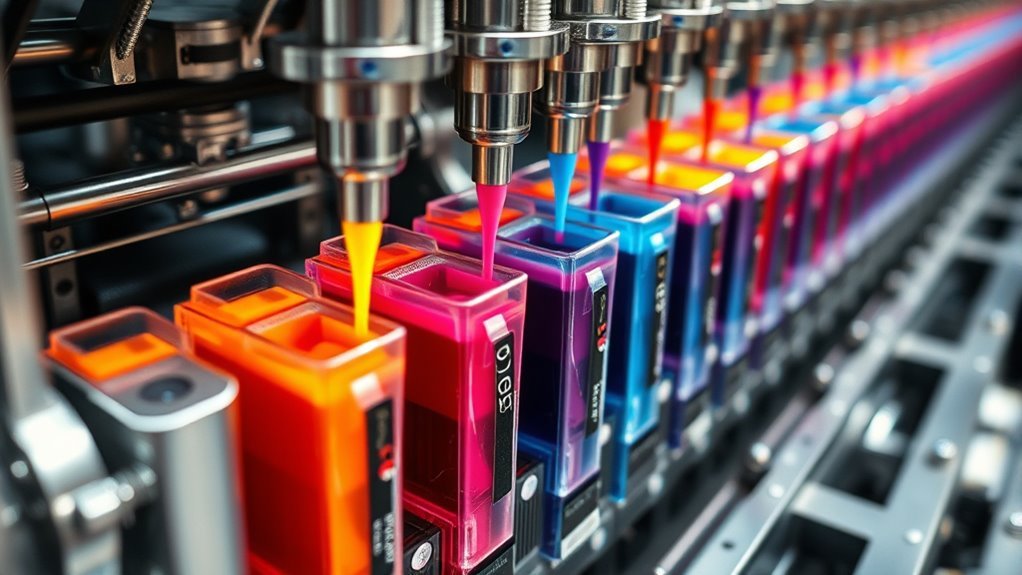
The high prices you pay for printer ink don’t just come from business models and market strategies—they also reflect the complex manufacturing process and specialized materials involved. When ink is engineered for tiny droplet sizes and consistent viscosity, strict manufacturing tolerances and purity standards come into play.
These guarantee that each droplet delivers sharp, vibrant prints without clogging nozzles. High-quality pigment-based inks use costly raw materials and precise chemical formulations, which add to the expense.
Specialized additives like biocides and pH buffers further protect ink performance and shelf life but increase production costs. Plus, these proprietary formulations are made in low volumes, driving prices higher.
All these factors combine, making the ink in your cartridge far more expensive to produce than basic dye inks. And that directly impacts what you pay at the store.
Why Printer Business Models and Intellectual Property Keep Prices High
Because printer manufacturers often sell their hardware at little or no profit, they rely heavily on ink cartridge sales to make money. They use a razor-and-blade business model, pricing printers low while marking up ink cartridges by 200–400%.
To protect this revenue, companies embed DRM and firmware restrictions that block third-party or refilled cartridges, maintaining monopoly pricing. Intellectual property protections, including patents on cartridge design and printhead technology, prevent competitors from offering cheaper alternatives.
Subscription plans lock you into ongoing costs, increasing your lifetime expense. Manufacturers also promote page yields to make per-page costs seem low while keeping cartridge prices high.
When you review their Privacy Policy, you might notice how data helps enforce these restrictions. This combination makes certain ink prices stay high, protecting their profits over the long term.
Frequently Asked Questions
How Do I Check How Much Ink My HP Printer Has?
You can check your HP printer’s ink levels directly on its control panel or via the HP Smart app on your computer or smartphone. Just open the app or printer settings to see current ink percentages and alerts.
It’s pretty straightforward and helps you know when it’s time to replace cartridges. So, no surprises when your ink runs low!
Why Is It Cheaper to Buy a Printer Than Ink?
It’s cheaper to buy a printer than ink because manufacturers sell printers at low prices to hook you. Then, they charge premium rates for ink cartridges, which are proprietary.
This limits cheaper alternatives and locks you into costly replacements. So, while the printer seems like a good deal upfront, the ongoing ink costs add up quickly.
How Much Ink Is 30 Pages?
Printing 30 pages uses about 5.8% of a black ink cartridge or roughly 10% of a color cartridge set.
That means ink costs around $1.26 for black or $6.00 for color, depending on your printer type.
Is It Okay to Use an off Brand of Ink for My HP Printer?
You can use off-brand ink for your HP printer, but be aware it might void your warranty, cause print quality issues, or trigger error messages.
It’s a good idea to choose reputable brands to minimize risks and keep things running smoothly. That way, you get better reliability without too many headaches.
Conclusion
Now that you know why printer ink costs so much, you can better understand what you’re paying for. For example, HP’s business model often ties you to their expensive cartridges, making it tough to find cheaper alternatives.
Manufacturing quality ink with precise materials also adds to the price. These factors combined drive the overall cost of printer ink higher than many expect.
By recognizing these key factors, you’ll be more prepared to make smart choices. Whether it’s investing in a high-yield cartridge or exploring third-party options that fit your budget, understanding the cost drivers can save you money. So, next time you shop for ink, remember that business models, material quality, and cartridge design all play a role in the price. Being informed helps you find the best printer ink deals without compromising on quality.