7 Food-Safe 3D Printer Filaments You Should Know
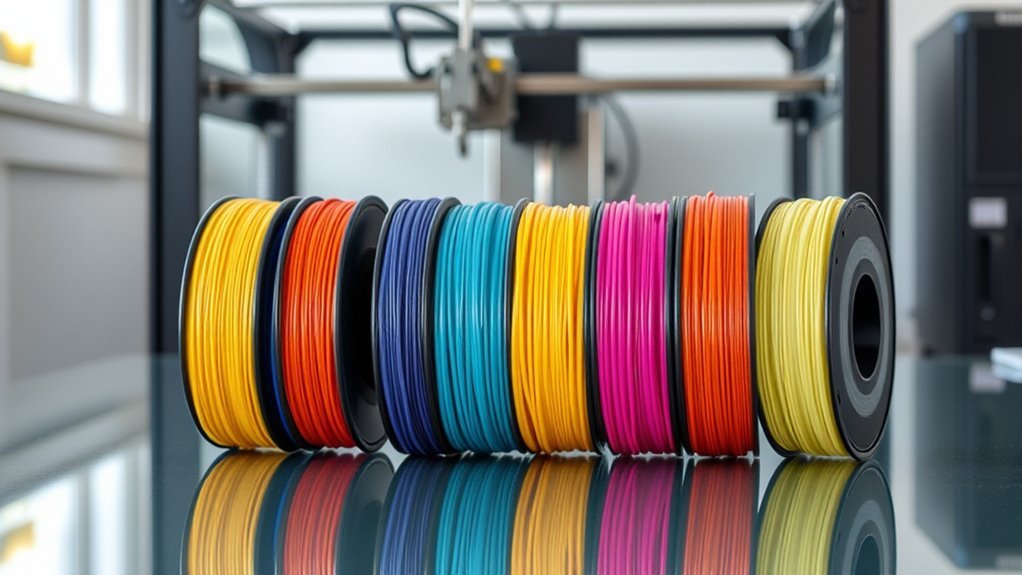
You’ll want certified filaments like Nylon White FS, PETG, PLA, polycarbonate, and PEEK for truly food-safe 3D printing. These materials are essential because they meet strict safety standards, ensuring your prints won’t contaminate food. Each filament offers different strengths to suit various applications, making them popular choices for food-safe projects.
For example, Nylon FS is great for conveyor parts that need durability. PETG stands up well to repeated use, while PLA is ideal for single-use or cooler items. On the other hand, polycarbonate (PC) and PEEK handle high-temperature environments like a champ.
But remember, certifications alone aren’t enough. You’ve got to print carefully, finish surfaces smoothly, and validate each part’s safety. Dive into tips on choosing the right filament, printing properly, and maintaining your prints to keep everything safe and long-lasting.
Key Takeaways
- Nylon White FS is certified NSF/ANSI 51 and FDA CFR Title 21 compliant. It’s ideal for food equipment parts, but remember, part-level validation is required.
- PETG offers heat resistance and food-grade certifications. Plus, it’s durable for repeated use when properly post-processed and sealed.
- PLA is biodegradable and has low toxicity. It’s best for single-use or sealed items, but not great for repeated hot washing since it softens.
- Polycarbonate (PC) and PEEK are high-temperature, high-strength options. They work well for food contact when certified and printed with specialized hardware.
- All FDM filaments create micro-crevices. So, sealing and post-processing are essential to ensure food safety and cleanability for repeated use.
How To Choose Food-Safe 3D Printer Filaments?
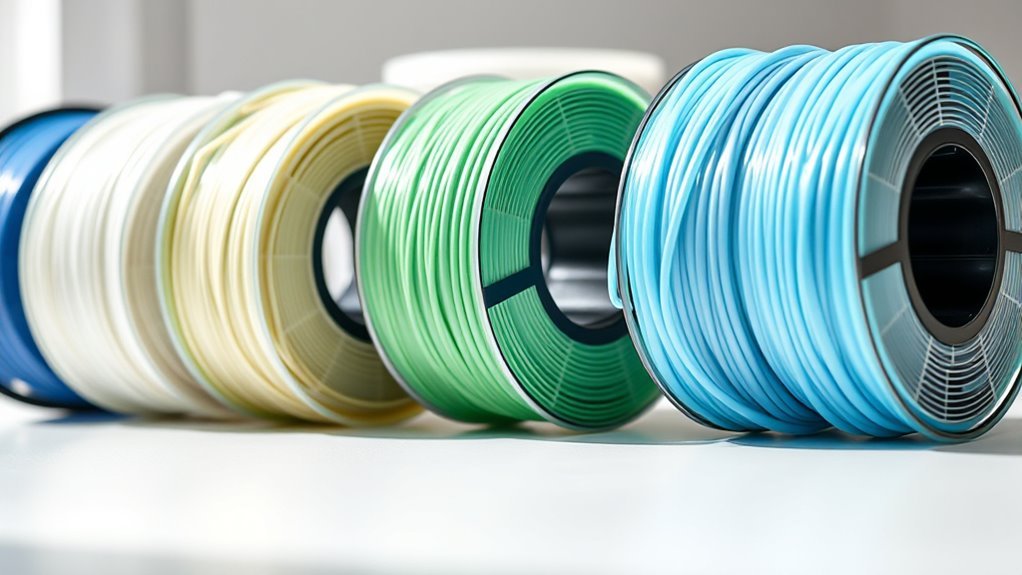
When choosing food-safe 3D printer filaments, you should first verify their certifications like NSF/ANSI 51, FDA CFR Title 21, or EC 1935/2004 instead of trusting vague food-safe claims. Confirming the FDA CFR Title compliance guarantees the filament’s chemistry suits your application.
You’ll want a food safe filament that offers a smooth surface finish to minimize bacteria-trapping micro-crevices. Focus on materials and print settings that allow low layer heights and consider post-processing like sanding or FDA-approved coatings to boost cleanability.
Also, check the manufacturer’s documentation for supply-chain transparency to reduce contamination risks. Finally, guarantee the filament and any coatings can handle your cleaning methods—detergents, alcohol, or dishwasher temperatures—to keep your parts truly safe for food use.
Nylon White FS: A Top Food-Safe Filament
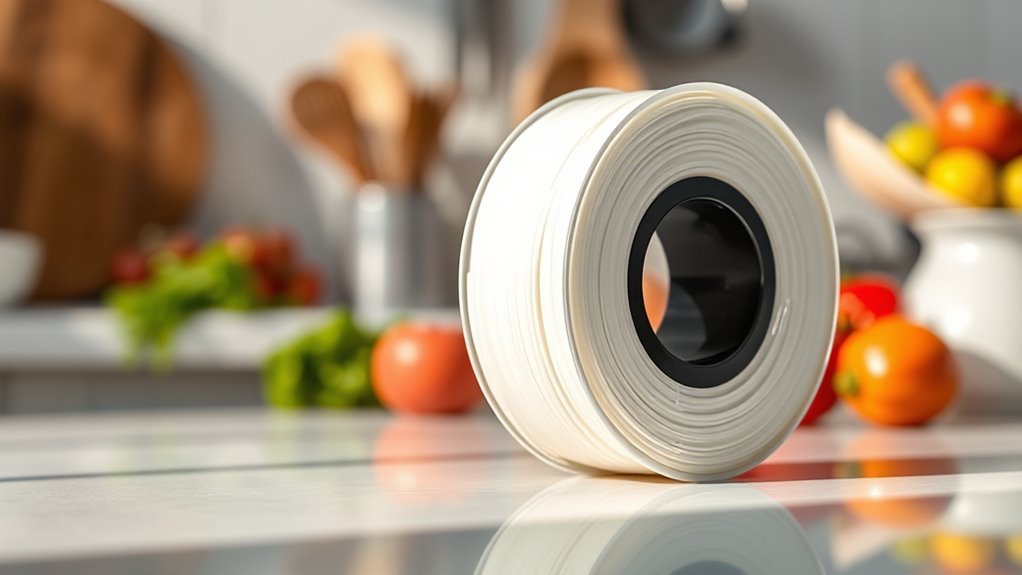
Choosing a filament that meets strict food safety standards is just the start. Nylon White FS stands out as a top choice, certified to NSF/ANSI Standard 51 and compliant with FDA CFR Title 21 for food equipment materials.
It’s compatible with Markforged FX10 printers, making it ideal for producing food-contact parts like conveyor guides and pushers. However, printed parts still require additional validation to guarantee food safety.
To make the most of Nylon White FS, keep in mind a few key points: Avoid designs that trap food or fluids. Also, aim to achieve smooth, cleanable surfaces.
Don’t forget to store spools in moisture-free conditions. And always follow validated cleaning and operating protocols to keep everything safe and effective.
Popular Food-Safe Filaments: PETG And PLA
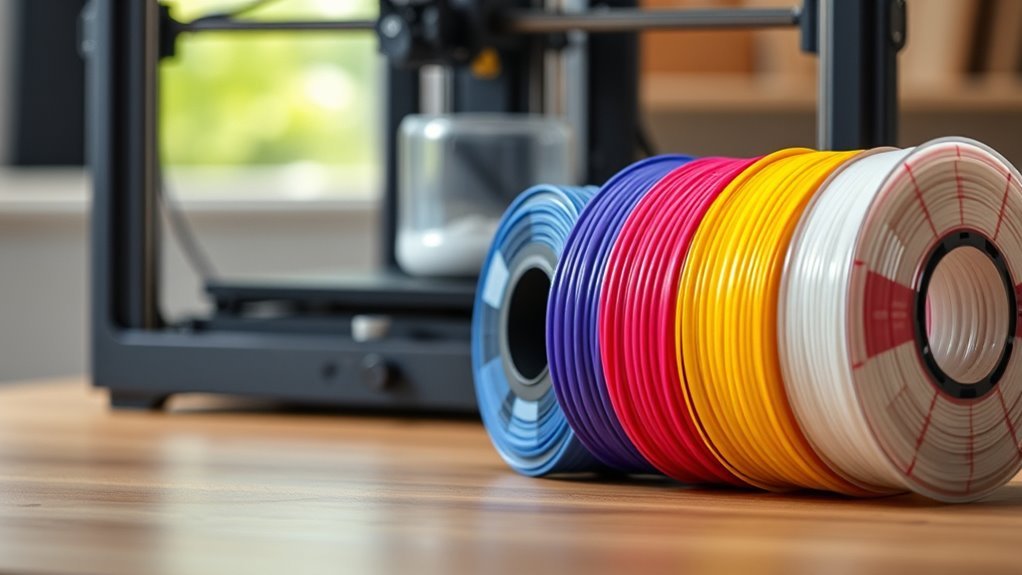
You’ll find PETG is often recommended for food-contact prints thanks to its heat resistance and available food-grade certifications. It’s a solid choice if you want something durable and safe.
PLA is popular for its low toxicity and ease of use but has limits like lower heat tolerance and porous surfaces. So, it’s great for simpler projects but might not hold up as well under heat.
Keep in mind, both need careful printing and post-processing to guarantee safety and durability. You can’t just print and go—you have to be thoughtful about it.
PETG Food Safety
Though PETG’s base polymer is less toxic than ABS or many resin systems, you should verify any food-grade or FDA-compliant claims with manufacturer documentation before using it for food-contact prints. PETG is popular as a food safe printer filament, but its layer lines can trap bacteria, so thorough post-processing is essential.
To safeguard safety and durability, focus on:
- Using certified PETG filament with documented traceability.
- Printing with dedicated nozzles and low layer heights to minimize crevices.
- Applying post-processing like sanding or FDA-approved coatings for smooth surfaces.
- Validating heat resistance against your cleaning procedures to prevent deformation.
PLA Benefits And Limits
PLA stands out as a popular choice for food-contact 3D prints due to its biodegradability and generally low toxicity. However, it softens above ~60°C, making it vulnerable to warping or damage when exposed to hot washing or heat. This limits PLA’s reusability for food-contact items.
While PLA is safe for hobby prints, its porous surface can harbor bacteria. So, sealing or post-processing is essential if you want to use it repeatedly.
Understanding PLA’s benefits and limits helps you decide when it’s the right filament for your food-contact projects.
| Feature | Details |
|---|---|
| Biodegradable | Yes, environmentally friendly |
| Heat Resistance | Softens above ~60°C |
| Toxicity | Generally low |
| Food-Contact Suitability | Good for single-use or sealed items |
| Surface Texture | Micro-crevices require sealing |
Printing Considerations
When choosing between PETG and PLA for food-safe 3D printing, you need to take into account factors like heat tolerance, surface finish, and filament storage. PETG withstands higher temperatures (~70–80°C), making it better for repeated hot use. On the other hand, PLA softens around 55–60°C and suits cooler applications.
Both filaments create micro-crevices in FDM prints, so post-processing is essential for safe food contact applications. Keep these in mind:
- Store PETG and PLA spools airtight with desiccants to prevent moisture absorption.
- Use dedicated nozzles and print beds to avoid contamination.
- Apply FDA-approved sealants or smooth surfaces to reduce bacteria traps.
- Verify certification and print parameters to guarantee food-safe compliance.
Following these steps will help you achieve clean, durable, and safe prints. It’s all about keeping things hygienic and reliable when you’re working with food!
High-Performance Food-Safe Filaments: Polycarbonate And PEEK
If you need materials that withstand high temperatures and mechanical stress in food-contact applications, polycarbonate (PC) and PEEK stand out as top contenders.
Polycarbonate offers impact strength and heat resistance up to around 120°C. But keep in mind, you’ll need certified materials to ensure food contact safety.
PEEK, on the other hand, excels with continuous-use temperatures up to about 260°C and superior chemical resistance. It’s perfect for really demanding environments.
Both filaments require strict verification of food-contact certification. Plus, careful post-processing is a must to eliminate porosity that can harbor bacteria.
Printing these materials demands specialized hardware and moisture control to keep performance and safety on point.
| Property | Polycarbonate (PC) | PEEK |
|---|---|---|
| Max Continuous Temp | ~120°C | ~250–260°C |
| Food Contact Safety | Certified materials needed | Certified materials needed |
| Mechanical Strength | High impact strength | Exceptional mechanical strength |
| Chemical Resistance | Moderate | Exceptional |
| Printing Requirements | Nozzle >300°C, heated chamber | Nozzle >400°C, heated chamber |
Certified Specialty Food-Safe Filaments
Certified specialty food-safe filaments like Nylon White FS offer a reliable solution for 3D printing parts that come into direct or close contact with food. This unfilled nylon filament is certified to NSF/ANSI 51 and complies with FDA CFR Title 21, designed specifically for food contact applications.
When you choose a certified food-safe filament, keep in mind a few important things. First, certification covers formulation, toxicology, and manufacturing audits, but you still need to validate safety at the part level.
These filaments are great for Zones 1 and 2, making them perfect for conveyor guides, chutes, funnels, and end-of-arm tooling. Just make sure to verify certifications like NSF/ANSI 51 and FDA CFR Title 21 on datasheets and NSF listings.
And don’t forget to follow strict printing protocols to maintain food contact safety. This way, you can be confident your printed parts meet rigorous food-safe standards.
Design And Printing Tips For Food-Safe Filaments
You’ll want to orient your print to place the smoothest surface where food will make contact, avoiding horizontal gaps and overhangs that create crevices. Using layer heights of 0.1–0.2 mm and increasing outer wall shells helps reduce micro-crevices and improve cleanability.
These steps guarantee your printed part is safer and easier to maintain. It’s all about making sure your print stays food-safe and hassle-free!
Optimizing Print Orientation
When optimizing print orientation for food-safe filaments, focus on positioning critical food-contact surfaces as top-facing layers. This helps achieve smoother finishes and reduces visible seams.
This approach minimizes layer lines, improving printed contact with food and enhancing overall cleanability. To get the best results, consider these tips:
- Align load-bearing walls with filament extrusion to boost strength and reduce delamination risk.
- Avoid supports on food-contact faces; if needed, place them on non-contact surfaces to prevent roughness.
- Use thinner layer heights (0.12–0.2 mm) and multiple shells to close gaps, lowering porosity and bacteria traps.
- Design with gentle slopes and draft angles to minimize internal corners and help with drainage during cleaning.
Choosing the right print orientation guarantees durability, safety, and hygiene for your food-safe prints. It’s definitely worth the effort!
Enhancing Surface Cleanability
Although achieving food-safe prints starts with the right filament, enhancing surface cleanability depends heavily on your design and printing choices. For food safe 3D printing, use the lowest practical layer height (0.1–0.2 mm) and increase shell counts to reduce micro-crevices where food and bacteria can hide.
Try to orient parts to avoid horizontal crevices and overhangs. Instead, favor sloped, self-draining surfaces with fewer internal cavities. This makes cleaning up after contact with food a lot easier.
Print at higher extrusion temperatures and slower speeds to improve layer adhesion and reduce porosity. That way, you help ensure there are no leaks.
Design continuous, gap-free walls with rounded corners and fillets. These features simplify sanitizing.
Finally, apply compatible post-processing like sanding or vapor smoothing to create a smooth, nonporous finish. Just make sure to verify the method and coatings suit your cleaning agents and temperatures.
Cleaning And Maintaining Food-Contact 3D Prints
Regularly cleaning and properly maintaining food-contact 3D prints guarantees they stay safe and functional. To keep your prints truly food safe, follow these essential steps:
Use lukewarm water and mild detergent for routine cleaning—avoid dishwasher cycles that can warp materials. It’s a simple way to protect your prints and keep them looking good.
Sanitize prints with food-safe agents compatible with your filament, like isopropyl alcohol. Just make sure the sanitizer is chemically safe for your specific material.
Apply post-processing techniques such as sanding or FDA-compliant coatings to reduce surface porosity and bacterial buildup. These extra steps really help keep things hygienic.
Inspect regularly for damage and retire parts that lose their smooth, cleanable finish. You don’t want any rough spots that could harbor bacteria and cause contamination risks.
Frequently Asked Questions
Can I Use Food-Safe Filaments for Hot Beverage Containers?
You can use food-safe filaments for hot beverage containers, but make sure the filament and printer settings are suitable for heat resistance.
Also, properly seal and clean the print to avoid contamination and guarantee safety. It’s super important to keep things hygienic when dealing with hot drinks.
How Does Filament Color Affect Food Safety?
Filament color itself doesn’t affect food safety, but colored filaments may contain additives or dyes that aren’t food-safe.
You should always check the manufacturer’s specifications to guarantee any pigment used is approved for food contact. It’s better to be safe than sorry when it comes to what touches your food.
Are Additives or Pigments in Filaments Safe for Food Contact?
You might think all pigments are unsafe, but some additives and pigments in filaments are FDA-approved for food contact.
Still, you should always check certification and avoid unknown or cheap filaments to keep your prints truly food-safe. Better safe than sorry, right?
Can I Recycle Food-Safe 3D Prints for Cooking Purposes?
You shouldn’t recycle food-safe 3D prints for cooking since repeated heating or wear can degrade safety.
Instead, use new, certified food-safe filaments for each cooking application. This helps guarantee hygiene and avoid contamination risks.
Do Food-Safe Filaments Impact the Taste of Printed Items?
No, food-safe filaments don’t impact the taste of your printed items if you use them correctly.
Just make sure your printer and environment are clean to avoid contamination that could alter flavor or safety.
It’s really all about keeping things hygienic so your prints stay safe and tasty!
Conclusion
When choosing food-safe 3D printer filaments, remember that over 60% of food contamination from 3D prints comes from poor material choice or inadequate cleaning. Nylon White FS, PETG, and PLA offer safe options for everyday use. Meanwhile, Polycarbonate and PEEK serve high-performance needs.
Certified specialty filaments add extra assurance for those looking for that next level of safety. By following smart design, printing, and maintenance tips, you’ll confidently create safe, durable food-contact items.
With the right food-safe 3D printer filaments and proper care, you can protect your health while impressing everyone with your creations. Whether you’re using Nylon White FS, PETG, PLA, or even high-performance materials like Polycarbonate and PEEK, making smart choices is key. So, keep your prints clean, choose certified filaments, and enjoy crafting safe, reliable food-contact items every time!