How Much Does a 3D Printer Cost?
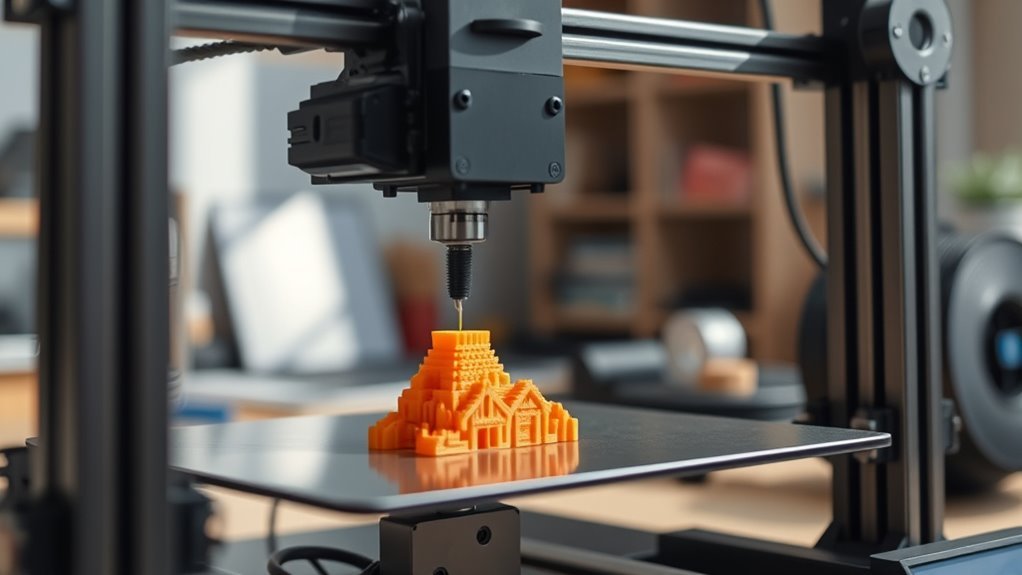
You can expect to spend anywhere from $100 to over $300,000 on a 3D printer, depending on your needs and the type of printer you choose. Whether you’re looking for a budget-friendly model or a professional-grade machine, prices vary widely.
Budget models like the Ender 3 cost between $100 and $300, making them perfect for beginners and hobbyists. If you want something a bit more advanced, hobbyist options typically range from $300 to $1,000.
Professional and industrial 3D printers come with added features and greater precision. But keep in mind, they also have higher price tags and ongoing costs for materials and maintenance. If you’re curious about how different types, features, and materials can affect your total investment, keep reading!
Key Takeaways
- Budget 3D printers start around $100–$300. They’re great for basic projects and smaller build volumes.
- Hobbyist models usually range from $300 to $1,000. These offer larger build volumes and some improved features.
- Professional 3D printers cost between $1,000 and $5,000. You get higher precision and specialized capabilities with these.
- Industrial and metal 3D printers go beyond $5,000. Metal printers can even cost $100,000 or more.
- Keep in mind, there are additional expenses too. Materials can run from $15 to $150 per kilogram, plus maintenance and post-processing tools add to the overall cost.
Understanding 3D Printer Price Ranges
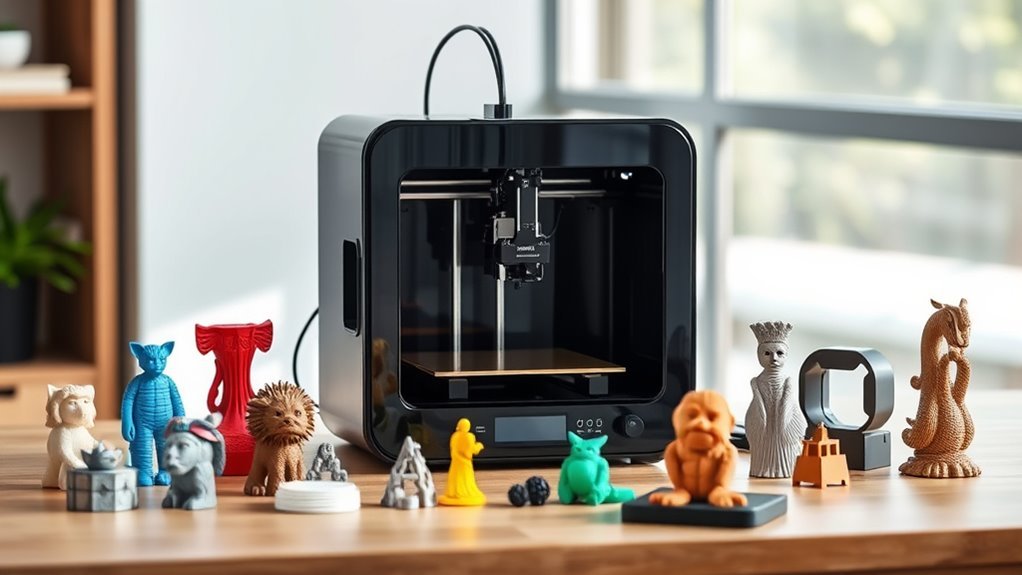
Although 3D printers come in a wide price range, you can find models that fit almost any budget and use case. Budget 3D printers, like the popular Ender 3, typically cost between $100 and $300. They’re perfect for beginners or DIY enthusiasts.
Affordable 3D printers like the Ender 3 offer great entry points for beginners and DIY fans.
If you need more advanced features, hobbyist printers in the $300 to $1,000 range offer larger build volumes and better components. These are great if you want to step up your game without breaking the bank.
On the professional side, machines can cost from $1,000 up to $5,000. They deliver higher precision and specialized features that can really make a difference.
Looking for serious manufacturing capabilities? Industrial 3D printers start at around $5,000 and can reach into the tens or even hundreds of thousands. This is especially true for metal or selective laser sintering technologies used in aerospace and manufacturing.
Factors Driving 3D Printer Prices
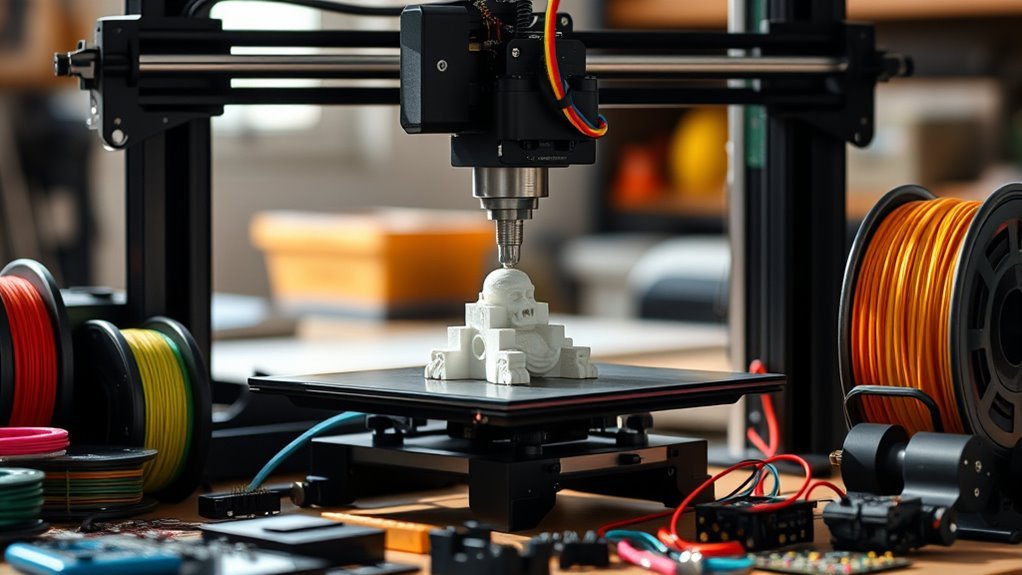
When you shop for a 3D printer, the technology type plays a big role in the price. You’ll also notice that printers compatible with a wider range of materials tend to cost more.
Plus, advanced features like auto-leveling and remote access can push the price higher. It’s kind of like choosing a car—you pay more for extra bells and whistles. So, think about what you really need before splurging!
Technology Type Impact
Because different 3D printing technologies serve varied needs and complexities, their prices can vary widely.
For example, an FDM 3D printer aimed at hobbyists can cost between $100 and $1,000. Resin 3D printers often range from $150 to $1,000 depending on resolution and build size.
Industrial machines, like SLS or metal printers, can cost tens of thousands to over a million dollars. Your choice impacts not just upfront costs but also maintenance and consumables.
| Technology Type | Price Range |
|---|---|
| FDM Hobbyist | $100 – $1,000 |
| Resin (MSLA/DLP) | $150 – $1,000 + post-processing gear |
| SLS (Entry-level) | Several thousand dollars |
| Industrial SLS | Tens of thousands |
| Metal Additive (SLM) | $100,000 – $300,000+ |
Material Compatibility Costs
While choosing a 3D printer, you’ll quickly see that material compatibility plays a major role in cost. Consumer filaments like PLA keep expenses low, but compatibility limitations—such as maximum nozzle temperature—can force you into pricier branded or industrial materials, which cost $50–$150 per kilogram.
If you opt for an MSLA printer, resin costs are another factor. Standard resin starts around $40 per liter, but specialty resins, often printer-specific, raise costs considerably.
These limitations might push you toward more expensive materials or necessary upgrades. Don’t forget post-processing supplies tied to materials, like FEP sheets and curing chambers, which add ongoing expenses.
Ultimately, the materials your printer supports impact both your upfront and operating costs. So, choose wisely to balance quality and budget.
Feature Set Influence
Although 3D printers might look similar at first glance, the features they offer can drastically affect their price. Entry-level models typically cost between $100 and $300, featuring smaller build volumes and basic components that require more hands-on setup.
As you move up the price range to $300–$1,000, expect larger build volumes, auto bed leveling, and improved extruders that boost reliability and ease of use. These upgrades make printing smoother and less frustrating.
Professional-grade printers, costing $1,000 to $5,000, add precision hardware, integrated sensors, and brand-locked materials for higher-quality results. They’re great if you need consistent, top-notch prints.
Industrial machines, priced above $5,000, incorporate advanced technologies like metal printing and automation, supporting specialty materials often costing $75–$150 per kilogram. So, your choice of features directly influences the initial cost and ongoing expenses.
Bottom line? Think about what’s essential for your projects before deciding. It’ll save you money and hassle in the long run.
How 3D Printer Type Affects Your Budget?
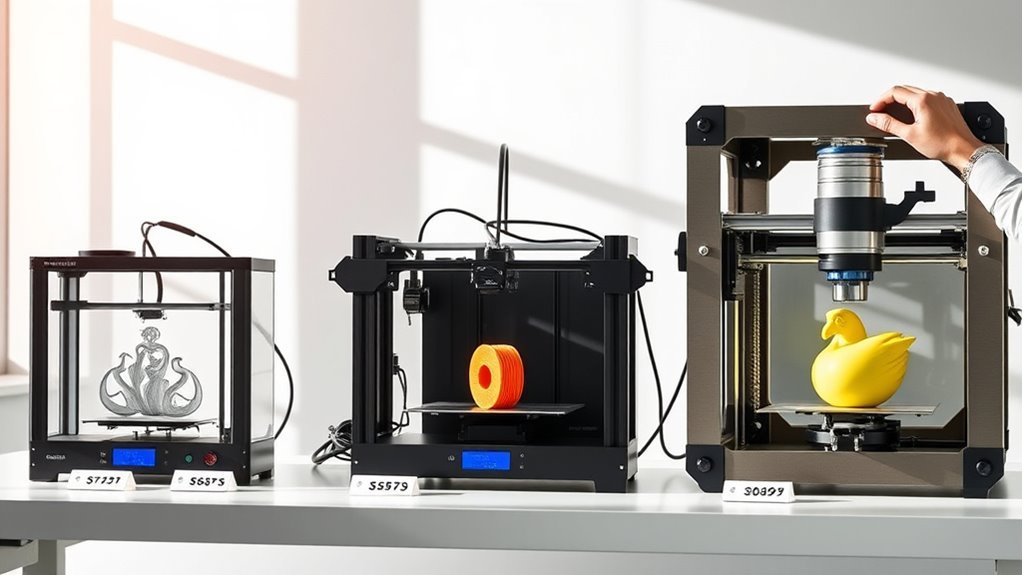
When choosing a 3D printer, your budget will largely depend on the type of machine you pick. If you’re on a tight budget, budget FDM or entry-level resin printers cost between $100 and $300. They’re perfect for beginners.
Advanced hobbyist models can run up to $1,000. These add features like auto-bed leveling and better resolution.
Professional printers cost thousands of dollars. They offer precision and specialized capabilities.
Industrial systems start at $5,000 and can exceed $100,000. So, they’re definitely an investment.
Consider these cost ranges:
- Budget FDM/resin printers: $100–$300
- Advanced hobbyist printers: $300–$1,000
- Professional/performance printers: $1,000–$5,000
- Industrial/business systems: $5,000+
Keep in mind, additional material and maintenance costs increase with printer class. It’s something to factor into your overall budget.
Which Features Affect 3D Printer Cost?
Because 3D printers vary widely in technology and features, the cost you’ll pay depends heavily on what’s included. Technology and build volume play a big role: larger build areas and advanced printer types like SLS or SLM increase prices substantially.
Hardware features and reliability also impact cost. Higher-end models offer auto bed leveling, heated chambers, dual extruders, and industrial-grade components, which boost durability and reduce maintenance.
| Feature Category | Impact on Cost |
|---|---|
| Technology & Build Volume | Larger volume, advanced types raise cost |
| Hardware Features | Auto leveling, dual extrusion increase price |
| Reliability | Industrial components reduce maintenance |
| Build Format | Large-format printers cost more |
Choosing features wisely helps balance price with performance. It’s all about finding the right fit for your needs without overspending.
How 3D Printer Materials Affect Your Total Cost
After choosing the right features for your 3D printer, material costs quickly become a major factor in your overall expenses. The type of filament or resin you use can multiply your build cost markedly.
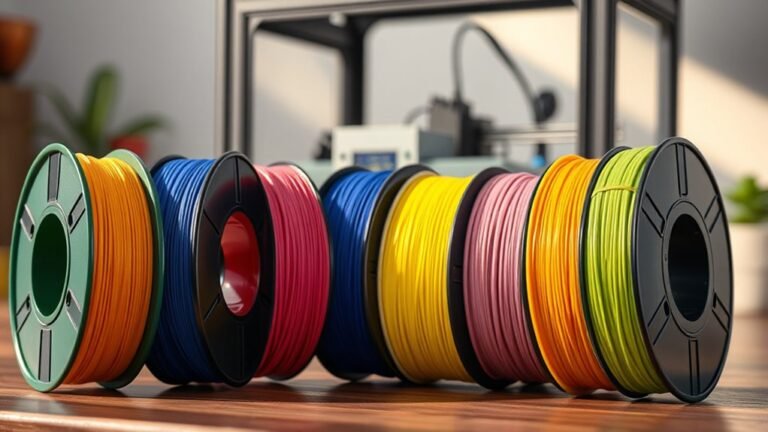
Basic PLA costs around $15–$25 per kilogram, while specialty filaments or resins can be several times pricier. Resin printers add extra costs through post-processing supplies and equipment, unlike basic FDM printers.
High-performance polymers and metal powders require expensive machines and materials, greatly increasing part costs. Consider these to understand your total investment:
- PLA filament: $15–$25/kg
- Specialty filaments: $50–$150/kg
- Standard resins: ~$40/liter
- Post-processing supplies for resin printing
- Industrial powders for advanced builds
Choosing materials wisely helps control your printer build cost effectively. It’s all about balancing quality and budget in the long run.
What 3D Printer Maintenance and Operational Costs Are
You’ll need to budget for common maintenance expenses like replacing nozzles, belts, or FEP sheets, which can range from $20 to over $100.
Operational costs also include energy use and post-processing tools, adding $50 to several hundred dollars monthly.
Understanding these factors helps you estimate your printer’s true cost beyond just materials. It’s not just about the stuff you print with!
Common Maintenance Expenses
Frequently, maintaining a 3D printer involves ongoing expenses that go beyond the initial purchase. You’ll need to budget for consumable materials like filaments or resins. These vary in price depending on quality and type.
Replacement parts, such as nozzles or build plates, wear out and require timely swaps to keep prints consistent. Routine maintenance and minor repairs add to costs, especially for professional or industrial machines.
Plus, you might need post-processing equipment and safety upgrades to guarantee quality and safe operation. It’s all part of keeping your 3D printing running smoothly.
Common maintenance expenses include:
- Consumable materials (PLA filament, resin)
- Replacement build plates and nozzles
- FEP sheets and LCD screens for resin printers
- Routine service and minor repairs
- Post-processing tools like curing chambers and filtration systems
Operational Cost Factors
Maintaining a 3D printer involves more than just replacing parts and buying materials. Consumables vary widely: hobbyist filament typically costs $15–$25 per kg, professional or brand-locked filaments $50–$80 per kg, and industrial materials $75–$150 per kg. Standard resins start around $40 per liter.
Routine replacement parts for resin printers—like FEP sheets, screens, and build plates—commonly cost $25–$80. Nozzles or sensors for FDM printers often run $20–$100. Maintenance and repair for professional machines usually run $50–$200, with parts at $50–$100.
Meanwhile, industrial systems can demand $100–$3,000+ per part. Upgrades and post-processing add expenses too: curing chambers and filtered enclosures cost $65–$250, and hobbyist add-ons range from $30–$300. Plus, operational overheads like energy use add roughly $50–$200 monthly for heavy use.
How to Choose the Right 3D Printer Price
Although choosing the right 3D printer price can seem overwhelming, understanding your project needs and budget helps narrow down the options effectively. You want to balance ease of use with features that suit your goals.
Keep in mind ongoing costs like materials and maintenance, which add up over time. It’s something a lot of people overlook at first.
Consider these factors when selecting a price tier:
- Your experience level and willingness to tinker
- Required build volume and material compatibility
- Desired print quality and precision
Also, think about your budget for both the printer and consumables. And don’t forget any future upgrade or expansion plans you might have.
Where to Find the Best Deals on 3D Printers
When hunting for the best deals on 3D printers, you’ll want to keep an eye on budget-friendly models like the Creality Ender 3 V3 SE and Anycubic Photon Mono 2, especially during sales at major retailers like Amazon and Best Buy. These printers available under $300 offer great value and fast printing capabilities.
Also, check manufacturer clearance events from brands like Creality and Bambu Lab, where mid-range models drop markedly in price. Don’t overlook bundles that include filament, resin, or curing stations—these can lower your overall cost per print.
For higher-tier machines, explore vendor refurb and reseller promotions to score substantial discounts. Finally, use community resources and time your purchase around seasonal sales to secure the best deals without paying full MSRP.
Frequently Asked Questions
Can I 3D Print a Tooth?
Yes, you can 3D print a tooth using dental-grade resins or metals. But keep in mind, you’ll need certified materials, specialized equipment, and clinical workflows to do it right.
Temporary crowns are easier to make this way. However, for permanent restorations, you’ll need industrial metal printers and professional labs. It’s a bit more complex but totally doable!
What Software Do I Need for 3D Printing?
You’ll want slicing software like Cura or ChiTuBox to convert your models into printer commands. These tools help your printer understand exactly how to create your design layer by layer.
Also, grab CAD tools such as Tinkercad or Fusion 360 for designing your 3D models. They make it easy to bring your ideas to life with a bit of creativity and precision.
Plus, monitoring apps like OctoPrint are great for keeping an eye on your print jobs. They make your printing sessions smoother and smarter, so you can relax while your printer does the work.
Is 3D Printing Easy to Learn?
Yes, 3D printing’s easy to learn if you’re patient. You’ll spend days mastering bed leveling, slicer settings, and maintenance.
Troubleshooting and online communities help a lot. Plus, upgrades improve your results as you gain experience.
Can I Make Money With a 3D Printer?
You can make money with a 3D printer—many hobbyists start with machines under $1,000 and sell custom parts or prototypes.
Just remember, managing material costs and post-processing is key to turning a profit consistently.
It might take a bit of trial and error, but once you get the hang of it, there’s definitely potential to earn some cash.
Conclusion
You might think finding the perfect 3D printer fits neatly into your budget, but surprisingly, the right choice often depends on more than just price. Coincidentally, the features, materials, and maintenance all play a big role in your total cost.
So, before you buy, consider how each factor aligns with your needs. That way, you’ll get the best value and avoid unexpected expenses down the road.
Ready to print your future? When looking at how much a 3D printer costs, don’t just focus on the initial price. Think about the cost of materials, upkeep, and the specific features you need. This approach helps ensure you pick a 3D printer that fits your budget and delivers great results for your projects.