How Much Does a 3D Printer Cost in 5 Price Ranges for 2027
You can expect to spend from about $219 for an entry-level 3D printer like the Bambu Lab A1 Mini up to over $1,800 for premium industrial models in 2027. These prices reflect various 3D printer cost ranges, catering to different needs and budgets. Whether you’re just starting out or looking for advanced features, there’s something for everyone.
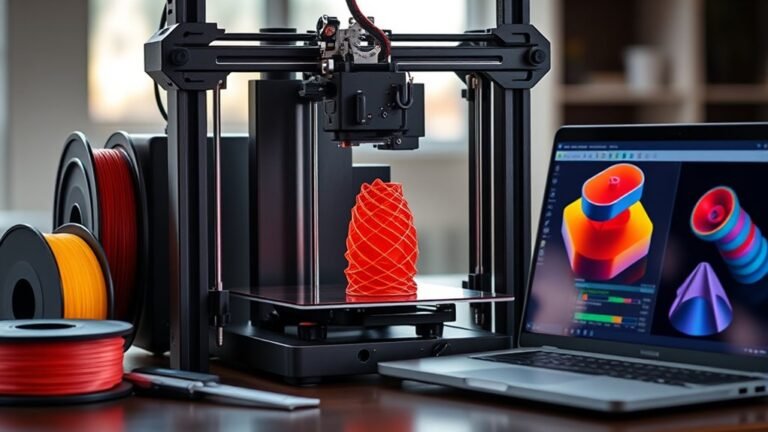
Budget options usually offer basic materials and smaller build volumes. On the other hand, mid-range and prosumer machines provide larger sizes, support for more materials, and better print quality.
Keep in mind that ongoing costs like filament and replacement parts add up over time. If you want to find the right balance of features and price, exploring these tiers can really help guide your choice. It’s all about matching what you need with what you’re willing to spend.
Key Takeaways
– Entry-level 3D printers cost around $200–$300, including starter filament and basic tools, with build volumes near 150–250 mm.
They’re great if you’re just getting started or want something simple to experiment with.
– Budget colour-capable FDM printers start at about $299, supporting single-nozzle multi-colour but with higher filament waste.
So, you can add some color to your prints without spending a fortune, though it might not be the most efficient.
– Mid-range models priced $300–$800 offer larger volumes, better material compatibility, automatic leveling, and improved print quality.
These are perfect if you want more features and better results without breaking the bank.
– Prosumer and premium printers range from $800 to $1,800+, featuring advanced materials support, larger volumes, and factory-tuned profiles.
They’re built for serious hobbyists or professionals looking for top-notch performance and reliability.
– Hidden costs like filament, nozzles, consumables, and finishing tools add $60–$200+ annually beyond the printer’s base price.
So, keep in mind that the initial price isn’t the whole story — there’s some ongoing investment too.
Understanding 3D Printer Price Tiers in 2027
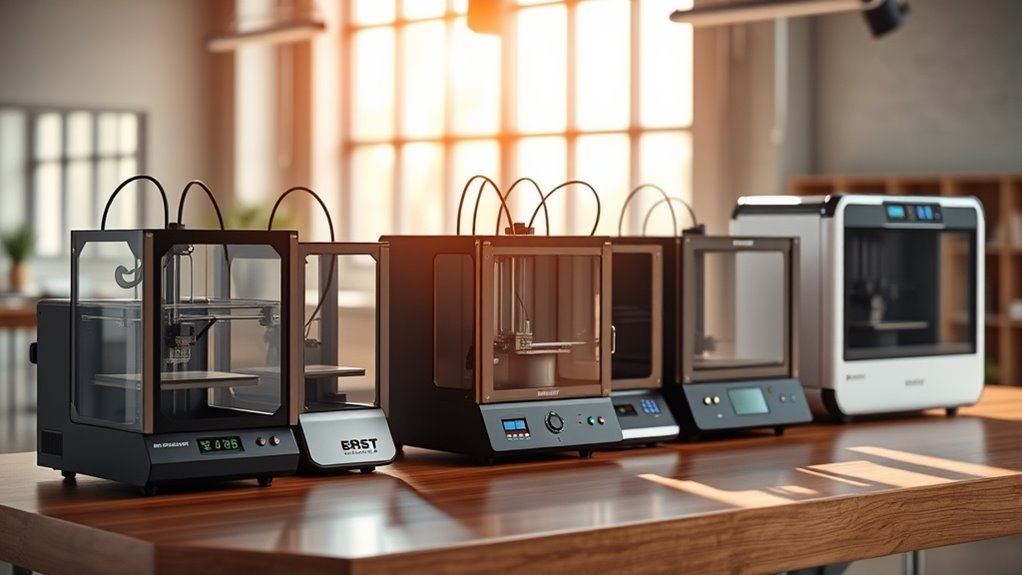
While 3D printers come in various price ranges, understanding what you get at each tier helps you make the right choice. The Bambu Lab A1 mini, priced around $219, represents the cheapest 3D printer you can find with solid entry-level features.
However, expect to spend closer to $300 when you include starter filament and basic tools. Colour printing means stepping up the price ladder—budget colour-capable FDM machines start near $299 but often only support single-nozzle multi-colour designs.
If you want multi-toolhead colour printing with low waste, be ready to spend considerably more. Mid-range printers from $400 to $1,000 offer better build quality, larger volumes, and improved colour capabilities.
Knowing these price tiers helps you match your needs without overpaying. It’s all about finding the right balance for what you want to create.
Materials Supported and Print Volumes by Price Level
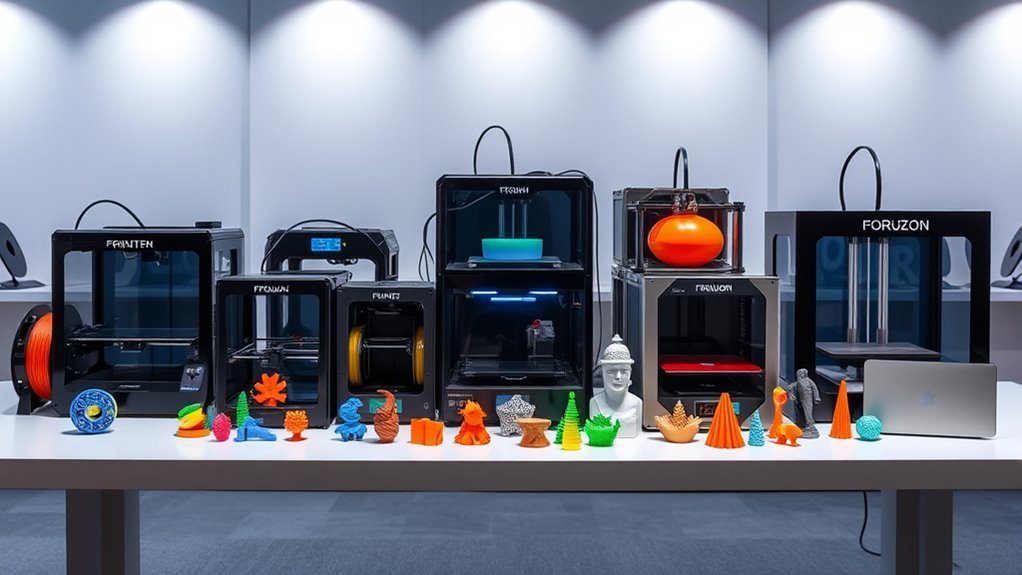
As you explore 3D printers across different price levels, you’ll notice that the materials they support and their print volumes vary markedly.
Entry-level models under $300 print mainly with PLA and PETG, offering build volumes around 150–250 mm per axis. They’re perfect if you want a compact, budget-friendly option.
Entry-level 3D printers under $300 are compact, budget-friendly, and ideal for PLA and PETG printing.
Mid-range printers ($300–$800) expand material compatibility to TPU and occasional ABS. They come with larger build volumes up to 300–400 mm on one axis, giving you more flexibility.
Prosumer machines ($800–$1,800) support ABS, ASA, and flexible filaments with build volumes reaching 400×400×400 mm. These are ideal if you’re making engineering parts.
Industrial printers ($1,800+) handle high-temp nylons and composites with massive build volumes beyond 500 mm. Choosing one that fits your material needs and build size is key to getting the most from your investment.
Balancing 3D Printer Print Quality and Cost Across Tiers
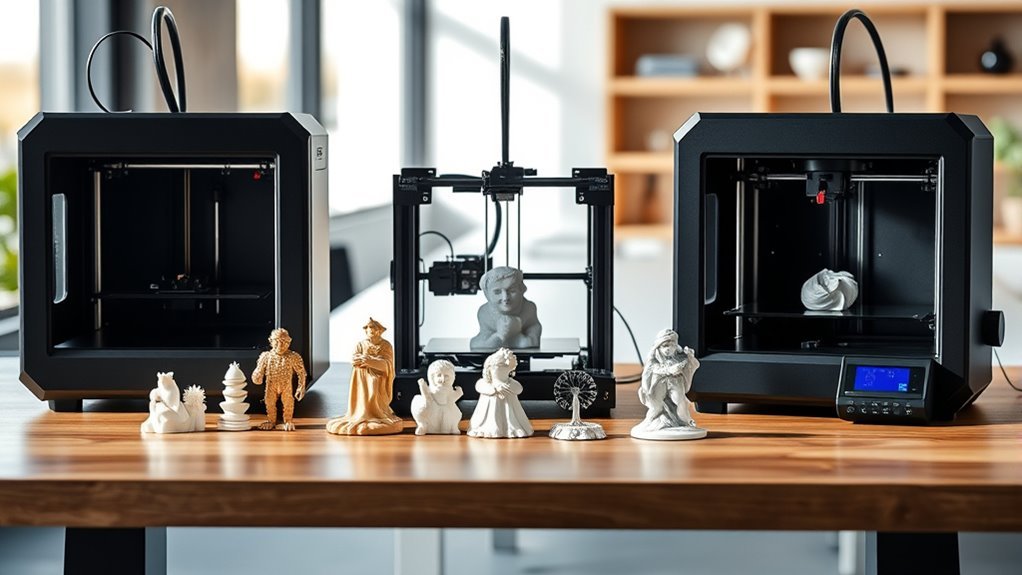
Choosing the right 3D printer means weighing print quality against your budget, since each tier offers distinct trade-offs. Entry-level models under $300 deliver acceptable hobbyist prints but need manual tuning, leading to more failed prints and layer artifacts.
Mid-range printers, priced $300–$800, often include automatic bed leveling and sturdier frames. These features produce cleaner surfaces and finer detail with fewer failures.
Premium printers over $800 add fast motion, improved extruders, and factory-tuned profiles. This ensures reliable, professional-quality results.
For the best 3D printers, expect to spend around $300–$500 initially to balance cost and quality effectively. Every time you move up a tier, you gain consistency and advanced features, but you’ll also pay more.
Understanding these trade-offs helps you pick the right printer without overspending or sacrificing quality. It’s all about finding the sweet spot that fits your needs and budget.
Hidden Costs to Budget For Beyond the Printer Purchase
Investing in a 3D printer is just the start—there are several ongoing expenses you’ll need to factor into your budget. Filament alone can cost $60–$100 for a decent starter supply, with typical spools around $15 per kilogram.
Frequent multicolor purges may increase waste, raising your filament costs. Don’t forget nozzles—replacement or upgrades range from $10 to $50, depending on material and size.
Consumables like glue, bed tape, PTFE tubing, and spare parts will add $20–$60 yearly. You’ll also want basic tools for finishing, which can run $20–$100 as a one-time expense.
Finally, consider potential shipping fees, taxes, and optional upgrades that might tack on $20–$200 or more. These hidden costs guarantee your 3D printing experience stays smooth and reliable.
How to Choose the Best 3D Printer for Your Budget and Needs
When you set out to pick a 3D printer, you’ll want to balance your budget with the features that suit your specific needs. If you’re new and budget-conscious, printers like the Bambu Lab A1 mini or Creality SparkX offer solid performance under $400.
For multi‑colour prints, consider machines priced between $300 and $600, such as the Anycubic Kobra X, which handles up to four colours with minimal waste. If you need a sturdy, enclosed printer for materials like ABS, the Elegoo Centauri Carbon at around $339 is a great option.
Remember to factor in ongoing costs like filament and replacement parts. Weigh your priorities—print size, colour capability, and material compatibility—to select the best 3D printer that matches both your budget and project demands.
Frequently Asked Questions
What Is the Price of a 3D Printing Machine?
You’ll find 3D printers priced from $150 for entry-level models up to $1,500 or more for advanced multi-toolhead machines.
Expect to spend extra on filament and tools, which add to your total cost. It’s something to keep in mind when budgeting for your 3D printing setup.
What Is the #1 3D Printer?
You’ll find the Bambu Lab A1 (full) is the #1 3D printer for 2027. It’s fast, reliable, and offers great print quality.
That makes it perfect whether you’re a beginner or a prosumer looking for top value. Seriously, it’s hard to beat.
How Much to Get a 3D Print?
Wondering how much to get a 3D print? It usually costs $0.20 to $50, depending on size, material, and detail.
You could save money by printing yourself or pay more for professional quality and convenience.
How Much Did 3D Printers Cost When They First Came Out?
When 3D printers first came out, you’d pay between $1,000 and $5,000 for hobbyist kits. Early professional models cost way more—often $20,000 or more.
That made them too pricey for most consumers back then. So, they were mostly used by businesses and serious enthusiasts. It wasn’t exactly something everyone could just buy off the shelf.
Conclusion
You might think higher-priced 3D printers are out of reach, but investing in the right tier saves you time and frustration with better quality and reliability.
Remember, it’s not just about the upfront cost—consider materials, maintenance, and features that match your needs.
By understanding these price ranges and hidden expenses, you’ll confidently choose a 3D printer that fits both your budget and goals.
This way, your 3D printing journey becomes smoother and more rewarding. Keep in mind that balancing cost with functionality is key to finding the perfect 3D printer in 2027.