How Large Is Printer Paper?
Printer paper sizes can be a bit confusing, but knowing the basics helps a lot. The most common sizes you’ll encounter are Letter and A4, which are used widely around the world. Letter size paper measures 8.5 × 11 inches and is mostly used in the U.S. and Canada. On the other hand, A4 paper is the international standard, sized at 210 × 297 mm (or about 8.27 × 11.69 inches).
A4 is a bit taller and slightly narrower than Letter size. Besides these, there are larger formats like A3 or Tabloid, which measure 11 × 17 inches. These bigger sizes are great for posters or detailed graphics.
What’s important to keep in mind is that your printer type will determine which paper sizes it can handle smoothly. So, it’s worth exploring your options to find out which paper size fits your printing needs best.
Key Takeaways
- Common printer paper sizes include Letter (8.5 × 11 in) and A4 (210 × 297 mm). A4 is slightly taller and narrower, which is pretty handy depending on where you’re printing.
- Legal size paper measures 8.5 × 14 inches. This extra length is great for contracts and legal documents that need a bit more space.
- Larger formats like Tabloid or A3 measure 11 × 17 inches. These are perfect for posters and detailed visuals that need more room to shine.
- A4 paper follows the ISO 216 standard with a √2 aspect ratio. This makes it easy to scale printing between sizes like A4 and A3 without messing up the layout.
- Printer trays often support Letter and A4 sizes. Meanwhile, multipurpose trays can handle Legal, Tabloid, and other larger formats, giving you flexibility depending on the job.
What Are the Most Common Printer Paper Sizes?
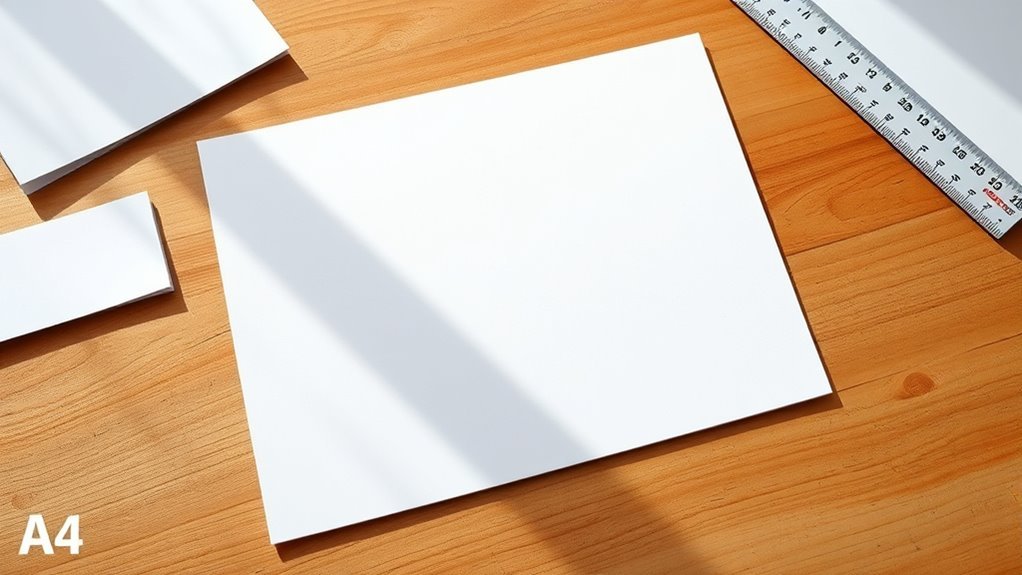
When you print documents, knowing the most common paper sizes can help you choose the right fit. In North America, Letter size (8.5 × 11 in) dominates everyday printer paper use for reports and documents.
Internationally, A4, part of the ISO paper sizes standard, measures slightly differently at 210 × 297 mm and suits most business needs outside North America. You’ll also encounter Legal size (8.5 × 14 in) for contracts and Tabloid (11 × 17 in) for larger layouts.
For presentations and posters, A3 size is popular, while A5 is perfect for flyers and booklets. Most modern printers accommodate both A4 and Letter sizes, with some handling larger formats like A3 and Tabloid to meet diverse printing needs.
How Big Is A4 Paper Compared to Letter Size?
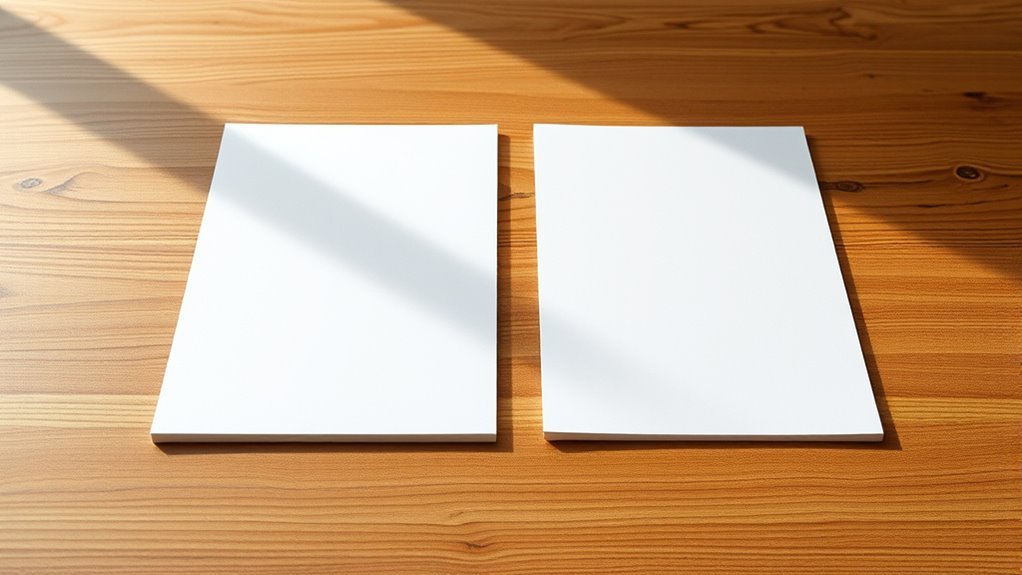
You’ll notice A4 paper is a bit taller but slightly narrower than Letter size, with A4 offering a bit more total area. Depending on where you are, you’ll likely use one standard over the other—A4 internationally and Letter in the US and Canada.
Keep in mind that printers often handle both sizes, but differences in margins and scaling can affect your printouts and how documents fit in binders. So, it’s good to double-check before printing or organizing your papers.
Dimensions Compared Side-by-Side
Although both A4 and Letter sizes are common for printing, they differ noticeably in dimensions. A4 paper size follows the ISO 216 standard, measuring 210 x 297 mm (8.27 x 11.69 inches). It’s taller but slightly narrower than Letter size.
Letter size, the North American paper format, measures 8.5 x 11 inches (216 x 279 mm). So, it’s wider but shorter compared to A4. This means A4 actually has a larger paper area, about 0.0625 m², compared to Letter’s 0.0603 m².
While many printers support both sizes, you might need to adjust layouts or margins for printer compatibility.
| Paper Format | Dimensions (mm) | Dimensions (inches) |
|---|---|---|
| A4 (ISO 216) | 210 × 297 | 8.27 × 11.69 |
| Letter (NA) | 216 × 279 | 8.5 × 11 |
Regional Usage Differences
Since A4 paper measures 210 × 297 mm and Letter size is 216 × 279 mm, you’ll notice that A4 is slightly taller but narrower than Letter. A4 follows the international standard ISO 216, making it the dominant paper size worldwide.
Letter, with its unique dimensions (216 × 279 mm or 8.5 × 11 in), is primarily used in North America, including the U.S., Canada, and parts of Mexico. These differences in paper sizes affect printer settings and page layout, especially when sharing documents across regions.
Because A4 and Letter differ in aspect ratio and dimensions (mm/in), you might experience minor shifts in margins or page breaks. Understanding these regional usage differences helps you adjust your printer settings for better compatibility.
Printing Compatibility Issues
Differences between A4 and Letter sizes can cause printing compatibility issues if you’re not careful. A4 measures 210 × 297 mm, making it narrower and taller than Letter paper, which is 216 × 279 mm.
When printing Letter-formatted documents on A4, you might notice clipped margins or extra white space unless you adjust printer settings. Always select the correct paper size in the print dialog and align your tray guides to match the paper size to avoid misfeeds or scaling errors.
Using “scale to fit” can help maintain formatting compatibility, but sometimes you’ll need to adjust margins or reformat layouts. Since A4 follows the international standard, it’s essential to pick the right paper size and accessories depending on your region to guarantee smooth printing.
Where Are A4 Paper Sizes Used Around the World?
When you travel across Europe, Asia, Australia, much of Africa, or South America, you’ll find A4 paper as the standard size for office documents, letters, and academic papers. Measuring 210 × 297 mm, A4 follows the ISO 216 international standard, making it the preferred paper size in these regions.
This standardization simplifies cross-border printing and assures compatibility across various office environments. Unlike the Letter size used mainly in the U.S., Canada, and parts of Mexico, A4’s dimensions support the √2 aspect ratio, which benefits scaling between sizes.
If you work with international documents or share files globally, you’ll notice A4 dominates as the universal choice for office documents, streamlining communication and printing across continents. Understanding these paper sizes helps you navigate global office standards more effectively.
Can You Use A4 Paper Size in U.S. Printers?
If you’re used to using A4 paper internationally, you might wonder how well it works with U.S. printers. Many modern U.S. printers support both A4 and US Letter paper sizes. But it’s smart to check your printer’s tray settings or control panel to confirm A4 compatibility.
If A4 isn’t listed, you can usually use the manual feed slot to load A4 paper. Just make sure to select the correct size in the print dialog.
Since A4 is slightly narrower and longer than US Letter, documents formatted for one might need margin adjustments or scaling to fit properly. A4 remains the international standard, and you can find A4 paper and related office supplies in the U.S. Although, some filing systems might require adapters.
What Are Larger Printer Paper Sizes: A3 and Tabloid?
Larger paper sizes like A3 and Tabloid offer you more space for creative projects, presentations, and detailed layouts. A3, measuring 297 x 420 mm (11.69 x 16.54 in), follows the ISO 216 standard with an aspect ratio that allows perfect A4 scaling—two A4 pages fit side-by-side without distortion.
Tabloid (11 x 17 in) is a popular North American large-format paper size, slightly narrower but taller than A3.
Here’s what you should know about A3 and Tabloid:
- A3 is ideal for posters and large-format graphics
- Tabloid suits brochures and newsroom layouts
- Their dimensions differ, so scaling or cropping may be needed
- Many printers offer tray support for these sizes
- Both enhance your options beyond standard paper sizes for impactful prints
How Printer Types Affect Supported Paper Sizes
Your printer type directly impacts the paper sizes it can handle, so check the tray configurations and adjustable guides. Most home printers cover standard sizes like Letter and A4, while larger models support bigger formats like A3 or custom media.
Always review the manufacturer’s specifications to make certain your printer fits your paper needs. It’s worth taking a moment to double-check before you buy or print!
Printer Compatibility With Sizes
Because different printer types cater to various printing needs, the sizes they support can vary considerably. Most desktop printers handle Letter (8.5×11) and A4 (210×297 mm) paper, which you can select in the driver or control panel.
Multifunction printers often offer adjustable trays and manual feed options, supporting sizes from A5 up to tabloid/ledger (11×17) or A3 (297×420 mm). When choosing a printer, consider:
- Tray capacity and adjustable trays
- Supported paper sizes listed in the user manual
- Manual feed for non-standard or heavier paper
- Paper weight (gsm) compatibility
- Size options for large-format printers used in graphics
Always check your printer’s user manual to confirm size and paper weight compatibility before printing. It’s a good habit to avoid any surprises!
Tray Configurations And Adjustments
Although many printers come with fixed trays, most modern office models include adjustable trays that let you slide guides to fit common paper sizes like Letter (8.5 × 11 in) and A4 (210 × 297 mm). These paper trays often support varying tray capacity and media thickness, making them versatile for everyday printing.
You’ll also find a multipurpose tray or manual feed slot for odd sizes such as Legal or Tabloid, but you’ll need to select the exact paper size in the printer driver. High-end printers offer a multi-tray configuration, letting you load different paper sizes simultaneously—like Letter in Tray 1 and Legal in Tray 2—saving time.
Always check tray markings and test sheets to make certain the adjustable guides and trays handle your required paper sizes smoothly. It’s a simple step that helps avoid jams and misfeeds.
What Paper Sizes Do Advanced Copiers Handle?
When you use advanced copiers, you’ll find they handle a wide range of paper sizes—from standard options like A5 to A3 and common North American sizes such as Letter, Legal, and Tabloid.
These machines often support larger formats like A2, A1, and custom media up to about 13 × 19 inches or more.
Here’s what you can expect from their paper trays and print feed options:
- Support for ISO sizes with tight tolerances
- Multiple adjustable paper trays for simultaneous loading
- Manual feed slots for custom media sizes
They also handle North American sizes like Letter, Legal, and Tabloid/Ledger.
Plus, many have large-format capabilities including engineering and plotter sizes.
Always check the user manual or tray markings to confirm the exact sizes your copier supports.
Choosing the Right Paper Size for Printing
Selecting the right paper size impacts both the appearance and function of your printed materials. For everyday North American printing, choose Letter (8.5 × 11 in), while A4 (210 × 297 mm) suits most international needs, offering better international compatibility.
If your document requires extra length, like contracts, Legal (8.5 × 14 in) is ideal. For larger visuals such as posters or detailed spreadsheets, A3/Tabloid (11 × 17 in) provides ample space.
Check your printer trays and drivers to make certain they support your chosen paper sizes—many printers include adjustable trays or manual feed options for nonstandard sizes. Also, consider envelopes (C4/C5) and binders when selecting paper to guarantee a smooth workflow and proper fit for your printed materials.
Frequently Asked Questions
What Is the Size of 8.5×13 Paper?
The 8.5×13 paper measures 8.5 inches wide and 13 inches long. You’ll find it’s wider than standard letter paper by 2 inches. It’s mainly used for legal documents and requires printer adjustments for proper printing.
What Is the Size of A2 Paper in Inches?
You’re holding a pretty generous sheet when you pick up A2 paper—about 16.54 by 23.39 inches. It’s perfect when you want something bigger than A4 but not quite poster-sized, so your projects really stand out.
It’s great for art, presentations, or any time you want your work to have a bit more presence without going overboard. Trust me, once you start using A2, it’s hard to go back to smaller sizes!
What Is the Size of Legal Paper in Millimeters?
Legal paper measures 215.9 millimeters wide and 355.6 millimeters long. You’ll find it’s the same width as Letter paper but longer, perfect for contracts or forms requiring extra space.
Many printers support this size, making it easy to use. It’s a popular choice when you need a bit more room than the standard Letter size offers.
What Are the Dimensions of A7 Paper?
You’re holding A7 paper when it measures exactly 74 by 105 millimeters. It’s tiny, perfect for notepads or tickets.
It fits just right in your hand, making it super handy for compact printing needs.
Conclusion
Now that you know the nuances of numerous notable paper sizes, steering your next print project becomes noticeably easier. Whether you’re working with widely-welcome A4 or tackling the tall tabloid, understanding your printer’s preferences prevents printing problems.
By choosing correctly, you’ll create crisp, clean copies consistently. So, stay savvy, select smartly, and save yourself some stress—your printing prowess will surely shine with every sheet you send through your setup!
Remember, knowing the right printer paper size isn’t just about fitting your content; it’s about optimizing quality and efficiency. When you match your project with the ideal paper, whether it’s letter, legal, A4, or tabloid, you reduce waste and avoid frustrating misprints.
So, keep these paper size insights handy. It’s a simple step that makes a big difference in your printing results, ensuring every page looks professional and polished. Your next print job will thank you for it!