How Much Does a 3D Printer Cost?
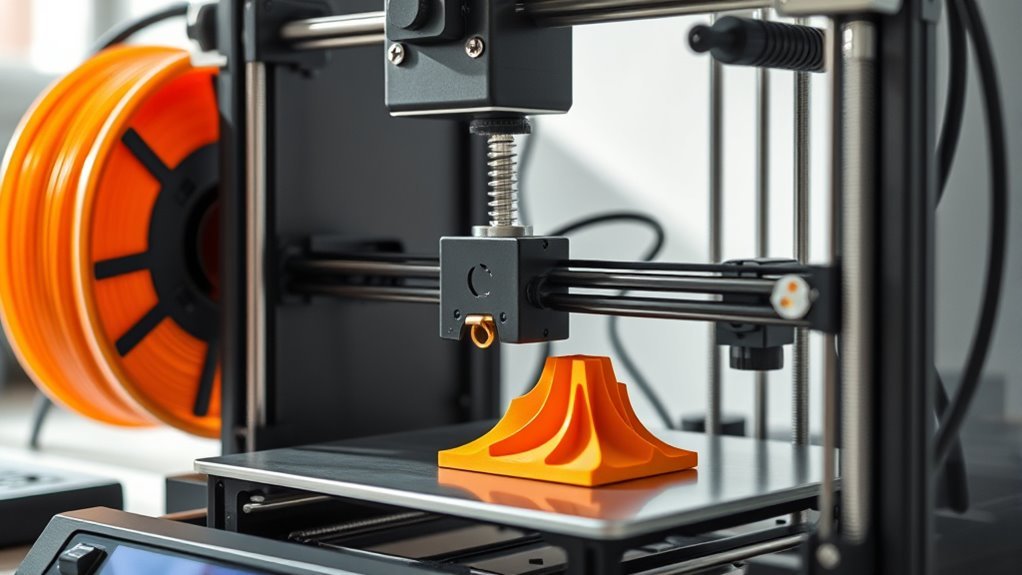
You can find 3D printers priced from under $100 to over $100,000, depending on the type and features. Whether you’re looking for a basic home printer or something for professional use, there’s a wide range of options to fit different budgets. Budget FDM or resin printers cost around $100–$300, while advanced hobbyist models range from $300 to $1,000.
Industrial printers and specialty materials push costs much higher. Resin printing tends to have pricier consumables and post-processing compared to FDM. If you want to understand how materials, upgrades, and usage influence your overall expenses, keep exploring these factors. It’s all about finding the right balance between what you need and what you’re willing to spend.
Key Takeaways
- Budget 3D printers start at $100–$300, suitable for basic hobbyist use and learning. They’re perfect if you’re just getting your feet wet.
- Advanced hobbyist printers range from $300 to $1,000. These offer larger build volumes and some cool enhanced features to step up your game.
- Professional 3D printers cost $1,000–$5,000. They often include dual extruders and heated chambers, which really boost performance.
- Industrial 3D printers begin around $5,000 and can go well beyond $100,000. These models support specialty materials and come with automation options.
- Keep in mind, ongoing costs like consumables, maintenance, and upgrades can add up. They really vary depending on the type of printer you have and how much you use it.
What Types of 3D Printers Affect Cost?
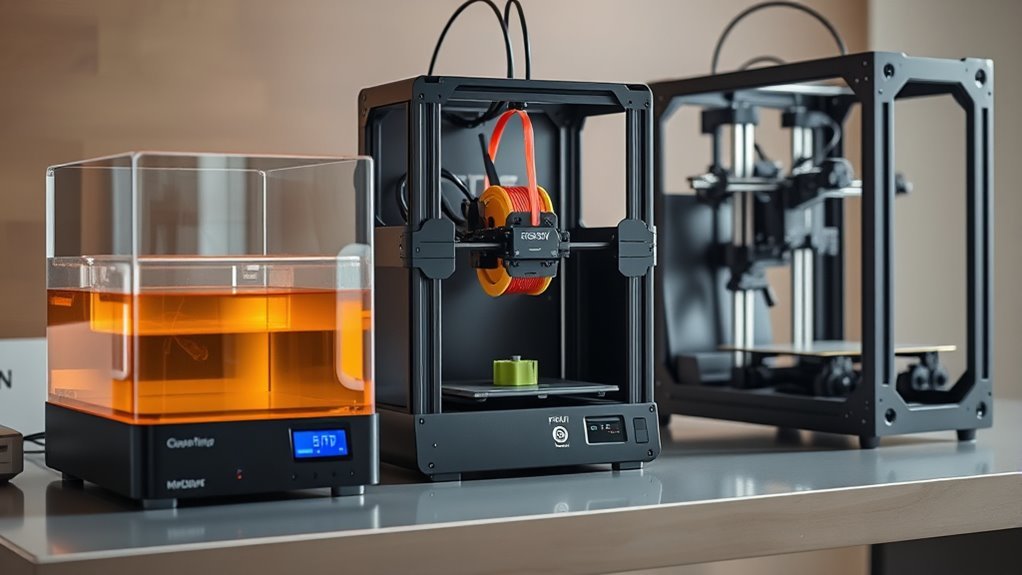
The type of 3D printer you choose directly impacts its cost, as prices generally increase with printer class and technology. If you’re just starting out, budget 3D printers like basic FDM or resin models cost between $100 and $300. They’re perfect for simple projects.
Choosing the right 3D printer starts with understanding how class and technology affect cost and functionality.
As you move up, advanced hobbyist printers range from $300 to $1,000. These offer better features and larger build volumes, which can really make a difference.
Professional or performance printers can set you back $1,000 to $5,000. And if you’re looking at industrial 3D printers, they start around $5,000 and can exceed $100,000.
These high-end machines often include advanced features like dual extruders, heated chambers, and automation. All these extras drive up the price quite a bit.
FDM vs Resin: Which Costs More?
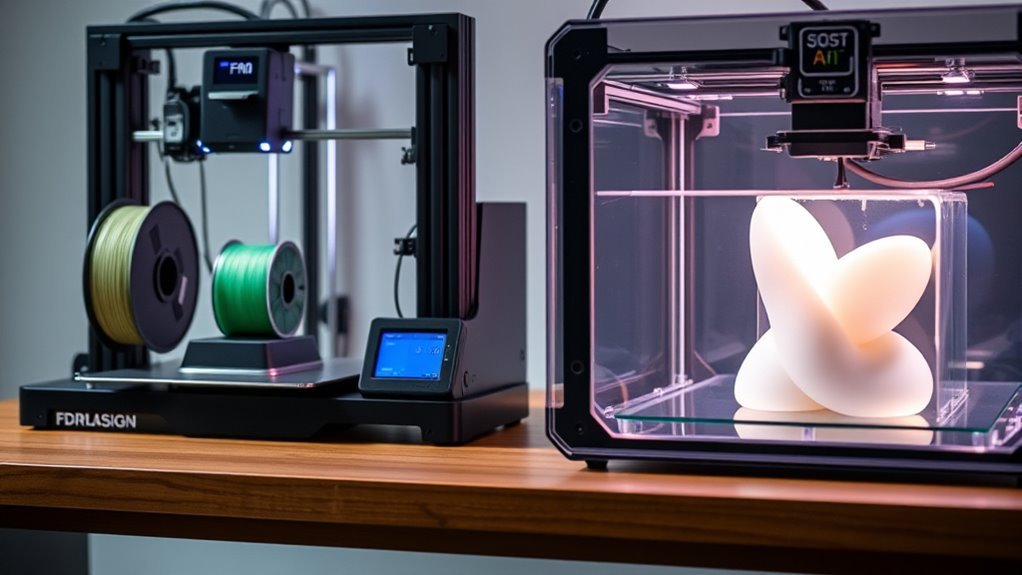
When comparing FDM and resin printers, you’ll find their initial prices often overlap. But material costs start to show differences quickly.
Resin consumables and maintenance parts tend to be pricier. Plus, post-processing adds extra time and expense you won’t see much with FDM.
Understanding these factors helps you decide which option fits your budget and workflow best. So, think about what matters most for your projects before choosing.
Initial Printer Purchase
Choosing between FDM and resin printers often comes down to your budget and project needs, as their entry-level prices can be surprisingly close. For example, an Ender 3 V, a popular FDM printer, typically costs between $100 and $300, while resin options like the Elegoo Mars start around $150 to $300.
Both offer solid entry points without breaking the bank. As you move into advanced hobbyist models, FDM printers like the Prusa MK3S+ and resin printers such as the Elegoo Mars 5 Ultra fall within the $300 to $1,000 range.
However, keep in mind that resin printers often require extra post-processing gear, which can increase your upfront investment even if the printer price matches an FDM model. So, it’s worth factoring that into your budget before making a decision.
Material and Consumables
After picking your printer, you’ll want to take into account the ongoing costs of materials and consumables, which can quickly add up.
With an FDM 3D printer, basic filament like PLA or PETG typically costs $15–$25 per kilogram. Specialty filaments, however, can reach as high as $150/kg.
Resin 3D printers require standard resin starting around $40 per liter. Specialty resins can cost much more than that.
Consumables differ too. Resin printers need parts like FEP sheets and LCD screens, which cost between $25 and $80 each. On the other hand, FDM printers use nozzles and build surfaces that range from $20 to $100.
Maintenance and Post-Processing
Managing maintenance and post-processing costs plays a crucial role in determining the overall expense of owning an FDM or resin 3D printer. FDM printers generally have lower consumable and maintenance costs, with filaments priced around $15–$25/kg and replacement parts like nozzles and belts costing between $20 and $100.
Post-processing for FDM is usually simpler and cheaper, involving sanding or acetone smoothing. It’s pretty straightforward and doesn’t require much extra gear.
Resin printers, on the other hand, demand more frequent replacement of parts such as FEP sheets and LCD screens, which can get pricey. Plus, resin post-processing needs equipment like curing chambers ($65–$250) and consumables such as isopropyl alcohol and gloves, adding to ongoing expenses.
Key Printer Features That Influence Price
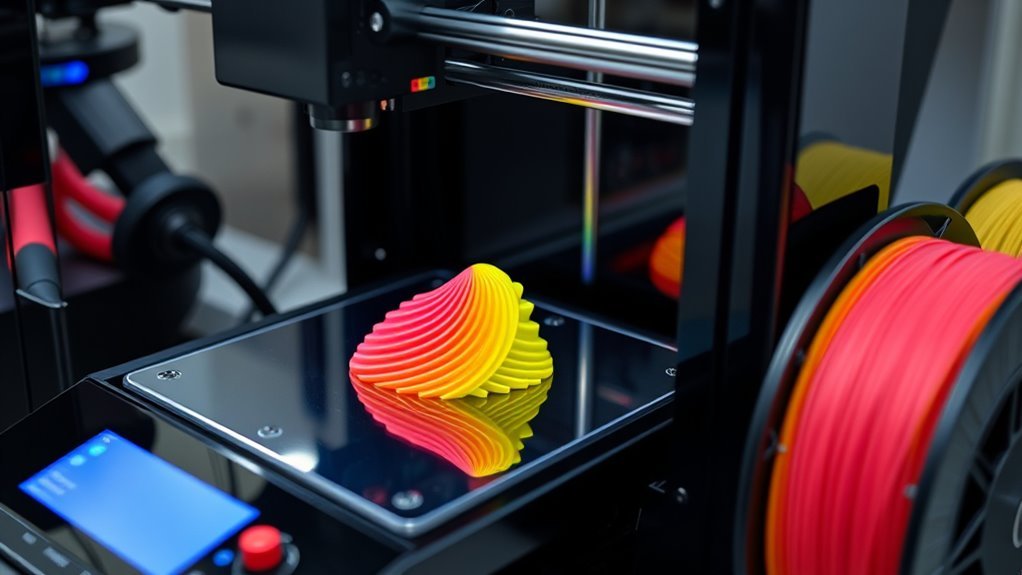
You’ll find that build volume plays a big role in a printer’s price—the larger the space, the higher the cost.
Material compatibility also affects price since printers that handle specialty or multiple materials often require more advanced hardware.
Understanding these features helps you choose a printer that fits both your needs and budget.
Build Volume Impact
Build volume plays a major role in determining a 3D printer’s price. If you want a desktop hobbyist FDM printer with a build volume around 220×220×250 mm, expect a price range of $150–$400, like the popular Ender 3 class.
Stepping up to mid-size prosumer printers with about 300×300×300 mm, prices jump to $300–$1,000 due to sturdier frames and enhanced features. It’s a noticeable price increase but often worth it for the added durability and capabilities.
Industrial or large-format printers with build volumes over 600 mm can cost thousands, reflecting heavy-duty components. These machines are built to last and handle bigger projects.
Resin printers also show price variation with build volume—from budget MSLA vats at $100–$300 to high-resolution machines costing up to $1,000. So, there’s something for every budget depending on what you need.
Keep in mind, bigger build volumes increase ongoing costs for materials and parts. Your upfront investment should match the scale and durability you’re aiming for.
Material Compatibility Range
Material compatibility plays a crucial role in determining a 3D printer’s price and capabilities. If you’re working with entry-level FDM printers ($100–$300), you’ll primarily print basic polymers like PLA and PETG. These machines often lack heated enclosures, limiting you from using high-temperature materials like nylon or polycarbonate.
Moving up to advanced hobbyist models ($300–$1,000), you can print a wider range, including TPU, nylon, and carbon-fiber filaments. This is thanks to all-metal hotends reaching around 300°C, which really opens up your options.
Professional printers ($1,000–$5,000) support engineering-grade composites by adding hardened extruders and heated chambers. Resin printers require specific photopolymer resins, which are a whole different ballgame.
Then there are industrial systems ($5,000+) that handle specialty polymers and metals. But keep in mind, these often come with costly, brand-locked consumables.
Understanding material compatibility helps you pick a printer that fits your needs and budget perfectly. It’s all about finding the right balance for what you want to create.
Price Ranges for Different 3D Printer Users
When diving into the world of 3D printers, understanding the price ranges helps you find the right fit for your needs and budget. Whether you’re starting with a Budget FDM printer or aiming for a pro machine costing thousands of dollars, here’s what to expect:
- Budget FDM ($100–$300): Perfect for beginners and hobbyists, these printers offer basic features and decent quality, like the Ender 3 class models.
- Advanced Hobbyist ($300–$1,000): These provide larger builds, better components, and features like auto-bed leveling. They’re ideal for serious makers who want to step up their game.
- Professional ($1,000+): Designed for pros and small businesses, these printers deliver high precision. They often require brand-locked materials, so keep that in mind.
Knowing these tiers helps you pick a 3D printer that matches both your skills and your wallet. It’s all about finding what works best for you!
How Material Choices Impact Printing Costs
Choosing the right filament or resin can dramatically affect your overall printing costs. Basic PLA filament costs about $15–$25 per kilogram, but professional or specialty materials can multiply your per-part expense by up to 10 times.
If you’re using an MSLA printer, resin starts around $40 per liter, with specialty resins costing even more. Plus, you’ll need post-processing supplies like isopropyl alcohol and curing chambers, which add to the cost.
High-temperature or engineering polymers require industrial printers and hardened nozzles, raising operational costs further. Multi-material setups increase material waste and require extra spools and feeders.
While fast printing saves time, these material choices impact your budget markedly. So, choosing wisely guarantees your printer runs efficiently without surprise expenses from costly consumables or maintenance.
Extra Costs: Upgrades and Maintenance
Although your initial investment in a 3D printer covers the basics, you’ll find that upgrades and maintenance add extra costs over time.
Keep in mind these common expenses to budget accordingly:
- Upgrades: Auto-bed leveling sensors, new nozzles, and advanced add-ons like multi-material units usually cost between $20 and $300 each.
- Consumables and parts: Resin printer components such as FEP sheets, monochrome LCDs, and build plates range from $25 to $80 and require regular replacement.
- Maintenance and repairs: Routine fixes cost $50–$200, but professional or industrial printer repairs can climb to $3,000 or more, often needing authorized technicians.
Factoring these extra costs makes sure your 3D printer stays reliable and efficient without surprises.
Best Budget 3D Printers for Beginners in 2026
Keeping extra costs in mind helps you plan for long-term 3D printing success, especially when selecting your first machine. In 2026, budget-friendly 3D printers like the Creality CR series offer reliable FDM printing around $169–$219. They’re perfect for beginners exploring PLA or PETG.
Planning for extra costs ensures success when choosing beginner-friendly 3D printers like the Creality CR series.
If you want high-detail resin prints, the Anycubic Photon Mono 2 is a standout choice. It’s priced between $149 and $199 and features a 4K monochrome LCD for sharp miniatures.
For under $300, hobbyists also consider fast, feature-rich options with auto bed leveling and all-metal hotends. Just remember, filament and resin costs add up over time, so factor in consumables and basic upgrades.
These budget printers excel at learning and prototyping but won’t handle advanced industrial materials without costly modifications. So, keep your expectations realistic, and you’ll have a great start!
Planning Your 3D Printer Budget for Long-Term Use
When planning your 3D printer budget for long-term use, you’ll need to take into account more than just the initial purchase price. Whether you’re aiming for a high precision build or a reliable hobbyist machine, ongoing costs add up quickly.
- Materials and consumables: Filaments and resins vary from $15/kg for basic hobbyist to $150/kg for industrial-grade. Regular replacements like nozzles and belts can cost $25–$3,000 annually depending on your printer’s scale.
- Maintenance and upgrades: Plan for routine upkeep and optional enhancements like auto-leveling or dual extrusion, which can be $30–$300 each. Plus, don’t forget electricity costs if you’re using your printer a lot.
- Post-processing and safety: Equipment like curing chambers and fume extractors range from $65 to $300. These are essential for precise, safe builds.
Budgeting smartly guarantees your 3D printer stays efficient and precise in the long run.
Frequently Asked Questions
Can I 3D Print a Tooth?
Yes, you can 3D print a tooth using dental-grade printers and materials, but you’ll need a validated workflow, biocompatible resins, and proper post-processing.
It’s best handled by licensed professionals to guarantee safety and fit. They know how to make sure everything works just right for your mouth.
What Software Do I Need for 3D Printing?
Think of slicing software as your 3D printer’s map and compass. You’ll need tools like Cura or ChiTuBox to guide your design, translating models into precise instructions.
This way, your printer can craft your vision layer by layer. It’s like giving your printer a clear set of directions so it knows exactly what to do.
Is 3D Printing Easy to Learn?
Yes, 3D printing’s pretty easy to learn. You’ll start with simple settings and basic tuning, then troubleshoot common issues.
It takes a few days to weeks for consistent prints, but mastering advanced stuff needs more time and practice. Just stick with it, and you’ll get the hang of it before you know it!
Can I Make Money With a 3D Printer?
You can definitely turn your 3D printer into a money-making machine. By focusing on quality, niche markets, and smart reinvestment, you’ll build a profitable business that grows like a snowball rolling downhill.
It’s all about finding your sweet spot and sticking with it. Keep your standards high, and watch your reputation—and your earnings—grow over time.
Conclusion
When it comes to choosing a 3D printer, remember that the price tag is just the starting point. You’re investing in a creative companion that grows with your skills and projects.
While some costs might seem like little surprises along the way, they’re part of the journey to mastering your craft. By planning wisely and understanding what influences price, you’ll find a setup that feels just right—and keeps your creativity flowing without breaking the bank.
Knowing how much a 3D printer costs is just one piece of the puzzle. It’s about finding the right balance between features, quality, and budget. With careful consideration, you can select a 3D printer that fits your needs and helps you bring your ideas to life, all while managing expenses effectively.