8 Best 3D Printer Hotbed Mosfets for 2027
You’ll want hotbed MOSFETs that handle 25A to 30A currents and fit 12V-24V systems. These specs are crucial to keep your 3D printer’s motherboard safe from overload and ensure smooth operation.
Options like the Hot Bed Power Expansion Board and MKS MOSFET offer strong heat dissipation and stable temperature control. This means better prints and less downtime for your 3D printer.
Many models, including Lysee’s modules, are super easy to install with clear wiring guides.
If you need reliable performance and durability, there’s definitely more to discover about choosing the right MOSFET for your setup.
| Image | Name | Editor's Rating | Price |
|---|---|---|---|

|
|
||

|
|
||

|
|
||

|
|
||
|
|
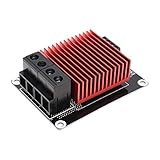
Hot Bed Power Expansion Board Heating Controller Module
- Voltage: 12V to 24V; Max Current: 25A
- Can work stably when the current is not more than 25A
- Maximum power of the heated bed: Over 300W (12V) or 600W (24V)
- Make sure that the cables that connect to the controller board and hotbed can withstand high current
- We recommend using a 24V power supply when using a heat bed with high power
Upgrade your 3D printer’s heating system with the Hot Bed Power Expansion Board Heating Controller Module. This module effectively manages high current loads, ensuring your heated bed runs smoothly without stressing your printer’s mainboard. It works with 12V to 24V power supplies, handling up to 25A and over 600W at 24V for stable, efficient heating.
The controller is easy to integrate by connecting the signal input cable from your printer’s hot bed output to the module’s input. Its compact and lightweight design fits neatly inside most 3D printer setups, saving space and reducing clutter. This setup helps maintain consistent temperature control, improving print quality and reliability.
Maintenance is straightforward as the module protects your mainboard from overload, minimizing the risk of damage. However, correct wiring is crucial to avoid issues, so it’s best suited for users comfortable with basic electronics. The module supports only 12V to 24V systems, so compatibility should be confirmed before installation.
With its focus on functionality and safety, this controller module is ideal for upgrading heated beds to handle higher power loads efficiently. It offers a practical solution for enhanced heat management in 3D printing.
Best for: Users upgrading 3D printer heated beds who need reliable, high-power heat control for 12V or 24V systems.
What We Like:
- Handles high current up to 25A for powerful heating capacity
- Protects mainboard by offloading heated bed power control
- Compact, lightweight design fits most 3D printers
- Supports stable and consistent temperature regulation
Specification:
| Feature | Details |
|---|---|
| Manufacturer | ReliaBot |
| Voltage Support | 12V to 24V |
| Max Current | 25A |
| Max Power Output | Over 600W at 24V |
| Dimensions | Compact (exact size not specified) |
| Weight | Lightweight (exact weight not specified) |
2Pcs Heat Bed Power Expansion Module 25A MOS Tube Mosfet for 3D Printer
- This 25A MOSFET module is designed as a reliable power expansion solution for 3D printer heated beds. It offloads high current switching from the main board, preventing...
- By diverting heavy current away from the main board, this module safeguards sensitive connectors and traces from overheating damage. Its robust MOSFET handles loads...
- Grade Components for Durability: Featuring premium stainless steel terminals and aluminum heat dissipation blocks, the module ensures secure connections and efficient...
- Optimized for PID Temperature Control: Unlike mechanical relays, this MOSFET - based module supports precise PWM / PID control for heated beds, enabling smoother...
- Universal Compatibility with 3D Printers: Suitable for open - source 3D printer motherboards and extruder upgrades. Easy to install with standard wiring, making it a...
Experience enhanced power management with the 2Pcs Heat Bed Power Expansion Module 25A MOS Tube Mosfet. This module prevents overheating by offloading high current loads up to 25A from your 3D printer’s mainboard. It ensures your printer runs safely and efficiently, reducing the risk of damage to sensitive components.
Designed for operating voltages between 12V and 24V, it supports precise PWM/PID temperature control, helping maintain consistent heat levels for better print quality. The sturdy build features stainless steel terminals and aluminum heat sinks, which offer reliable cooling and long-lasting durability.
Maintenance is simple due to its robust design and standard wiring compatibility. Whether you’re upgrading your heated bed or extruder, this MOSFET module integrates smoothly with most 3D printer firmware, making installation straightforward for users with basic wiring knowledge.
While it excels in typical 3D printing environments, note that it operates within an 80°C temperature limit and is not suitable for higher voltage systems. This makes it best suited for hobbyists and industrial users focused on dependable high-current power control.
Best for: DIY 3D printer builders and industrial users seeking efficient and safe power management for heated beds and extruders.
What We Like:
- Supports high current loads up to 25A, protecting the mainboard.
- Durable stainless steel terminals and aluminum heat sinks for effective cooling.
- Compatible with most 3D printer firmware and enables precise temperature control.
- Easy installation with standard wiring for most users.
Specification:
| Feature | Details |
|---|---|
| Manufacturer | Not specified |
| Dimensions | Not specified |
| Weight | Not specified |
| Material | Stainless steel, aluminum |
| Color Options | Not specified |
MKS MOSFET 3D Printer Heating Controller 30A
- Each one has done functional test
- Superior performance of MOSFET (Max 280A)
- Extra large heat sink , the maximum current can be up to 30A or more
- Can use hot bed output signal of Ramp1.4 and MKS series to control
- Can use digital signal of 5-24v to control
The MKS MOSFET 3D Printer Heating Controller 30A offers a dependable solution for managing heated beds in demanding 3D printing environments. It ensures consistent power delivery with support for up to 30A continuous current and a peak capacity of 280A. This capability helps maintain stable temperatures, improving print quality and reducing the risk of heat-related issues.
Designed with an extra-large heat sink, the controller effectively dissipates heat during extended printing sessions. This prevents overheating, enhancing both safety and device longevity. Its compatibility with Ramp1.4 and MKS series control signals makes it easy to integrate into existing setups without complex adjustments.
Installation requires careful attention to wiring, especially ensuring correct anode and cathode alignment to avoid damage. The sturdy metal and plastic construction balances durability with functionality, though it may weigh more than some lighter alternatives.
Overall, this controller is designed for users who need reliable, high-current heated bed control with easy integration and effective thermal management.
Best for: Users seeking a robust MOSFET controller for heated beds in advanced and high-demand 3D printing systems.
What We Like:
- Supports high continuous current of 30A with a peak capacity of 280A
- Large heat sink provides reliable heat dissipation
- Compatible with Ramp1.4 and MKS control signals for straightforward setup
- Durable metal and plastic construction ensures long-term use
Specification:
| Feature | Details |
|---|---|
| Manufacturer | DEVMO |
| Dimensions | Not specified |
| Weight | 0.23 kg (approx.) |
| Material | Metal and Plastic |
| Current Rating | 30A continuous, 280A max |
3D Printer Hotbed MOSFET Expansion Module Black
- It very often that after purchasing 3D printer (especially in Anet A8, A6, A2) motherboard is all load to heat up Printing Hotbed. That creates fire hazard problems as...
- It also solving print quality issues as motherboard is not heavily overloaded with power consumption of heating printbed.
- Hence that issue MOSFET Module is solving existing problems by taking the load off the motherboard.
- It is used not for hotbed only. It is very common that it is used for extruder's heating elements .
- MAinly it is to take the load off the motherboard and make motherboard more stable and power interference .
Enhance your 3D printing setup with the 3D Printer Hotbed MOSFET Expansion Module Black, designed to improve power management and safety. It effectively offloads the high current load from your motherboard, reducing the risk of overheating and damage during long print jobs.
This module supports up to 25A current with a 12V power supply, ensuring stable and consistent power delivery to your heated bed. By stabilizing power flow, it helps maintain better print quality and protects sensitive connectors from excessive strain.
Crafted from durable black plastic, the expansion module fits seamlessly with popular motherboard models like Anet A8, A6, A2, and Chitu. Installation requires basic wiring knowledge, but once set up, it offers a reliable upgrade for safer 3D printing.
Regular maintenance is minimal; just ensure connections remain secure and inspect the module periodically for any signs of wear. Note that this device is limited to 12V systems and includes one MOSFET module with a 2-pin lead, so additional wiring may be necessary for your setup.
Best for: 3D printing enthusiasts and professionals using Anet or compatible motherboards who need safe and stable power management for heated beds.
What We Like:
- Reduces motherboard overheating and fire risks
- Supports high current loads up to 25A for powerful heated beds
- Compatible with multiple 3D printer boards including Anet and Chitu
- Durable design with easy integration into existing setups
Specification:
| Feature | Details |
|---|---|
| Manufacturer | Not specified |
| Dimensions | Not specified |
| Weight | Not specified |
| Material | Black plastic |
| Color Options | Black |
| Compatible Voltage | 12V |
| Max Current | 25A |
| Included Items | One MOSFET expansion module with 2-pin lead |
3D Printer Heating Controller MOSFET for Heatbed Extruder MOS Module
- High Power Expansion Module: This 3d printing accessory serves as a general add-on heated bed power expansion module, enhancing the performance of your 3d printer
- Sturdy Pcb Material: Constructed from sturdy pcb material, this 3d printer control module is designed to withstand the demands of your 3d printing projects
- Efficient Heat Dissipation: Equipped with an extra-large heatsink, this control module for 3d printer supports a maximum electric current of over 30a, ensuring efficient...
- Flexible Signal Control: This module can utilize ramp1.4 or the heatbed of the mainboard for direct output signal control, providing versatile options for your setup
- Versatile Voltage Compatibility: The 3d printer heating controller supports digital signal control from 5v to 24v, making it suitable for various 3d printing applications
Experience precise and reliable control for your 3D printer’s heated bed with this 3D Printer Heating Controller MOSFET module. Designed to handle currents over 30A, it ensures consistent power delivery, preventing temperature fluctuations that could affect print quality.
Its robust PCB and large heatsink work together to dissipate heat effectively. This design reduces the risk of overheating during long print jobs, enhancing both safety and component longevity. The module supports digital signals from 5V to 24V, making it compatible with popular mainboards like Ramp1.4.
Installation requires basic wiring knowledge, but once set up, it seamlessly integrates into your printer’s heating system. Compact yet sturdy, this red MOSFET module fits well into most printer setups without taking up excessive space.
Regular maintenance is straightforward—just ensure the heatsink remains clean and free of dust to maintain optimal performance. This module is tailored specifically for 3D printer heatbeds and extruders, offering a dedicated solution for improving thermal control.
Best for: Users needing a durable and efficient high-current heating controller tailored for 3D printer heatbeds and extruders.
What We Like:
- Supports stable high current over 30A for consistent heatbed performance
- Large heatsink effectively manages heat during extended prints
- Compatible with a wide voltage range (5V to 24V) and Ramp1.4 signals
- Compact design balances power and space efficiency
- Easy to maintain with simple cleaning of heatsink
Specification:
| Feature | Details |
|---|---|
| Manufacturer | Not specified |
| Dimensions | 8.8 x 6.7 x 3.3 cm |
| Weight | 150 g |
| Color Options | Red |
| Voltage Range | 5V to 24V (digital) |
| Current Rating | Over 30A |
Lysee 3D Printer Hotbed MOSFET Expansion Module (3 pcs)

- Size: 3 pcs
- Item type: Motherboard
- Macine: Anet
The Lysee 3D Printer Hotbed MOSFET Expansion Module is designed to provide stable, high-current power for your heated bed. If your printer struggles with power overloads or inconsistent heating, this module offers a reliable solution. It allows your printer to safely handle currents up to 25A, far beyond the typical 15A limit of most controller boards.
This set of three modules is compatible with popular 3D printer models such as Anet A8, A6, and A2. It also works well with Chitu and other open motherboards, expanding your printer’s power capacity without risking damage to the control board’s connectors. The compact design makes maintenance straightforward, ensuring your printer stays efficient over time.
Installing the module requires some technical knowledge but results in a safer, more reliable power supply to your heated bed. By offloading the high current load from your controller board, it prevents overheating and potential failures. This upgrade is essential for users aiming to improve print quality and extend their printer’s lifespan.
Best for: 3D printing enthusiasts with 12V heated beds needing to manage higher current loads safely and protect their printer’s electronics.
What We Like:
- Supports stable operation up to 25A, reducing risk of controller board damage
- Compatible with Anet A8, A6, A2 models and Chitu motherboards
- Compact and durable design for long-term reliability
- Improves safety by handling high current loads effectively
Specification:
| Feature | Details |
|---|---|
| Manufacturer | Lysee |
| Quantity | 3 Modules |
| Current Capacity | Up to 25A |
| Compatible Models | Anet A8, A6, A2 |
| Motherboard | Chitu and others |
| Voltage | 12V Heated Beds |
Lysee 3D Printer Hotbed Heating MOSFET Module

- Functional test has been done for each one.
- The MOS tube performance is excellent, nominal maximum current is 280A.
- Maximum current can be up to 30A or more due to extra large heat sink.
- Can use heatbed output signal of Ramp1.4 and series to control.
- Can use digital signal of 5-24V to control.
The Lysee 3D Printer Hotbed Heating MOSFET Module offers a reliable solution for managing high current loads in 3D printer heatbeds. It handles over 30A effortlessly, ensuring stable and consistent heating performance. This helps prevent common issues like voltage drops and overheating during long print jobs.
Its robust design includes an extra-large heat sink that efficiently dissipates heat, prolonging the module’s lifespan and reducing maintenance needs. The unit is easy to integrate, accepting digital control signals from 5 to 24V, which makes it compatible with a variety of printer setups.
Designed primarily for Ramp1.4 boards, this module simplifies heatbed control by providing a durable and high-capacity MOSFET solution. While its size may limit use in compact printers, the sturdy build and tested reliability make it a solid choice for serious 3D printing enthusiasts.
Best for: Users who require a dependable high-current MOSFET module to enhance 3D printer heatbed control, especially with Ramp1.4 control boards.
What We Like:
- Supports high currents over 30A for stable heatbed operation
- Large heat sink ensures efficient heat dissipation
- Compatible with digital control signals from 5 to 24V
- Durable design tested for reliable performance
Specification:
| Manufacturer | Lysee |
|---|---|
| Dimensions | Not specified |
| Weight | Not specified |
| Material | Electronic components with metal heat sink |
| Color Options | Not specified |
Lysee MOSFET Board for CR-10 Ender-3
- Functional test has been done for each one.
- The MOS tube performance is excellent, nominal maximum current is 280A.
- Maximum current can be up to 30A or more due to extra large heat sink.
- Can use heatbed output signal of Ramp1.4 and series to control.
- Can use digital signal of 5-24V to control.
The Lysee MOSFET Board offers precise and reliable hotbed heating control for your 3D printer. It ensures consistent temperature management, reducing the risk of overheating and improving print quality. This board is designed to handle currents over 30A, making it ideal for demanding printing tasks.
Its compact design with a large heat sink allows efficient heat dissipation, preventing thermal issues during long print jobs. The module supports digital control signals from 5 to 24V and works seamlessly with Ramp1.4 boards. Installation is straightforward, requiring only basic wiring to connect the power supply, heated bed, and control signals.
Maintenance is simple since the MOSFET board includes all necessary cables and terminals, minimizing setup errors. While it excels in high-current applications, its size might limit use in very compact printer enclosures. Users with low current needs might find it more advanced than necessary.
This board enhances the safety and stability of your printer’s hotbed, delivering consistent performance for CR-10, Ender-3, and similar models.
Best for: 3D printing enthusiasts using CR-10, Ender-3, or comparable printers who need a stable and efficient hotbed heating controller.
What We Like:
- Supports high current (over 30A) for stable heating performance
- Compatible with 5-24V control signals and Ramp1.4 boards
- Includes all cables and terminals for easy installation
- Large heat sink ensures effective thermal management
Specification:
| Feature | Details |
|---|---|
| Manufacturer | Lysee |
| Compatible Models | CR-10, Ender-3, similar |
| Current Rating | Over 30A |
| Control Signal | 5-24V digital |
| Cooling | Large heat sink |
| Dimensions | Compact module (exact size not specified) |
Factors to Consider When Choosing a 3d Printer Hotbed Mosfet

When choosing a 3D printer hotbed MOSFET, you need to evaluate its current capacity to handle your printer’s power demands. Make sure the voltage compatibility matches your setup and that it can dissipate heat efficiently to avoid overheating.
You’ll also want to check signal control compatibility and how easy it is to install for a smooth upgrade. It’s all about making sure everything works well together without any hassle.
Current Capacity Requirements
Choosing a MOSFET with the right current capacity is critical to confirm your 3D printer’s hotbed operates safely and efficiently. Typically, MOSFET modules handle between 25A and 30A, which suits most heated beds.
For example, a 240W hotbed running on a 12V supply demands around 20A. You need to calculate your bed’s power usage carefully to pick a MOSFET that won’t be pushed beyond its limits.
Exceeding the maximum current rating risks overheating and damaging both the MOSFET and your printer’s motherboard. To avoid this, choose a MOSFET with a current capacity slightly higher than your bed’s requirements.
This safety margin confirms stable performance and reduces the chance of failure during intense printing jobs. It’s always better to have a bit of extra capacity than to risk a breakdown when you’re in the middle of a print.
Voltage Compatibility Range
Since your 3D printer’s power supply can vary, you’ll want a MOSFET that supports the appropriate voltage range, typically between 12V and 24V. Choosing a MOSFET compatible with your printer’s voltage guarantees efficient operation and protects electronic components from damage.
If you pick a MOSFET with too low a voltage rating, it won’t handle the power demands, leading to overheating and failure. Conversely, a higher voltage rating accommodates more powerful heated beds, which can improve print quality.
Always match the MOSFET’s voltage range with your printer’s specifications to maintain safety and peak performance. Operating outside these limits risks reducing the MOSFET’s lifespan and reliability, so voltage compatibility is a critical factor in your selection process.
Heat Dissipation Efficiency
Although MOSFETs are essential for controlling your 3D printer’s heated bed, they generate considerable heat when handling high currents, often exceeding 25A.
To keep your setup stable, you need efficient heat dissipation. Choosing a MOSFET with a larger heat sink increases surface area, allowing better heat exchange and preventing overheating.
This not only prolongs the MOSFET’s lifespan but also guarantees consistent temperature control, improving print quality. Modules designed for efficient cooling can handle power loads over 600W at 24V without risking performance or safety.
Additionally, proper installation that allows good airflow around the MOSFET module greatly boosts cooling efficiency and reliability. Prioritize these factors to avoid component failure and maintain smooth, precise printing.
Signal Control Compatibility
When selecting a MOSFET for your 3D printer’s heated bed, you’ll want to make sure it communicates seamlessly with your printer’s mainboard. Most modules require a digital control signal between 5-24V, so check that your MOSFET supports this range.
Compatibility with popular control boards like Ramps1.4 simplifies integration without extra tweaks. Also, look for MOSFETs that handle PWM (Pulse Width Modulation) signals—they allow smoother temperature control, improving print quality and reducing thermal cycling.
Some modules offer precise control signals designed for heated beds or extruders, tailoring performance to your printer’s needs. Finally, ensuring your MOSFET works well with various firmware configurations gives you flexibility if you upgrade or switch printers in the future.
Installation Ease
Ensuring your MOSFET module communicates well with your control board is just one part of the setup. You’ll want to focus on installation ease to get your 3D printer running quickly.
Look for modules with standard wiring configurations—these simplify connections and reduce setup time. Clear connection diagrams are a must; they guide you through proper electrical hookups and help avoid costly errors.
Make sure the MOSFET is compatible with common 3D printer motherboards so you won’t need extensive modifications. Also, consider the module’s weight and size—lighter, compact designs fit better in tight spaces.
Finally, check if the package includes installation accessories like cables and terminals. Having everything you need on hand can make the process smoother and faster.
Build Material Quality
Since your 3D printer’s hotbed MOSFET handles high currents and heat, choosing one made from durable materials is essential. Look for MOSFETs built with metal and high-quality plastic to guarantee they last and perform reliably under heavy loads.
Pay attention to components like stainless steel terminals and aluminum heat dissipation blocks. These parts boost durability and improve heat management, which is super important for keeping things running smoothly.
Effective heat sinks are a must—larger ones dissipate heat better, reducing the risk of overheating and extending the module’s lifespan. Also, the design should minimize electrical resistance to enhance efficiency and reliability during operation.
Quality materials directly impact current handling capabilities, with some MOSFETs safely managing currents over 30A. This makes them ideal for demanding 3D printing setups.
Safety Features Included
Many 3D printer hotbed MOSFET modules include essential safety features designed to protect both your printer and yourself. You should choose modules that handle high current loads, typically 25A or more, to prevent overheating and fire risks.
Look for efficient heat dissipation, like large heatsinks, to keep temperatures in check and extend the module’s lifespan. A good MOSFET offloads electrical stress from your mainboard connectors, protecting delicate components from damage caused by excessive current.
Ascertain the module operates stably at required power levels, such as 240W for 12V systems, for reliable performance. Also, verify your printer’s firmware compatibility to maintain proper temperature control and avoid issues from incorrect signaling.
Prioritizing these safety features keeps your 3D printer running smoothly and securely. It’s really worth taking the time to pick the right module for peace of mind.
Device Compatibility Scope
When choosing a 3D printer hotbed MOSFET, you need to confirm it matches your printer’s specifications and setup. Start by checking if the MOSFET supports your specific printer model, as some modules suit brands like Anet, CR-10, or Ender-3.
Verify the voltage range—most work well between 12V and 24V, aligning with your printer’s power supply. Also, make certain the MOSFET can handle the heated bed’s current, usually between 25A and 30A.
Don’t overlook compatibility with your printer’s mainboard control signals, such as Ramp1.4 or the MKS series, to guarantee smooth operation. Finally, review the installation requirements and included components to verify easy integration without extra hassle.
Frequently Asked Questions
How Do MOSFETS Improve 3D Printer Safety?
Mosfets improve your 3D printer’s safety by handling high current loads efficiently, preventing overheating and electrical fires. They reduce voltage spikes and guarantee stable power delivery,
so your printer runs smoothly and safely without damaging components.
Basically, they act like a smart switch that keeps everything running just right. This means fewer worries about your printer causing any electrical issues while you’re busy creating.
Can MOSFETS Be Used With All 3D Printer Models?
Think of mosfets like universal keys; you can use them with most 3D printers, but not all locks fit perfectly.
You’ll need to check your printer’s specs and maybe tweak wiring to guarantee a safe, smooth upgrade.
What Are Common Signs of a Failing MOSFET?
You’ll notice your hotbed not heating properly, intermittent power issues, or your printer shutting down unexpectedly.
Sometimes, the mosfet gets unusually hot or shows visible damage, so keep an eye out for these warning signs.
How Do MOSFETS Affect Print Quality?
Mosfets are the heartbeat of your print’s heat control; if they falter, your bed won’t maintain steady temperatures.
You’ll see warping, layer separation, or failed adhesion, making your prints look rough and inconsistent.
It’s like your printer loses its rhythm, which really shows up in the final quality.
Are MOSFET Upgrades Compatible With Original Printer Warranties?
You usually won’t keep your original warranty if you upgrade the mosfet yourself, since manufacturers often see it as tampering.
It’s best to check your printer’s warranty terms before making any modifications to avoid issues. That way, you won’t be caught off guard if the warranty gets voided.
Conclusion
Choosing the right 3D printer hotbed MOSFET is like picking the perfect gear for a smooth ride—it guarantees your printer runs efficiently and safely. Consider current capacity, compatibility, and build quality to avoid overheating or failures.
With options like the MKS MOSFET or Lysee modules, you’ll find a reliable fit for your setup. These choices help maintain consistent power delivery and protect your printer’s electronics.
Investing in a quality MOSFET keeps your prints consistent and your printer protected. It’s a small upgrade that can make a big difference in the longevity and safety of your 3D printer.
In the world of 3D printing, having the best hotbed MOSFET means smoother prints and fewer headaches. So, whether you’re upgrading or building new, picking the right MOSFET ensures your 3D printer stays reliable and efficient for years to come.