
3 Best 3D Printers for Nylon Filament in 2027
To 3D print nylon filament well in 2027, you’ll want to pick printers that offer precise hotend control at 270–300°C and come with all-metal nozzles for durability. These features are essential because nylon requires high temperatures to melt properly. Plus, all-metal nozzles stand up better to wear and tear, especially when printing abrasive nylon composites.
Make sure the printer has a heated bed that can maintain temperatures between 30–60°C. This helps reduce warping and ensures strong layer adhesion. An enclosed chamber is also a big plus—it keeps moisture and temperature stable during printing, which is super important for nylon.
Some advanced models even include built-in drying options to keep your filament dry and ready to print. Hardened steel nozzles are another great feature to look for since they protect against the abrasive nature of nylon composites. These combined features guarantee strong, warp-free parts with excellent layer adhesion.
If you’re using SUNLU or Polymaker nylons, look for printers optimized specifically for those brands. Tailored printing settings can make a huge difference in your final print quality. Keep exploring to find the best options for your nylon 3D printing projects!
| Image | Name | Editor's Rating | Price |
|---|---|---|---|

|
|
||
|
|
||
|
|
SUNLU Nylon Filament 1.75mm, Nylon 6+66 PA Filament, 1KG, Black
- ①【High Strength and Impact Resistance】- SUNLU nylon filament has tensile strength and bending strength exceeding that of regular PLA/ABS, ensuring durability.
- ②【Excellent Drop Resistance】- PA 3D printer filament resists damage from abrasion and friction, it very suitable for high-stress parts such as gears and bearings...
- ③【Low Shrinkage, Warp-Free & Easy Printing】- Nylon 6/66 copolymer formula minimizes shrinkage during printing, preventing warping and cracking for complex...
- ④【High-Temperature Resistance】- PA filament has a heat deflection temperature of 121°C, ensuring stability in harsh environments (such as engine compartments...
- ⑤【Exceptional Layer Adhesion】- Carbon fiber reinforcement enhances interlayer bonding, reducing delamination and fatigue—perfect for dynamic parts like drone arms...

SUNLU Nylon Filament 1.75mm offers a strong and durable solution for 3D printing parts that must endure stress and wear. Its unique Nylon 6+66 blend delivers superior strength, making it ideal for functional components that require lasting performance.
This black filament excels in resistance to impact, abrasion, and friction, perfect for dynamic parts such as drone arms or robotic joints. It reduces common printing issues like warping and shrinkage, ensuring precise prints even with complex designs.
Maintaining this filament is straightforward but important: it requires drying before use to avoid moisture-related problems. The recommended print temperature is 270–280°C, with a heated bed set between 30–50°C, which supports consistent, high-quality results.
SUNLU Nylon 6+66 stands out for its heat deflection temperature of 121°C, enabling parts to perform reliably in demanding environments. While it demands higher printing temperatures and slower speeds, the durability gains make it worthwhile for engineering and professional applications.
Best for: Engineers and hobbyists needing a high-strength, stable filament for producing tough, functional mechanical parts.
What We Like:
- High tensile and bending strength with excellent impact resistance
- Low shrinkage for precise, warp-free prints
- Heat deflection temperature of 121°C for durable parts
- Suitable for complex geometries and dynamic components
- Requires drying to maintain filament quality
Specification:
| Attribute | Details |
|---|---|
| Manufacturer | SUNLU |
| Diameter | 1.75 mm |
| Weight | 1 kg |
| Material | Nylon 6+66 (PA) |
| Color | Black |
| Recommended Print Temp | 270–280°C |
| Heated Bed Temp | 30–50°C |
| Heat Deflection Temp | 121°C |
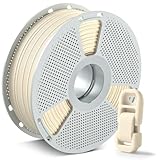
SUNLU Nylon Filament 1.75mm, Nylon 6+66 PA Filament, 1KG, Natural White
- ①【High Strength and Impact Resistance】- SUNLU nylon filament has tensile strength and bending strength exceeding that of regular PLA/ABS, ensuring durability.
- ②【Excellent Drop Resistance】- PA 3D printer filament resists damage from abrasion and friction, it very suitable for high-stress parts such as gears and bearings...
- ③【Low Shrinkage, Warp-Free & Easy Printing】- Nylon 6/66 copolymer formula minimizes shrinkage during printing, preventing warping and cracking for complex...
- ④【High-Temperature Resistance】- PA filament has a heat deflection temperature of 121°C, ensuring stability in harsh environments (such as engine compartments...
- ⑤【Exceptional Layer Adhesion】- Carbon fiber reinforcement enhances interlayer bonding, reducing delamination and fatigue—perfect for dynamic parts like drone arms...
SUNLU Nylon Filament delivers strength and durability for demanding 3D printing projects. Designed to resist impact and wear, this Nylon 6+66 PA filament excels where typical PLA or ABS fall short. Its carbon-fiber reinforcement improves layer adhesion, reducing delamination and fatigue in parts exposed to dynamic stress.
This filament maintains excellent thermal stability up to 121°C, making it suitable for applications requiring heat resistance. Post-print annealing can be applied to further boost strength and thermal performance. Minimal shrinkage ensures parts stay precise and free from warping.
Proper maintenance is essential to achieve the best results. The filament must be dried at 90°C for 12 hours to avoid moisture-related print issues. It prints at higher nozzle temperatures (270–280°C), so compatibility with your printer and filament dryer should be confirmed.
Best for: Engineers, hobbyists, and professionals needing tough, impact-resistant parts that maintain dimensional stability under stress.
What We Like:
- High tensile and bending strength with wear resistance
- Carbon-fiber reinforcement improves adhesion and durability
- Minimal shrinkage reduces warping and print defects
- Vacuum-sealed packaging protects against moisture
- Suitable for dynamic parts like drone arms and robotic joints
Specification:
| Attribute | Details |
|---|---|
| Manufacturer | SUNLU |
| Material | Nylon 6+66 PA with Carbon Fiber |
| Diameter | 1.75 mm |
| Weight | 1 kg |
| Color | Natural White |
| Recommended Nozzle Temp | 270–280°C |
| Thermal Stability | Up to 121°C |
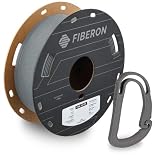
Polymaker Fiberon PA6-GF25 Glass Fiber Nylon Filament 1.75mm, Grey, 0.5kg
- Strong Nylon for Load-Bearing Parts: PA6-GF25 combines 25% glass fiber reinforcement with Nylon 6 to provide high strength, stiffness, impact durability, and layer...
- Engineered Heat Performance: After annealing at 100°C for 16 hours, test specimens reach an HDT of 191°C at 0.45 MPa and 157°C at 1.8 MPa. These results are not...
- Keep Dry Before and During Printing: Nylon 6 absorbs moisture, which can reduce stiffness and strength while increasing flexibility. Store and print below 20% relative...
- Use an All-Metal Hotend and Hardened Nozzle: Print at 280–300°C with a 40–50°C build plate and the cooling fan off. Do not exceed the recommended bed temperature...
- Important Post-Printing Guidance: Anneal printed parts at 100°C for 16 hours when maximum thermal and mechanical performance is required. Remove same-material supports...
Polymaker Fiberon PA6-GF25 is designed for 3D printing projects that require exceptional strength and heat resistance. This grey filament combines Nylon 6 with 25% glass fiber, providing enhanced stiffness and durability to tackle demanding mechanical and automotive parts.
Printing this filament requires an all-metal hotend and a hardened nozzle to handle its abrasive nature. Maintain a nozzle temperature between 280–300°C and a heated bed at 40–50°C to reduce warping. Turning off the cooling fan during printing helps improve layer adhesion and overall print quality.
Since Nylon tends to absorb moisture, it’s important to keep the filament dry. Proper storage and drying will preserve its mechanical properties and prevent weakened prints. After printing, annealing parts at 100°C for 16 hours increases heat resistance and dimensional stability.
This filament excels in producing load-bearing components that demand toughness and precision. Its reinforced structure ensures long-lasting performance in industrial, automotive, and other high-stress applications.
Best for: Professionals and hobbyists needing a durable, heat-resistant filament for precision parts in automotive and mechanical projects.
What We Like:
- Strong mechanical performance with 25% glass fiber reinforcement
- High heat resistance after annealing
- Compatible with most printers equipped with all-metal hotends
- Enables precise, load-bearing prints with excellent stiffness
Specification:
| Attribute | Details |
|---|---|
| Manufacturer | Polymaker |
| Material | Nylon 6 with 25% Glass Fiber |
| Diameter | 1.75 mm |
| Weight | 0.5 kg |
| Color | Grey |
Factors to Consider When Choosing a 3D Printer for Nylon Filament

When choosing a 3D printer for nylon filament, you need precise temperature control and a compatible build plate to guarantee strong adhesion. An enclosed print chamber helps maintain consistent conditions, which is super important for nylon.
Also, moisture management features are a must to prevent filament issues. Don’t forget to pick a printer with a durable nozzle material that can handle nylon’s abrasiveness. This way, your prints come out great without wearing down your equipment too fast.
Temperature Control Precision
Mastering temperature control is essential for successful nylon filament printing, as even slight fluctuations can cause under-extrusion, poor layer adhesion, or warping. You need a printer with precise hotend control within ±1–2°C, since nylon typically prints between 270–300°C.
Stable heated bed temperatures around 30–50°C, or higher for some nylons, also minimize first-layer warping and guarantee dimensional accuracy. Consistent temperature throughout long prints and uniform heat distribution prevent layer delamination and maintain mechanical strength.
Look for accurate, repeatable temperature ramps and the ability to hold annealing setpoints (90–130°C) if you plan post-print heat treatments. Closed-loop monitoring with thermal safeguards, like thermal runaway protection and reliable sensors, protects your prints from failures caused by moisture or overheating.
This way, you can guarantee reliable, high-quality nylon prints every time.
Build Plate Compatibility
A build plate plays a vital role in successful nylon filament printing by providing the right surface for adhesion without causing excessive bonding. You’ll want a plate with options like a PEI sheet, Garolite, or nylon-friendly adhesives such as a PVA glue stick to prevent warping and part lift.
Heated bed capability reaching 50–60°C helps maintain stable temperatures and improve first-layer adhesion. Look for removable or replaceable surfaces, like magnetic or spring steel plates, to make part removal easier without damaging the build plate.
Make certain the surface is low-porosity and chemically compatible to avoid nylon sticking too strongly or absorbing moisture. Finally, bed flatness and consistent temperature control are critical since any unevenness or temperature fluctuations can cause warping and layer separation in your nylon prints.
Enclosed Print Chamber
Although nylon filament demands precise temperature control, using an enclosed print chamber helps you maintain a stable environment that markedly reduces warping and layer separation. By keeping ambient temperatures above 40–50°C, especially for Nylon6/66 and glass-filled nylons, you prevent rapid cooling that causes shrinkage stresses and part distortion.
An enclosure also minimizes drafts and thermal gradients, improving dimensional accuracy and interlayer bonding in long or complex prints. When printing nylons requiring high extrusion temperatures (270–300°C), the enclosure reduces cracking risks from sudden temperature swings and supports annealing processes.
Just make sure your enclosure allows safe ventilation or filtered exhaust to manage fumes and moisture. Also, verify that internal parts can withstand elevated temperatures to avoid deformation or failure during extended prints.
Moisture Management Features
Because nylon readily absorbs moisture from the air, managing filament humidity is essential to guarantee print quality and mechanical strength. You should store and print nylon at under 20% relative humidity and dry the filament at 90–100°C for 8–12 hours, or up to 16 hours for reinforced nylons.
Look for printers with enclosed or heated build chambers and front-facing filament dryers or dry boxes to maintain dryness during printing. Make certain your filament spools can handle drying temperatures above 110°C to avoid deformation.
Consider printers that offer real-time filament moisture monitoring or support vacuum-sealed storage with desiccant packs to prevent moisture reabsorption. If nylon gets damp, bake it as recommended and print immediately from a sealed environment to keep your prints strong and free of defects.
Nozzle Material Durability
When printing with nylon filament, especially glass- or carbon-filled types, you’ll need a nozzle built to withstand abrasion and high temperatures. Standard brass nozzles wear quickly, causing extrusion issues and dimensional inaccuracies due to nozzle bore erosion.
Instead, opt for hardened steel, stainless steel with wear-resistant coatings, or tungsten carbide nozzles. These materials resist wear and maintain shape even at the 270–300°C printing range nylon demands.
Corrosion resistance is also vital because nylon absorbs moisture and many printing environments have elevated humidity. Stainless steel or coated nozzles handle this better than brass.
For long runs, consider nozzles with replaceable tips designed for wear resistance. This helps reduce downtime and keeps print quality consistent.
Prioritizing nozzle durability guarantees reliable, precise nylon prints without frequent replacements. It’s definitely worth the investment!
Print Speed Capabilities
Choosing the right nozzle material helps maintain print quality as you push the limits of nylon printing. Nylon typically prints best at moderate to high speeds, around 60–150 mm/s, but you’ll need to tune settings based on filament type and part complexity.
If you want to print stiffer, reinforced nylons faster—up to 200–300 mm/s—be cautious. Higher speeds can weaken layer adhesion and increase nozzle pressure, so always check critical dimensions afterward.
Slower speeds, between 20–60 mm/s, improve layer bonding and surface finish. This is especially true for thin walls or functional parts requiring strength.
When increasing speed, raise extrusion temperature or use a larger nozzle to maintain consistent melt flow and avoid under-extrusion. Also, keep nylon dry and monitor extrusion stability.
Faster printing can cause delamination or bridging issues with this hygroscopic material, so stay on top of these factors to get the best results.
Frequently Asked Questions
How to Store Nylon Filament to Prevent Moisture Absorption?
You should store nylon filament in an airtight container with desiccant packs to keep moisture away. Keep it in a cool, dry place.
Also, consider using a filament dryer before printing to guarantee peak results. This way, you’ll get the best quality from your prints every time.
Can Nylon Filament Be Used for Food-Safe Prints?
You can use nylon filament for food-safe prints, but only if the filament is specifically food-grade and your printer’s nozzle and environment are clean.
Otherwise, contamination risks make it unsuitable for direct food contact. So, it’s really important to double-check these details before printing anything that will touch food.
What Post-Processing Techniques Work Best for Nylon Prints?
You’ll want to sand nylon prints smooth, like polishing a rough stone, then apply heat treatment or vapor smoothing to seal pores.
These contrast techniques sharpen details while softening texture, giving your nylon prints a sleek, durable finish.
Are There Differences in Printing Settings for Dyed Versus Natural Nylon?
Yes, you’ll need to adjust temperature and cooling settings slightly for dyed nylon since pigments can affect melting behavior.
Also, slow down print speed and dry the filament well to prevent clogging and guarantee smooth extrusion with dyed nylon.
How Does Nylon Filament Compare Cost-Wise to Other Materials?
Nylon’s cost is like a sturdy bridge—higher than PLA or ABS but worth it for strength and flexibility. You’ll pay more upfront, but its durability often saves you money on replacements and repairs down the line.
It might pinch your wallet a bit at first, but think of it as an investment. Over time, the toughness of nylon means fewer headaches and less spending on fixes.
Conclusion
When choosing a 3D printer for nylon filament, you might think higher temperature capabilities always mean better prints. But that’s only part of the story. Nylon’s moisture sensitivity and warping issues mean you need a printer with a reliable enclosure and good bed adhesion, too.
So, don’t just chase specs—consider all factors to get the best results with filaments like SUNLU or Polymaker. A printer that balances temperature control, enclosure quality, and bed adhesion will help you avoid common nylon printing problems.
In the end, selecting the right 3D printer for nylon filament isn’t just about hitting high temps. It’s about managing moisture, reducing warping, and ensuring your prints stick well. This approach guarantees smoother prints and better durability with nylon materials. Your prints will thank you for choosing a printer that’s truly optimized for nylon filament.