4 Best 3D Printers for Carbon Fiber in 2026 You Need to Know
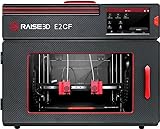
If you want top carbon fiber 3D printing, the Raise3D E2CF with its dual independent extruders and silicon carbide nozzles stands out for durability and precision. This printer is designed to handle the challenges of carbon fiber filaments, making it a reliable choice for high-quality prints.
Pair it with SUNLU PA6-CF20 or Polymaker Fiberon filaments. These materials handle high temperatures well and require hardened nozzles for the best results.
When choosing a printer, look for an all-metal hotend rated for 300°C or higher. A solid frame adds stability, and features like auto bed leveling help avoid print failures.
With the right combination, you’ll find plenty more tips to nail your carbon fiber projects and get impressive, robust prints every time.
| Image | Name | Editor's Rating | Price |
|---|---|---|---|
|
|
||

|
|
||
|
|
||

|
|
Raise3D E2CF Carbon Fiber IDEX 3D Printer
- The E2CF has slicing profiles that have been repeatedly tested and verified by our engineers in ideaMaker
- Dual IDEX Direct Drive Extrusion System Engineered for Printing Carbon Fiber Reinforced Filament
- Large Build Volume - Single: 13" × 9.4" × 9.4" Dual: 11.6" × 9.4" × 9.4"
- Maximum Nozzle Temp: 300ºC
- Flexible Steel Removable Build Plate w/Max Temp of 110ºC
Step into the world of advanced manufacturing with the Raise3D E2CF Carbon Fiber IDEX 3D Printer. Designed to tackle the challenges of printing with carbon fiber reinforced filaments, this printer ensures your parts are not only strong but also lightweight and heat-resistant. Its independent dual extruders operate in mirror and duplication modes, allowing you to double output or create complex multi-material designs efficiently.
Maintenance is simplified with durable silicon carbide nozzles and a direct drive system built to handle abrasive materials without frequent replacements. Auto bed leveling and power-loss recovery features reduce the chances of print failures, giving you more consistent results and less downtime.
The large build volume supports bigger projects, ideal for producing aerospace components, prosthetics, or custom automotive parts. While the printer’s weight means it requires a sturdy setup, this stability contributes to precise, high-quality prints.
Best for: Professionals and advanced users in manufacturing, aerospace, automotive, and medical fields needing reliable, heat-resistant carbon fiber prints with dual extrusion capabilities.
What We Like:
- Independent dual extruders with mirror and duplication modes for increased productivity
- Silicon carbide nozzles and direct drive system designed for abrasive carbon fiber filaments
- Large build volume with auto bed leveling and power-loss recovery for dependable printing
Specification:
| Feature | Details |
|---|---|
| Manufacturer | Raise3D |
| Dimensions | Not specified |
| Weight | 110 pounds (50 kg) |
| Material Compatibility | Carbon fiber reinforced filaments |
| Color Options | Not specified |
SUNLU PA6-CF20 Carbon Fiber Nylon 3D Printing Filament 1.75mm, 1KG, Black
- 【Stiff & Strong & Heat Resistant】 - SUNLU PA6-CF nylon filament 1.75mm is made of 80% PA and 20% Carbon Fibers. The carbon fiber reinforcement really provides...
- 【Good for Industrial Engineering Printing】 - SUNLU PA6 CF is very strong, durable and features an excellent heat resistance, the models printed with Carbon Fiber...
- 【Heat-Resistant】- PA6 Filament withstands up to 209°C, much higher than Easy PA, PC, ASA and other 3D printing filaments. It can be applied to parts that need to...
- 【Not Compatible with AMS】- PA6-CF is too brittle and prone to breaking inside the printer. Not recommended for use with AMS, AMS Lite, or other multi-color systems.
- 【Printing Setting】 - Nozzle: 270-290℃; Bed Temperature: 50-70℃; Speed: 50mm/s – 150mm/s; Annealing: 80℃~130℃ 5-12h (To ensure a good heat resistance of your...
Unlock new possibilities in 3D printing with the SUNLU PA6-CF20 Carbon Fiber Nylon filament. Designed for those who demand strength and heat resistance, this filament combines the flexibility of nylon with the durability of carbon fiber. It delivers tough, precise parts that hold up under pressure and heat.
This filament blends 80% PA6 nylon with 20% carbon fiber, offering exceptional stiffness and strength. It withstands temperatures up to 209°C, making it ideal for mechanical parts like gears and helmets. Its high heat resistance ensures your prints perform well in demanding environments.
To achieve the best results, dry the filament before printing and use a hardened steel nozzle to prevent wear from the carbon fiber. Maintain a nozzle temperature between 270–290°C and ensure solid bed adhesion. Be cautious with multi-extruder setups, as the filament’s brittleness could cause issues.
Best for: Engineers and hobbyists who need a robust, heat-resistant filament for high-strength parts on single-extruder FDM printers.
What We Like:
- Excellent stiffness and layer bonding for durable, functional parts
- Heat resistance suitable for high-temperature applications
- Compatible with most 1.75 mm single-extruder FDM printers
- Vacuum sealed with desiccant to keep filament dry
- Requires hardened steel nozzle for longevity
Specification:
| Feature | Details |
|---|---|
| Manufacturer | SUNLU |
| Diameter | 1.75 mm |
| Weight | 1 kg |
| Material | 80% PA6 Nylon, 20% Carbon Fiber |
| Color | Black |
Polymaker Fiberon PA6-CF20 Carbon Fiber Nylon Filament 1.75mm, Black, 0.5kg
- 20% Carbon Fiber Reinforced PA6: Fiberon PA6-CF20 combines Nylon 6 with 20% carbon fiber for high stiffness, strength, dimensional stability, and strong layer adhesion...
- Engineering Performance After Annealing: Typical TDS values include 109.3 MPa dry X-Y tensile strength and an 8.64 GPa Young’s modulus. Heat deflection temperature...
- Dry Before and During Printing: PA6 is moisture-sensitive. Dry the filament at 100°C for 10 hours before printing, then store and print below 20% relative humidity...
- Advanced Printer Setup Required: Use a 280–300°C nozzle, a 40–50°C build plate, and an all-metal hotend with the cooling fan off. A heated chamber is not required...
- Use a Wear-Resistant Nozzle: Carbon fiber is abrasive, so a hardened steel or ruby nozzle is required instead of a standard brass nozzle. For optimum heat resistance and...
Polymaker Fiberon PA6-CF20 is engineered for those who need exceptional strength and heat resistance in their 3D prints. This carbon fiber-reinforced nylon filament delivers superior stiffness and dimensional stability, making it ideal for functional parts that must endure stress and temperature. It solves common challenges in engineering prototypes where durability and precision are critical.
This filament combines Nylon 6 with 20% carbon fiber, providing a dry tensile strength of 109.3 MPa and a heat deflection temperature of 215°C after annealing. To maintain these properties, use an all-metal hotend and a wear-resistant nozzle due to the filament’s abrasive nature. Print at 280–300°C with a heated bed set between 40–50°C for optimal results.
Proper filament care is essential. Keep the filament dry and store it in low humidity to prevent print defects. Annealing your parts can further enhance their performance and longevity, ensuring your prints meet demanding industrial standards.
Best for: Engineers, makers, and industrial users needing high-strength, heat-resistant, and dimensionally stable 3D printed functional parts and prototypes.
What We Like:
- High tensile strength and rigidity for tough, durable prints
- Excellent heat resistance after annealing
- Strong interlayer bonding for reliable tooling parts
- Requires specific equipment for wear resistance and precision
- Enhanced stability with proper drying and post-processing
Specification:
| Manufacturer | Polymaker |
|---|---|
| Material | Nylon 6 with 20% Carbon Fiber |
| Diameter | 1.75 mm |
| Weight | 0.5 kg |
| Color | Black |
| Recommended Nozzle Temp | 280–300°C |
| Heated Bed Temp | 40–50°C |
SUNLU Nylon PA6-CF20 3D Printer Filament, 1.75mm, 1KG, Black
- Extreme Stiffness & Heat Resistance: SUNLU PA6-CF20 reinforced nylon filament blends 80% PA nylon with 20% carbon fibers. The result is a significant upgrade in...
- Industrial-Grade Durability: PA6-CF suitable for functional prototypes and end-use parts that must endure stress, this material excels in applications requiring high...
- High-Temperature Performance (209C/408F): Featuring a heat deflection temperature significantly higher than many common filaments like Easy PA, PC, or ASA, this material...
- Recommended Print Settings: For successful prints, use a nozzle temperature of 270-290C (518-554F) and a heated bed at 50-70C (122-158F). Print speeds between 50-150mm/s...
- Essential Printing Tip :Dry Before Use: For optimal results, dry this filament before printing. Recommended settings: 80C for 24 hours or 110C for 4 hours. Due to its...
Experience the power of advanced 3D printing with the SUNLU Nylon PA6-CF20 filament, engineered to deliver outstanding strength and heat resistance. This high-performance filament combines 80% nylon with 20% carbon fiber, solving issues related to part durability and stiffness. It ensures your prints maintain structural integrity under demanding conditions.
The filament withstands temperatures up to 209°C, making it ideal for producing automotive parts, gears, and functional prototypes that need to endure heat and mechanical stress. Its excellent layer adhesion guarantees strong, reliable prints that hold up over time.
To maintain print quality, it’s essential to dry the filament before use and print with a hardened steel nozzle to prevent wear from the abrasive carbon fibers. The recommended printing range is 270–290°C nozzle temperature and 50–70°C heated bed, compatible with most FDM 3D printers.
This 1 kg spool in classic black supports professionals and makers who require tough, heat-resistant components. Its design and material composition improve performance while addressing common printing challenges.
Best for: Makers and professionals needing high-strength, heat-resistant 3D printed parts such as automotive components, functional prototypes, and durable mechanical parts.
What We Like:
- High stiffness and tensile strength from carbon fiber reinforcement
- Heat resistance up to 209°C for demanding applications
- Vacuum-sealed with desiccant for moisture protection
- Compatible with most FDM printers
- Requires drying and hardened nozzle for best results
Specification:
| Feature | Details |
|---|---|
| Manufacturer | SUNLU |
| Material | Nylon PA6 with 20% Carbon Fiber |
| Diameter | 1.75 mm |
| Weight | 1 kg |
| Color | Black |
| Recommended Nozzle Temp | 270–290°C |
| Heated Bed Temp | 50–70°C |
Factors to Consider When Choosing a 3D Printer for Carbon Fiber 2026
When choosing a 3D printer for carbon fiber, you need to check if the extruder is compatible with abrasive materials. This is super important because carbon fiber can wear down regular nozzles quickly.
Make sure the printer can reach the high temperatures required for strong, precise prints. Also, consider if it has a build volume that fits your projects—no one wants to start a print only to realize it’s too big!
You’ll want to look for features that handle carbon fiber safely. Plus, durability and reliability matter a lot to keep your workflow smooth and avoid interruptions.
Extruder Compatibility
Although printing with carbon fiber composites demands specialized hardware, choosing the right extruder setup is essential to handle the material’s high temperature and abrasive nature.
You’ll need an all-metal hotend and heater that reach at least 300°C, ideally up to 320–350°C for CF-reinforced nylons. Select an extrusion drive that reduces filament stress—direct-drive or a short Bowden with a stiff PTFE liner works best.
Make sure the feeder can push brittle, fiber-filled filaments without grinding by using geared or high-torque extruders. Use an abrasion-resistant nozzle like hardened steel or ruby-tipped to avoid wear from carbon fibers.
Also, verify the extruder path avoids long flexible tubes or sharp bends, which cause filament breakage. Finally, confirm your firmware supports higher flow rates and fine-tuned retraction to prevent clogs and stringing with these tough composites.
Print Temperature Range
Mastering the print temperature range is essential for successful carbon fiber 3D printing. Carbon-fiber–reinforced nylons and engineering polymers need hotend temperatures between 270°C and 300°C to fully melt the matrix and make certain strong layer adhesion.
You’ll want an all-metal hotend rated for at least 300°C—preferably around 320°C—to avoid degradation that PTFE-lined hotends suffer at high temps. Keep your heated bed between 40°C and 110°C depending on the filament; nylons usually require 50–70°C to reduce warping and improve adhesion.
Monitor nozzle temperature closely, allowing thermal soak, especially for large prints, since fluctuations beyond ±5°C can cause delamination or inconsistent flow. Finally, balance temperature settings within the 270–300°C range to optimize fiber suspension and layer fusion without accelerating nozzle wear or stringing.
Build Volume Size
Choosing the right build volume size directly impacts your ability to print large carbon-fiber reinforced parts successfully. Start by measuring your largest expected part and add 10–20% extra space for fixturing, supports, or post-processing.
If you use IDEX or multi-head printers, check both single- and dual-extruder volumes since dual-head mode often reduces usable space. Larger volumes increase thermal mass, so an enclosed or heated chamber helps maintain consistent cooling and reduce warping during long prints with high-temp nylon/PA6-CF.
Pay attention to bed plate design—a removable, flexible, or split plate makes removing large, stiff carbon-fiber parts easier and safer. Finally, balance build size with rigidity and accuracy; larger gantries can cause vibrations and dimensional errors, so choose a printer proven to maintain precision at your target volume.
Material Handling Features
When printing with carbon-fiber-reinforced materials, your 3D printer’s material handling features play a crucial role in ensuring consistent quality and durability. You need an all-metal hotend that reaches at least 300°C to melt high-temp carbon-fiber nylons reliably.
Hardened nozzles, like those made from steel or silicon carbide, resist abrasive wear from carbon fibers far better than brass. Moisture is a big enemy; look for printers with sealed, desiccated filament storage or onboard dry boxes, and always pre-dry filaments around 80–110°C.
Smooth, low-friction filament paths and sturdy spool mounts prevent brittle carbon-filled filaments from snapping during long prints. Additionally, a heated build surface up to about 110°C, active bed leveling, and power-loss recovery keep prints adhering well and uninterrupted, especially for stiff composites.
Durability and Reliability
Although printing with carbon-fiber-reinforced filaments demands precision, you’ll get the best results by selecting a 3D printer built for durability and reliability. Look for a rigid metal frame and precision linear motion like linear rails to reduce vibration and keep layers aligned.
Your extruder and hotend must handle continuous high temps (up to 300°C) with strong bearings and heat management to avoid wear during long PA6/CF prints. Choose an all-metal hotend and abrasion-resistant filament path components to withstand carbon fiber’s harshness.
Features like auto bed leveling, power-loss recovery, and filament runout detection prevent print failures. Finally, check manufacturer MTBF data, warranty, and spare part availability to guarantee predictable maintenance and minimal downtime when printing abrasive, engineering-grade materials.
Frequently Asked Questions
How Does Carbon Fiber Filament Affect Printer Nozzle Wear?
Carbon fiber filament wears down your printer nozzle faster because its abrasive fibers scrape the nozzle’s interior.
You’ll want a hardened steel or ruby-tipped nozzle to handle this. It helps prevent frequent replacements and keeps your prints consistent.
Can Carbon Fiber Filaments Be Recycled After Printing?
Recycling carbon fiber filaments after printing isn’t a walk in the park. You can recycle them, but the process’s complex and often pricey.
You’ll need specialized facilities to handle the tough, composite material properly. It’s not something you can just toss into your regular recycling bin. So, while it’s possible, it takes a bit more effort and know-how.
What Safety Precautions Are Needed When Printing With Carbon Fiber?
You should wear a mask and gloves, make sure proper ventilation, and avoid inhaling dust or fumes.
Clean your workspace carefully and use a printer with an enclosed chamber to minimize exposure to carbon fiber particles.
These steps help keep you safe while working with carbon fiber materials. Just taking a little extra care goes a long way!
How Do Carbon Fiber 3D Prints Compare in Strength to Metal Parts?
Like David facing Goliath, your carbon fiber 3D prints often rival metal parts in strength while staying lightweight. They might not always match metal’s toughness but excel in stiffness and weight, giving you a strong, durable alternative.
It’s pretty impressive how these prints hold up, considering their lightness. So, if you’re looking for strength without the bulk, carbon fiber could be your go-to!
Are There Specific Post-Processing Techniques for Carbon Fiber Prints?
Yes, you’ll want to sand and polish carbon fiber prints carefully to avoid damaging fibers.
Applying epoxy resin can strengthen and smooth surfaces, giving your parts a nice finish. Heat treatment might also help improve layer adhesion and durability for your final parts.
Conclusion
Choosing the right 3D printer and filament for carbon fiber doesn’t have to be intimidating. With options like the Raise3D E2CF and premium filaments from SUNLU and Polymaker, you’re gently stepping into a world of strength and precision.
Embracing these tools means you’re not just printing—you’re crafting with confidence, turning challenges into opportunities. So, take the leap and watch your ideas transform into lasting masterpieces with ease and grace.
When you invest in the best 3D printers for carbon fiber, you’re unlocking new levels of durability and detail in your projects. Whether you’re a hobbyist or a professional, these printers and high-quality filaments make complex designs achievable.
So go ahead, explore the best 3D printers for carbon fiber in 2026, and bring your creative visions to life with unmatched strength and finesse.