Peru Guide /Legal Stuff /Extension of a Migraciones deadline

Natural Resources of Peru Coin Series

Numismatic series “Recursos Naturales del Perú”

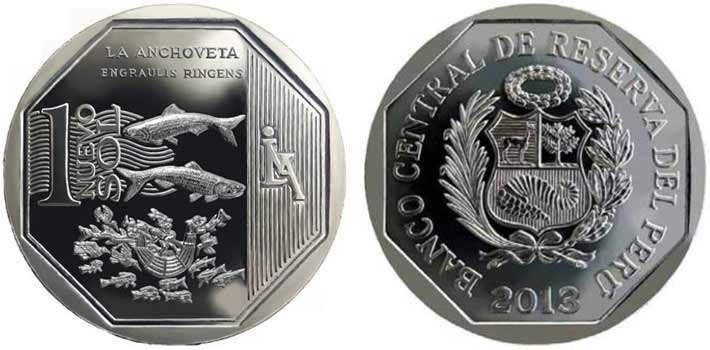
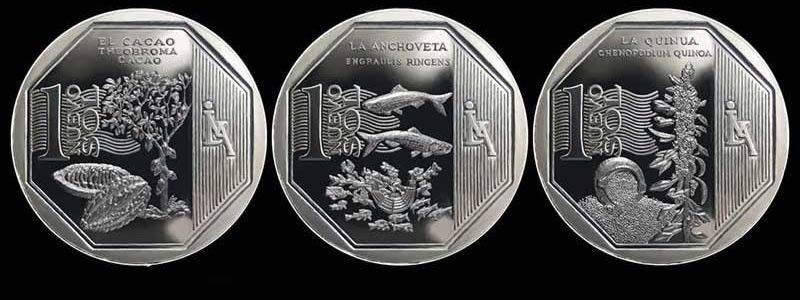
The numismatic series “Recursos Naturales del Peru” (Natural Resources of Peru) was issued by the Peruvian Central Reserve Bank (BCRP) on July 24, 2013 to promote a numismatic culture and to highlight the diverse and rich natural wealth of Peru with one of the most commonly used coins in the country, the S/. 1 coin. The series features three of Peru’s main natural resources: La Anchoveta (Peruvian anchoveta), El Cacao (cacao) and La Quinua (quinoa).

On the front of each Natural Resources of Peru coin the Peruvian anchoveta, cacao fruits or a quinoa panicle is depicted as primary image; the back shows the Peruvian Coat of Arms surrounded by the writing Banco Central de Reserva del Perú (Central Reserve Bank of Peru) and the year of issue.

All coins of the series have the denomination of One Nuevo Sol (S/. 1). They are legal tender. The coins circulate simultaneously with all other S/. 1 / S/ 1 coins and can be used in any transaction in Peru. 10 million units from each image have been minted.

Specifications:

  • Value: One Nuevo Sol (S/.1)
  • Date of issue: July 24, 2013
  • Diameter: 25.5 mm
  • Mass: 7.32g
  • Material: Alpaca Silver
  • Mintage: 10 million coins of each image
  • Front main image: Peruvian anchoveta, cacao or quinoa and the logo of the National Mint on a background of vertical lines.
  • Back image: Peruvian Coat of Arms
  • Legal Tender: Yes

Natural Resources Coin – La Anchoveta (Peruvian anchoveta)

The coin depicts two Peruvian anchovetas (Engraulis ringens), a fish species of the anchovy family found in the southeastern Pacific Ocean off Peru and Chile, and the image of a Moche representation called “Everyday marine life”.

Already thousands of years ago fishery and the abundance of the Peruvian anchoveta off the coast played a crucial role in the development of ancient cultures in the coastal areas of Peru. Its high nutritional content – Peruvian anchovetas provide proteins similar to those found in meat, contain no carbohydrates, are rich in vitamin A, vitamins B and vitamin C and essential fatty acids and are a source of calcium, phosphorus, potassium and minerals like iron and zinc – not only secured a healthy nutrition even of larger communities, but made the Peruvian anchoveta also a good product for trade. In modern times the Peruvian anchoveta was almost exclusively fished for the production of fishmeal, making Peru the world’s leading fishmeal producer. However, over the past 15 years it is rediscovered for direct human consumption and sold fresh or canned (abroad often under the name Peruvian sardines).

Natural Resources Coin – El Cacao (cacao)

The second coin of the Natural Resources series depicts a cacao tree (Theobroma cacao) and two cacao fruits.

Most probably originating in the tropical Andes foothills, in the Amazon rainforest, Cacao is cultivated in Peru for thousands of years. It was an integral part in the lives of ancient cultures and their rituals. Considered a “food of the Gods” and therefore sacred, its consumption was reserved to the nobles. Cacao was used in religious ceremonies, as sacrificial offerings, burial gifts, or as a special form of currency.

Today Peru is the world’s 9th largest cacao producer and the world’s largest organic cacao producer. Thanks to ideal climate conditions and soils which allow the trees to thrive successfully, Peru produces some of the best cacao beans in the world. Main cacao growing areas in Peru are the regions of Cusco, Junin, Huánuco, San Martin, Amazonas, Piura, Ucayali, Cajamarca and Ayacucho.

Peru Newsflash

New lizard species discovered in Peru

There is still so much new to find out about and see in Peru. Just recently Peruvian scientists discovered a...


Peru has the second-worst drivers in the world

For those living and driving in Peru it comes to no surprise. A recent study by Compare the Market, an...


Machu Picchu reopens for the first time after the social outbreak

The Ministry of Culture of Peru decided to re-open Machu Picchu after it was closed on January 21 because of...


Peru extends the state of emergency in 44 districts

The Peruvian government extended the "state of emergency" in 44 districts of the central departments of...

Peru Event Calendar

«◀ April 2025 ▶»
MonTueWedThuFriSatSun
12345
6789101112
1314151617 1819
20212223242526
27282930

Upcoming Events in Peru

Upcoming Events in Peru

Tourist Attractions & Sights in Peru

Machu Picchu


Peruvian Visa Types

Peruvian Digital Nomad Visa


Peruvian Cheese

Queso Rojo de Lluta

Latest Video

Long Reads...

The Mystery of the Nazca Lines in Peru

In the 1920s, when people first flew across southern Peru, they made an astonishing discovery. Stretching below them,…


Francisco Pizarro González (1474-1541)

Francisco Pizarro, a peasant from Spain, was one of the least well-equipped conquerors in history. However, in the name…


The colorful Fabrics and Textiles of Peru

Europe’s first knowledge of Peruvian textiles was acquired following the Spanish invasion of Peru in 1532, when the…


The Jeweled Frog and the Condor

By a quiet pond, at the side of a cloud-topped mountain in Peru, lived a small green frog and his large green family.…


Peruvian Economy

The Peruvian economy is an emerging, social market economy highly dependent on foreign trade and classified as an upper…