Peru Guide /Legal Stuff /Extension of a Migraciones deadline

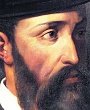
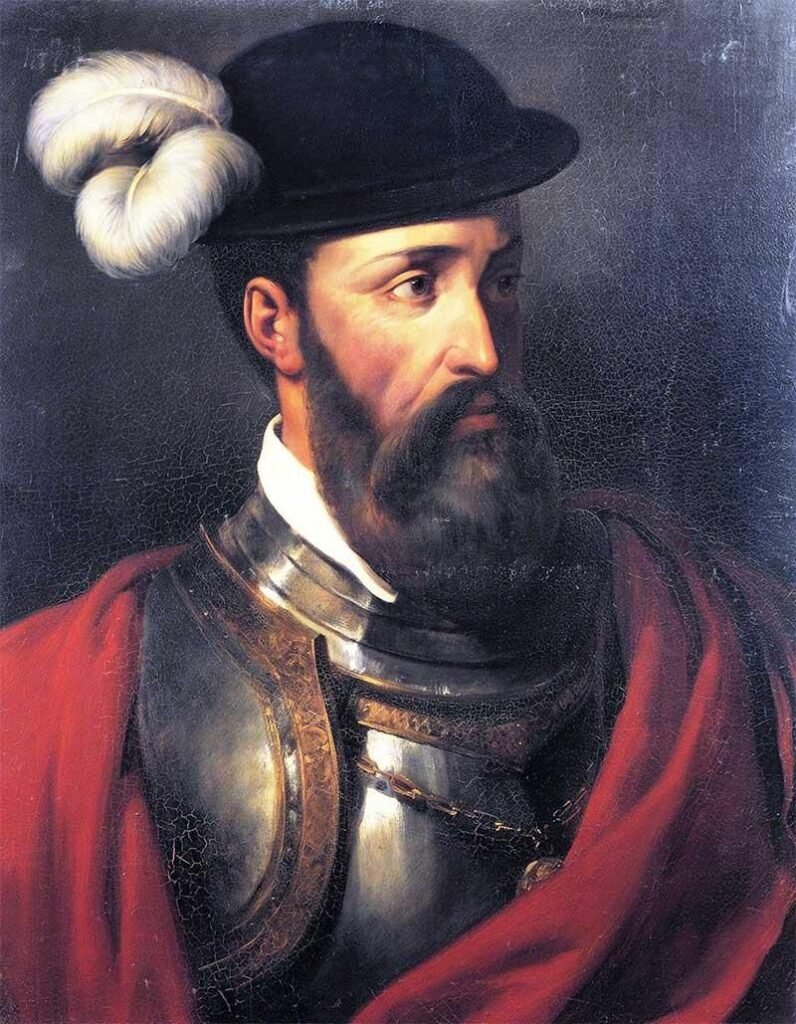
Francisco Pizarro González (1474-1541)

Conqueror of Peru and the Incas (hero or a criminal guilty of genocide)

Francisco Pizarro, a peasant from Spain, was one of the least well-equipped conquerors in history. However, in the name of Christ, he destroyed the powerful Empire of the Incas and bestowed on Spain the richest of possessions. Pizarro also established the city of Lima in Peru thus opening the way for Spanish culture to dominate South America.

Francisco Pizarro personifies the greed and heartless inhumanity of the Spanish conquistadors who, in their quest for fame, money and empire, viciously destroyed entire civilizations in the newly discovered lands of the Americas. Some helped rule this gold-rich empire, but many others lived the nomadic lifestyle of the military adventurer – ruthlessly exploiting native populations and extorting the wealth of the land to build vast private fortunes. Pizarro’s place in history is that of the man who destroyed the empire of the Incas and delivered much of the New World into Spanish hands.

Pizarro was born in Trujillo, a small town in the Caceres Province in the southwest of Spain around 1474, the illegitimate son of Gonzola Pizarro and Francisca Gonzalez. His father was a captain in the Spanish military who had fought in the Neapolitan wars. There is little reliable evidence about Pizarro’s early life. He is supposed to have been abandoned on the steps of the church of Santa Maria in Trujillo, and there is even a story that he was suckled by a cow. As a youth, Pizarro worked at herding pigs and had no education other than that of a hard upbringing. It is probable that he remained illiterate throughout his life.

Francisco Pizarro came from Estremadura, not only an autonomous community of Spain in the Province of Cáceres but also a region that produced an extraordinarily large number of men who went off to the New World to seek their fortunes and to glorify Spain. The conquistadors’ lust for gold was infinite and their religious fervor genuine. Hernan Cortez, the conqueror of the Aztecs, had been born in a nearby town, almost ten years after Pizarro. The wide, infinite skies of Estremadura inspired them with a desire to travel and, combined with the poverty of the land and the news of fabulous discoveries on distant shores, the lure was irresistible.
After the Italian explorer and navigator Christopher Columbus sponsored by the Catholic Monarchs of Spain discovered the Americas in 1492, the way was opened to the European exploration and colonization of the unknown territories. However, a year later – to prevent a war between Spain and Portugal over these discoveries in the New World – Pope Alexander VI divided the yet unknown territories into two parts. Using an imaginary ‘line of demarcation’, the land to the east of the line, which ran north to south several hundred miles west of the Azores and Cape Verdes, now belonged to Portugal, while the land to the west was given to Spain. Almost forty years later, Francisco Pizarro set out for Peru to secure the pagan Kingdom of the Incas for Charles V of Spain and the Catholic Church.

Francisco Pizarro and the Hojeda expedition

In 1509, Pizarro joined the ill-fated Hojeda expedition led by Alonso de Hojeda (also spelled Ojeda), an experienced Spanish explorer, conquistador and governor,  that set off intending to colonize the Panama Isthmus. It was to be a grueling time for the inexperienced Pizarro. Left behind in Panama in charge of the new settlement of San Sebastian, Pizarro had to endure near starvation, disease, and poisoned arrows from hostile natives, before the settlement had become so reduced in size that he had no choice but to flee. Using two tiny brigantine ships, Pizarro crammed the sixty surviving men on board. When one sank immediately, he could do nothing but leave the men to their fate and sail away to Cartagena.

Pizarro, Balboa (Panama & Central America)

But luck was on Pizarro’s side. Upon arrival in Cartagena, he ran into Martín Fernández de Encisco, a business associate of Hojeda’s who had arrived with a relief force of 150 men. They set sail towards Uraba, but Enciso lost his ship on a sandbank. Control of the expedition would have passed to Pizarro, but the emergence of the explorer Vasco Nuñez de Balboa denied him this opportunity.

Pizarro joined Balboa on an expedition across Panama’s infested jungles, and on 29 September 1513 they waded into the waters of the Pacific. It had been the first successful crossing of the Isthmus and was an incredible achievement. On the edges of the Mar del Sur, Pizarro first heard stories of a fabulous golden land to the south and saw pictures of strange new creatures.

The news that Balboa had discovered a new ocean created a sensation in Spain and gave new hope that a route through to the wealthy Spice Islands would soon be found. But Pedro Arias Davila (also spelled “de Avila”), the new Governor of Castilla de Oro, the Central American territories from the Gulf of Urabá, near today’s Colombian-Panamanian border, to the Belén River which after the discovery was broadened to include the Pacific coasts of Panama, Costa Rica, and Nicaragua, soon dashed Balboa’s dreams of pure exploration. Pedro Arias, who had been appointed Governor because of his court connections, and Balboa hated each other on sight; the small town would not be big enough to hold them both. Within a few months, he had Balboa arrested on charges of conspiracy. Pizarro, who arrested him, had finally got his revenge for being overlooked as the leader of the Uraba expedition. Balboa was executed.

Pizarro, a true opportunist, now quickly transferred his loyalty to Pedro Arias, who sent him to trade with the natives along the Pacific coast. When the capital was transferred to Panama, he helped Pedro Arias to subjugate the warlike tribes of Veraguas, and in 1520 he accompanied Espinosa on his expedition into the territory of Cacique Urraca, in the present Republic of Costa Rica.

By the age of forty-five, Francisco Pizarro had little to show for his many expeditions. His sole assets were some terrible lands and a collection of indigenous people. Accounts of the achievements of Hernan Cortez, and the return of Pascual de Andagoya from his expedition to the southern part of Panama, fired Pizarro with enthusiasm.

All the expeditions, prior to that of Andagoya, had been to the north up as far as Honduras. Few of the newly arrived adventurers were sailors, and the land to the north and west offered safer prospects than the unknown perils of the great South Sea that stretched in unlimited vastness beyond the horizon. Weather made the south a more difficult destination, and the Humboldt current in the Pacific Ocean ensured that the Spanish mariners were faced with tropical storms and violent seas. With no sailing directions, the Spanish learnt by trial and error, and bitter experience.

In Panama, Pizarro formed a partnership with Diego de Almagro, a soldier of fortune, and Hernando de Luque, a Spanish cleric. Their plans were to form a company – the Empresa del Levante – to conquer the lands to the south of Panama. Their project seemed so utterly unattainable that the people of Panama called them the ‘company of lunatics’. However, the three were determined: Pizarro would command the expedition, Almagro would provide military and food supplies, and Luque would be in charge of finances and additional provisions. And Pizarro had spent thirteen years in the Indies, and he knew that the biggest prizes went to the boldest and to those who got there first. Luque, a schoolmaster and treasurer of the company’s funds, provided the financial backing and with the consent of the governor they began fitting out two small boats for a voyage of discovery.

Peru Newsflash

New lizard species discovered in Peru

There is still so much new to find out about and see in Peru. Just recently Peruvian scientists discovered a...


Peru has the second-worst drivers in the world

For those living and driving in Peru it comes to no surprise. A recent study by Compare the Market, an...


Machu Picchu reopens for the first time after the social outbreak

The Ministry of Culture of Peru decided to re-open Machu Picchu after it was closed on January 21 because of...


Peru extends the state of emergency in 44 districts

The Peruvian government extended the "state of emergency" in 44 districts of the central departments of...

Peru Event Calendar

«◀ April 2025 ▶»
MonTueWedThuFriSatSun
12345
6789101112
1314151617 1819
20212223242526
27282930

Upcoming Events in Peru

Upcoming Events in Peru

Tourist Attractions & Sights in Peru

Machu Picchu


Peruvian Visa Types

Peruvian Digital Nomad Visa


Peruvian Cheese

Queso Rojo de Lluta

Latest Video

Long Reads...

The Mystery of the Nazca Lines in Peru

In the 1920s, when people first flew across southern Peru, they made an astonishing discovery. Stretching below them,…


Francisco Pizarro González (1474-1541)

Francisco Pizarro, a peasant from Spain, was one of the least well-equipped conquerors in history. However, in the name…


The colorful Fabrics and Textiles of Peru

Europe’s first knowledge of Peruvian textiles was acquired following the Spanish invasion of Peru in 1532, when the…


The Jeweled Frog and the Condor

By a quiet pond, at the side of a cloud-topped mountain in Peru, lived a small green frog and his large green family.…


Peruvian Economy

The Peruvian economy is an emerging, social market economy highly dependent on foreign trade and classified as an upper…