From then on, they dedicated themselves to stealing food from other farms. The little food that they brought to their recuperating mother, they said they had received from the community in return for the work they had provided. The mother felt thrilled and excited about her children.
Soon the three boys went hungry, since they were not proficient hunters or fishermen, and they were already being observed by many men in the village, given their habit of stealing food.
At one point, there was no other option, and the boys traded a part of their farm for food. But soon they were hungry again and traded another part of the farm for food. They finally gave up what they had left in exchange for more food.
Although they were satisfied for a while, the harvest season finally arrived, and the mother asked to accompany them to the farm to see the wonderful harvest that, month after month, her children had described and promised her. It was the men of the community who had taken over the chacra (“chacra” is an Andean term – a loanword from the Quechua word chakra, meaning “farm, agricultural field, or land sown with seed”), and in a short time they achieved what Pacha’s sons did not achieve in six months.
After insisting, the three boys helped the mother walk a little past her house, pointing out her beautiful farmland. They told her it was unnecessary for her to go there, because they would oversee harvesting it. Pacha wholeheartedly believed in her children, and full of joy, she listened to them and returned home. But that night, while he was sleeping, she dreamed that three men came to her farm and took all the food. She got up very early the next morning, left her sleeping children to rest, and set out for the farm. Arriving there, she collected potatoes, beans, sweet potatoes, and quinoa grains.
At dawn, Pacha was surprised by the new owners of the farm, who mistook her for a thief and hit her from behind. She fled without complaining and without letting her face to be seen.
She finally understood everything as she cried on the way home. Wherever Pacha walked, puddles of tears formed, until they formed a fine stream that ran thick, with the color of red earth. Hurt as she was, Pacha took a long time to get to her house. When she arrived, it was already lunchtime. Her children were still asleep, and they hadn’t even noticed their mother’s departure and return.
The eldest son yawned, wrapping himself in the blanket. The middle son uttered the word food, and the youngest son asked his mother for food. Next to the stove there were only a few beans, some old quinoa grains, and a half-rotten potato. Pacha put enough water to heat in a pot and then added the few beans, the little quinoa, and the only potato. There was no salt, but the mother cried over the soup while it was cooking. If she could have, she would have thrown herself into the soup, just to feed her children – so deep was her dedication to them even after what she discovered.
The smell of cooking soup woke the three boys, and they got out of bed only to eat. They ate eagerly, quickly, slurping, while the mother stood watching them. But the soup tasted bitter, and the boys raised their heads to complain with their mother. Then they saw her mistreated, as she was, and with sorrowful eyes. For a moment they reacted and tried to help her, but Pacha stopped them, pointing to the soup and then to her wounds. The boys understood that the mother had discovered them, and they wanted to avoid the situation, so they simply asked her who had abused her.
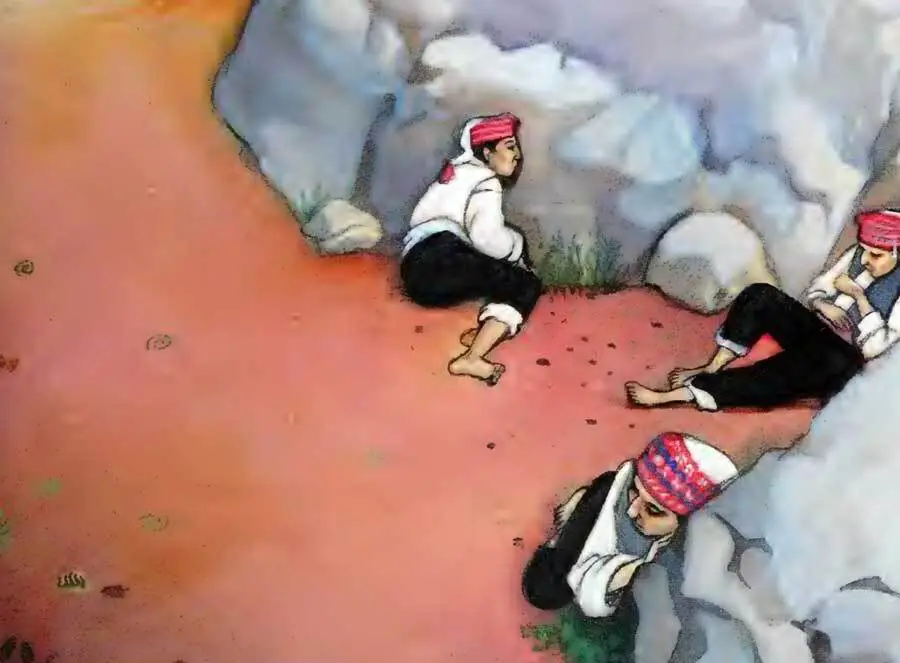
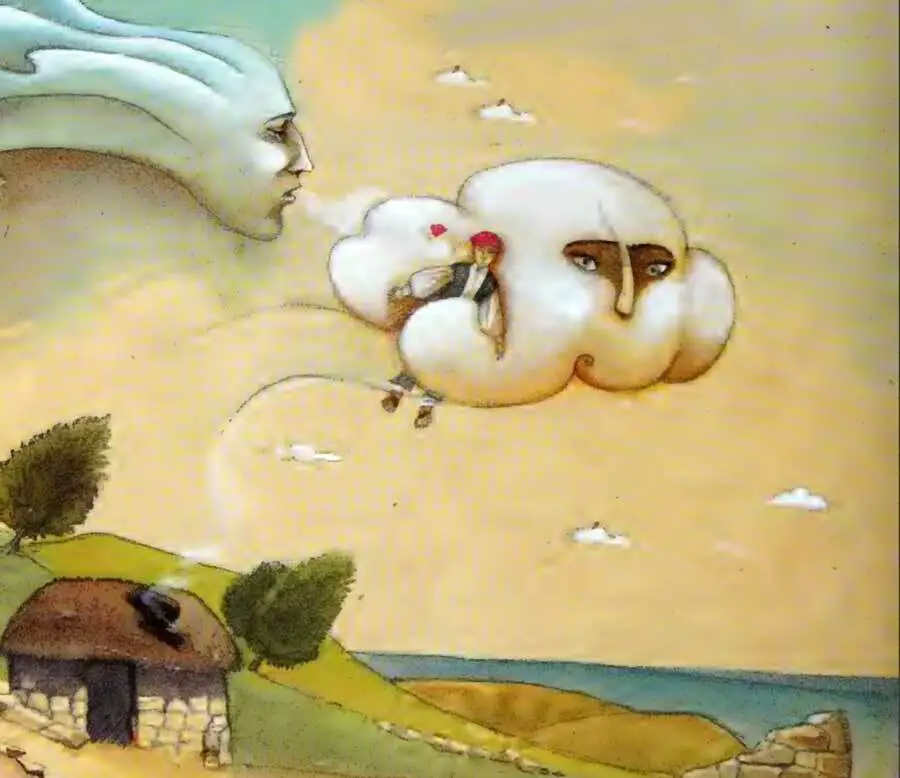
The three boys hid their grief and seemed to tremble in fright. But then, filled with pride, they became angry and shouted, blaming their misfortunes on the men of the village. Such was their fury, that the older one turned into a black cloud that broke the roof of the house, the middle one froze with fright and was dragged by the cloud, and the smaller one became wind and blew intensely dragging his two brothers with him.