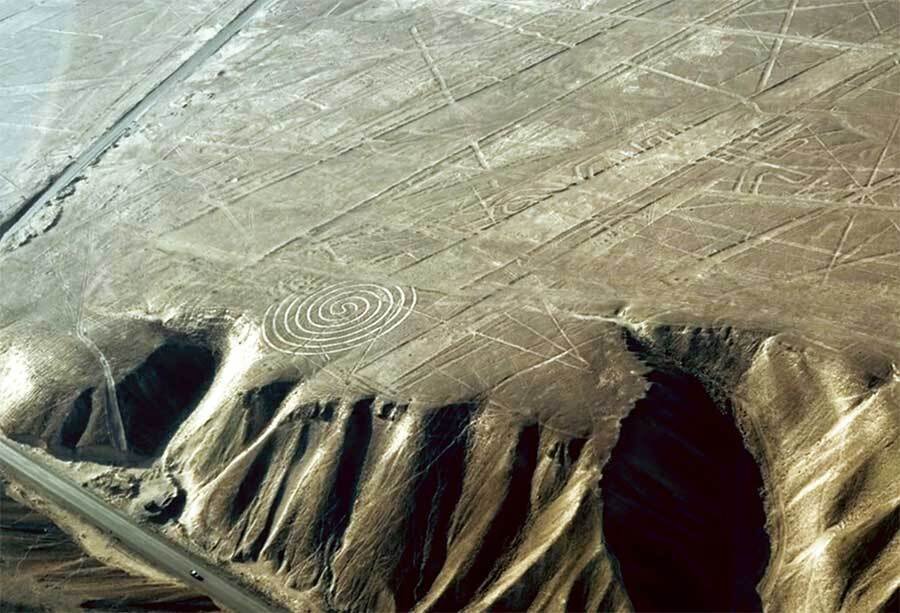
From the air, the land is beige and brown, scarred and crumpled, cut through by deep river gorges and riven by a mass of dried-up stream beds. It is arid and forbidding from a distance and, on the ground, it is dusty, hot and monotonous. There is no vegetation of any kind here. No birds call. No insects buzz. The silence is absolute. It is rarely windy and there are not even any clouds in the sky to vary the light and cause a shadow to move across the land. On the rare occasions when people are walking on the pampa, they can clearly hear each other call from half a kilometer away. It almost never rains on the pampa; the official tally is 0.5 mm (0.02 inches) of rain per year. And the air is so dry that the mark of raindrops of a shower that fell briefly four years ago are still there, marking the dust on rocks with strangely tragic splashes.
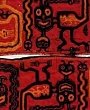
Yet this remote and almost unpopulated desert holds a secret. For a person walking across this bare and dusty land would find – scattered as if carelessly across the sterile wasteland – the most unexpected and extraordinary evidence of an ancient and vanished civilization. There are fragments of chunky pottery, decorated in bright colors with stylized images of birds and mythical creatures. There are ruins of buildings, some made of stone, others made of adobe bricks and now almost indistinguishable from the reddish brown of the desert earth itself. There are strange small mounds – surely man-made – and stone tombs. Most extraordinary of all, there are skeletons – bleached snowy white by the sun, curled in a fetal position and wrapped in pieces of dark-colored woven cloth, their skulls gleaming in the bright sunlight.
Who were these people? When did they live on the Nazca plateau? And how did they survive to build a life in such a dry land?
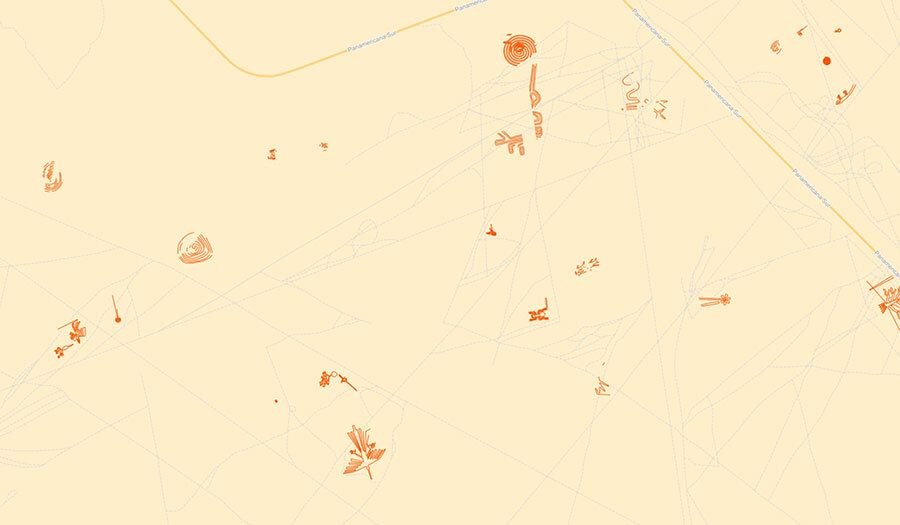
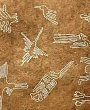
And there is something stranger still about this desert land, a mystery that can only really be appreciated from the air and that only emerged in the late 1920s when planes first flew across this remote region of Peru. Looking down from their cockpits, these early twentieth-century pilots had for the first time a bird’s-eye view of this desert. And what they saw was astonishing. Spread across the desert, over an area around 500 square kilometers (311 square miles), were thousands of enormous line drawings.
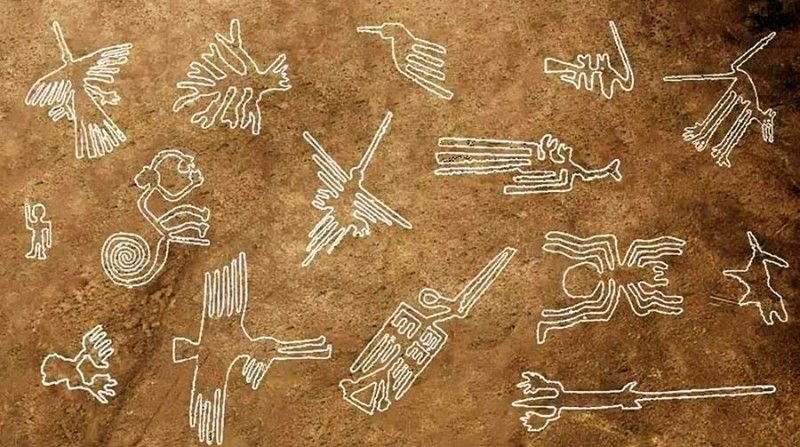
Some are in the shape of living things: birds, monkeys, lizards and a whale. There are plants and fishes too. Some images, like the hummingbird, for instance, are realistic and easily identified. Others can be identified as local South American species, but they have been drawn with mystifying mistakes or deliberate inaccuracies. The monkey, with its front paws pointing inwards and arched back, for instance, has a great curling tail like the South American spider monkey, but the tail curls the other way from that of a real monkey. Other drawings are highly stylized – like the carob tree with its symmetrical pattern of roots and branches; or the magnificent bird figure, with its elongated zigzag neck that immediately conjures up the sight of a sleek black cormorant dropping like a stone towards the sea. Some figures are imaginary composite creatures, part bird, part insect, and others just defy definition.