The 2021 presidential election saw far-left Pedro Castillo, a political greenhorn in Lima, and hard-right Keiko Fujimori, who is not only the daughter of former president Alberto Fujimori, but as well an old-timer on the political stage in Peru, in the run-off for the presidency. So, once more Peruvians had the choice between pest and cholera.
Peru Guide /Legal Stuff /Extension of a Migraciones deadline
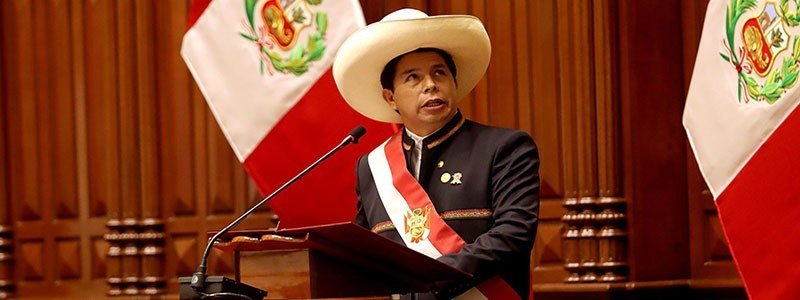
President Pedro Castillo from 2021 to 2022
Peru’s first indigenous peasant president was doomed to fail
Pedro Castillo's background in a nutshell
Pedro Castillo was born on October 19, 1969, to an illiterate and impoverished peasant family as third of nine children in Puña, a remote village in the Tacabamaba district of the Chota province in the Cajamarca region in northern Peru.
From an early age he did farm work on the plot of land his father received during the land reform under General Juan Velasco Alvarado. In his teenage years Castillo worked in the informal economic sector, seasonally grafted on coffee and banana plantations, sold newspapers, ice cream and cleaned hotels to support his family and to fund his elementary and secondary school education. He later trained to be a schoolteacher and from 1995 worked at the same school he attended in Puña as an elementary teacher. In 2006, Pedro Castillo earned a bachelor’s degree in education, seven years later a master’s degree in educational psychology from César Vallejo University in Trujillo, Peru.
Seeing Peru experiencing enormous economic growth from its mineral riches, but the rural areas of the country still not benefitting from this wealth and his students still coming to school hungry without having any prospects motivated Castillo to become actively involved in a teachers’ union where he during the 2017 teachers’ strike ascended to a union leader.
Castillo’s leadership role during the teachers’ strike raised his political profile and numerous political parties in Peru approached him in the aftermath offering to promote him as a congressional candidate, though he refused.
A more detailed description of his early years and first steps on the political stage can be found in Pedro Castillo’s biography.
Presidential elections 2021
In March 2021 Covid hit Peru. The management of the Covid-19 pandemic under Martin Vizcarra’s presidency, which included some of the strictest and longest anti-Corona measures in Latin America with a months-long shut down of the complete country, cessation of all activities, suspension of all travel, prolonged lockdowns and curfews, mask mandates and compulsory vaccination left the country in shambles. The extremely strict Covid measures not only severely damaged Peru’s economy and supported a democratic deterioration in the country, but heavily impacted the over the past years positive development of Peru and dramatically increased poverty, extreme poverty, unemployment and informal employment, malnutrition and the lack of necessities. The progress and advances in these areas which over the past two decades were achieved, evaporated into thin air.
Seeing his students and their families undergo even worse hardships then in the years and decades before, Pedro Castillo encouraged by the unions decided to run for presidency in 2021 as the candidate of the far-left Peru Libre (Free Peru) party.
With his simple motto “No more poor people in a rich country.” he attracted mostly rural Peruvians like him who feel left behind, seem to be forgotten by the elites in Lima and never really benefitted from Peru’s two decades of economic growth. He promised to restructure the economy and establish a fairer economic reality for everyday Peruvians. Other main goals included to reform Peru’s neoliberal constitution, which was written and implemented in 1993 by former President Alberto Fujimori, establish an international anti-corruption investigatory committee, improve Peru’s public health care system, which already long before Corona was a disaster, but now on its knees, improve public education and establish a structure for more political inclusion for all Peruvians eliminating injustice and inequality. Good intentions and necessary issues to tackle, but his way or better the way of the small Peru Libre party, who follows a Marxist, Marxist-Leninist and socialist ideology, to achieve these goals was, at least until Castillo moved to the center during his presidency, quite radical.
Never seen as a real threat in the fight for presidency, Pedro Castillo was mainly ignored or ridiculed sometimes insulted while quite a number of everyday rural Peruvians rallied behind him. And to the surprise and shock of many he received the most votes in the first round of the presidential elections. In the run-off for presidency, he faced Keiko Fujimori, the leader of the right-wing Fuerza Popular (Popular Force) party.
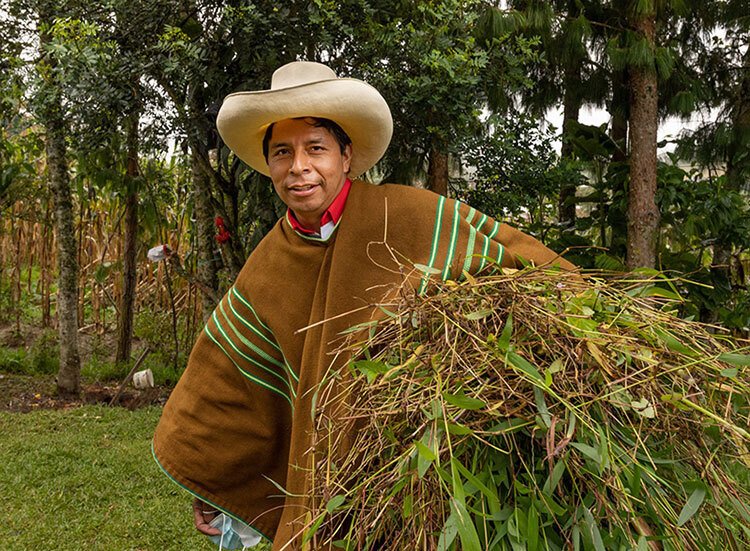
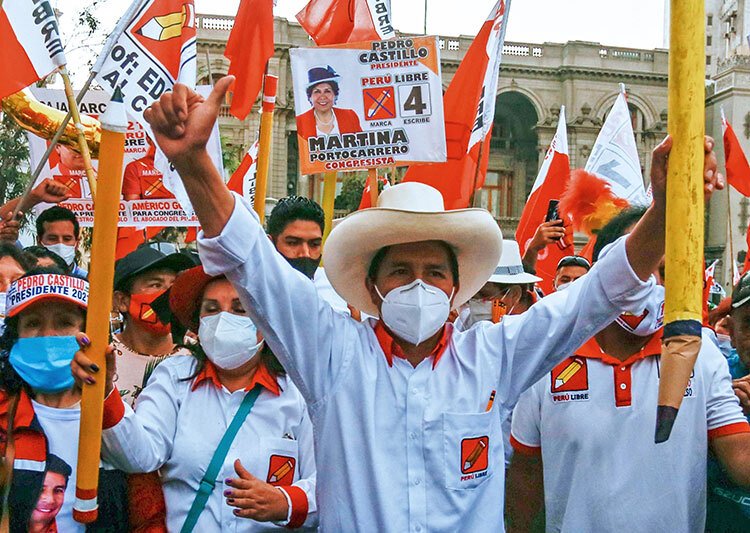
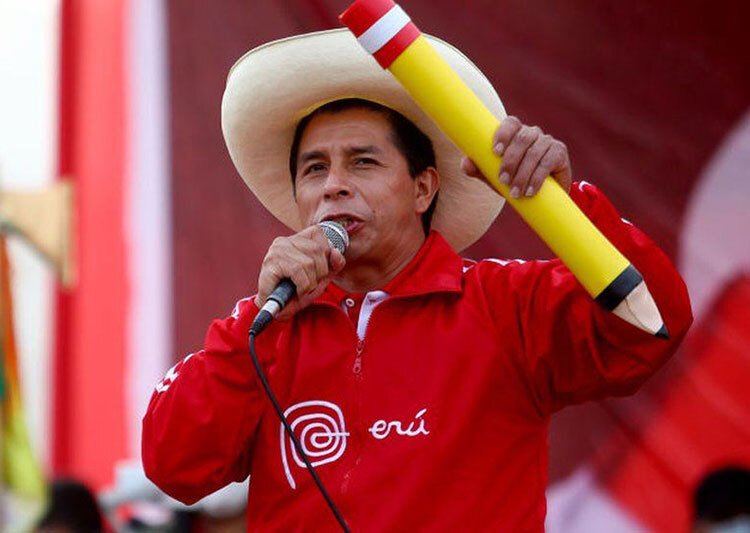
And then the mudslinging from both sides began. Castillo was ridiculed for always wearing a chotano, also known as a bambamarquino, a tall wide-brimmed straw hat that is worn by humble peasants in his home region of Cajamarca, and for the yellow pencil, a symbol for his teaching background and the importance of quality education for everyone which he chose for his campaign and the Peru Libre party. He was insulted because of his poor upbringing, bad education on literally all levels, lack of political experience. He was accused of being corrupt, involved with Shining Path and/or other criminal organizations. And he even received death threats.
Seemingly unimpressed by all this the simple, calm and polite Castillo continued to campaign “rallying the poor and terrifying the rich with his rhetoric of leftwing economic reforms”, as the Financial Times wrote in one of their articles about Castillo, which would end the free market economic model that has been in place in Peru since the 1990s.
Peru Newsflash
There is still so much new to find out about and see in Peru. Just recently Peruvian scientists discovered a...
For those living and driving in Peru it comes to no surprise. A recent study by Compare the Market, an...
The Ministry of Culture of Peru decided to re-open Machu Picchu after it was closed on January 21 because of...
The Peruvian government extended the "state of emergency" in 44 districts of the central departments of...
Peru Event Calendar
| Mon | Tue | Wed | Thu | Fri | Sat | Sun |
| 1 | 2 | 3 | 4 | 5 | ||
| 6 | 7 | 8 | 9 | 10 | 11 | 12 |
| 13 | 14 | 15 | 16 | 17 | 18 | 19 |
| 20 | 21 | 22 | 23 | 24 | 25 | 26 |
| 27 | 28 | 29 | 30 |
Upcoming Events in Peru
Tourist Attractions & Sights in Peru
Machu Picchu
International Schools in Peru
International Christian School of Lima - ICS Lima
Peruvian Visa Types
Peruvian Digital Nomad Visa
Laws, Norms, Legal Codes & Decrees
Legislative Decree No. 1582 (Modification of the Peruvian Foreigner Law, Nov 2023)
Peruvian Cheese
Queso Rojo de LlutaLatest Video
Long Reads...
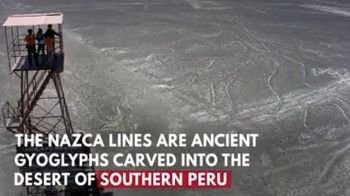
In the 1920s, when people first flew across southern Peru, they made an astonishing discovery. Stretching below them,…
Francisco Pizarro, a peasant from Spain, was one of the least well-equipped conquerors in history. However, in the name…
Europe’s first knowledge of Peruvian textiles was acquired following the Spanish invasion of Peru in 1532, when the…
By a quiet pond, at the side of a cloud-topped mountain in Peru, lived a small green frog and his large green family.…
The Peruvian economy is an emerging, social market economy highly dependent on foreign trade and classified as an upper…